



Despite scepticism, the rapid rise of clean energy sources offers hope for the future and a solution to the climate crisis.

A recent article in the Evening Standard claimed that renewable energy cannot replace oil and gas, labelling it a “great green deceit”. However, the real deceit is ignoring the scientific consensus that urges a shift from fossil fuels to clean, renewable energy.

The United Nations Intergovernmental Panel on Climate Change (IPCC) delivered a sobering warning last year, calling it a “code red for humanity.” Yet, despite the grim tone, scientists remain hopeful, suggesting that prompt action could avoid disaster. This action requires transitioning our energy systems to cleaner, renewable sources.

Is the shift challenging? Certainly. But the fact that it’s difficult is not a valid reason to abandon the effort. The flawed short-term thinking that claims renewable energy can’t replace oil and gas is precisely what has brought us to the brink of the global climate crisis.

But amidst the challenges, there is positive news. More clean energy is being generated every year. Just this week, the International Energy Agency (IEA) predicted that by early 2025, renewables will surpass coal as the largest source of electricity generation. This is not only beneficial for the environment but also for addressing the cost of living crisis and improving energy security. Renewable energy is cheaper than fossil fuels and, crucially, it is not dependent on imports from other countries.

Critics often point to the “cost of Net Zero,” but what about the cost of not pursuing this goal? According to the Deloitte Centre for Sustainable Progress, failing to reach Net Zero could cost up to $178 trillion over the next 50 years, far exceeding the cost of a green transition.

I know this transition firsthand. As the head of Naked Energy, a solar thermal company, I see the opportunities and innovations that come with clean energy. Solar thermal, for instance, is a low-cost, environmentally friendly technology with a small carbon footprint, and it’s set for explosive growth. The number of homes worldwide with solar thermal systems is expected to increase from 250 million today to 1.2 billion by 2050, according to the IEA.

In the UK, we’ve helped install solar collectors on leisure centres and swimming pools, assisting them in managing rising energy costs during the winter months. In Alberta, Canada, a community is using solar thermal systems and borehole thermal storage to supply all their heating and hot water needs without fossil fuels. Even companies like PepsiCo are committing to renewable energy, sourcing 100% of their electricity from clean sources over the past two years.

The green energy transition is also driving job creation in the UK. As demand for renewable energy hardware increases, local manufacturers in places like Braintree, Essex, are scaling up production of solar collectors. Efforts are underway to address the skills gap, ensuring there is a skilled workforce to support future demand.

And, for those who question renewable energy’s reliability due to weather conditions, battery storage technology has made significant advances. Electric vehicles now demonstrate how effective battery storage can be, and this technology will be crucial in addressing the intermittency of renewable energy sources.

Globally, renewable power capacity is expected to grow by 2,400 GW by 2027. Governments must continue to support this transformation through financial incentives and streamlined permitting processes to ensure the energy transition accelerates.

While the task is monumental, the shift to green energy is an endeavour worth every effort. There is no single solution, but collectively, renewable energy will secure a sustainable future for all.


As rail workers strike across the UK, the hospitality industry faces mounting challenges this winter.

On the first day of a series of planned strikes, 40,000 rail workers have walked out across the country, crippling Britain’s train services. The walkouts are expected to continue until the weekend, bringing train operations to a near halt.

Amid the disruption, Transport Secretary Mark Harper and RMT leader Mick Lynch are engaged in a public blame game, each accusing the other of causing the chaos. In this episode, Ross Lydall, City Hall Editor and Transport Editor at The Evening Standard, catches up with Mick Lynch on the picket line to discuss whether there is any prospect of a resolution to the ongoing deadlock.

In the second part of the podcast, Jack Stein, Chef Director of Rick Stein Restaurants, sheds light on the growing strain the rail strikes are placing on the hospitality sector. With the industry already grappling with one of its toughest winters, the strikes have only compounded the challenges.

Listen to the full discussion on your Spotify Daily Drive or wherever you stream your podcasts.

The Duchess of Sussex defends her extravagant celebration in New York, calling out negative media coverage.

Meghan Markle has addressed the backlash over her 2019 baby shower, defending the celebration and criticising the media for its negative portrayal. The Duchess of Sussex, who was expecting her son Archie at the time, attended a lavish surprise baby shower in New York City in February 2019. The event, held at The Mark Hotel, was organised by her close friends and attended by high-profile guests, including Gayle King, Serena Williams, and Amal Clooney.

Despite the joyous occasion, the party was met with harsh criticism, with the media labelling it as “ostentatious” and speculating that the cost of the event was between $300,000 and $500,000. Meghan addressed the controversy in the fourth episode of her and Prince Harry’s Netflix docuseries, recalling how her friends had simply wanted to shower her with love and support.

Reflecting on the negative media reaction, Meghan shared her frustration, emphasising that the party had been entirely funded by her friends, not taxpayer money. “It was so wrong,” she said, expressing disbelief over the criticism aimed at the event. “Why are you taking such a beautiful moment and trying to ruin it?” she added, questioning why her friends’ gesture of love had been turned into something negative.

The episode also included unseen photos from the shower, showing Meghan smiling in a polka dot dress surrounded by her friends. Serena Williams, who attended the event, recalled the challenges of trying to have an intimate experience amidst the intense global attention surrounding the duchess. “There was no intimate moment that one could have,” Williams admitted, reflecting on the pressure Meghan faced.

Additionally, Meghan opened up about her mental health struggles and the sense of being trapped in a “bubble” where “everything was controlled,” shedding light on the emotional toll of public scrutiny.

Pat Cullen claims gender dynamics are affecting negotiations as nurses plan strikes over pay.

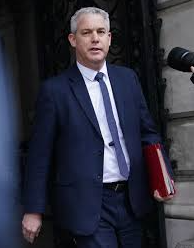
The head of the Royal College of Nursing (RCN), Pat Cullen, has accused Health Secretary Steve Barclay of employing “bullyboy” tactics in negotiations with nurses. This comes as RCN members prepare for unprecedented national strikes on December 15 and December 20, set to disrupt the NHS in the lead-up to Christmas.

Cullen, who represents hundreds of thousands of nurses, claims Barclay has refused to engage in meaningful discussions, and suggests the refusal may be due to her leadership of a predominantly female workforce. She argued that a different approach would likely be taken if the profession were male-dominated.

In an interview with The Guardian, Cullen expressed frustration with Barclay’s stance, stating: “I’m a woman negotiating for a 90% female profession, dealing with a Government that’s particularly macho and tends to operate with a bullyboy tactic.” She further criticised Barclay for not recognising nurses’ needs, asserting, “By refusing to negotiate, Steve Barclay is ignoring nurses and ignoring me. I think there’s an issue here with us being female.”

The strike action, set to take place across multiple NHS locations in England, Wales, and Northern Ireland, follows the union’s dissatisfaction with this year’s pay award of £1,400. RCN representatives claim that due to successive below-inflation pay rises, experienced nurses are now 20% worse off in real terms since 2010. The union is demanding a 5% pay rise above the Retail Price Index (RPI) inflation.

Despite Barclay’s assertion that his “door remains open” for talks, Cullen argues that the Government is failing to value the contributions of nurses. She remarked that the healthcare sector often devalues “female work,” despite the crucial roles that nurses played during the pandemic.

In response to the growing tensions, a Department of Health spokesperson expressed that Mr Barclay has “the utmost respect for nurses” and highlighted that the Government is addressing worker conditions beyond pay. However, Cullen remains steadfast, stating that she would be willing to engage in discussions if the Government is willing to show flexibility. “Everything is on the table,” she said, “but they need to come to the table with me.”

The strikes come at a time when the NHS is already under significant pressure, and with ambulance workers set to join the industrial action on December 21, the Government faces further challenges as it works to address workers’ concerns.

Jurors yet to seek clarification as the jury deliberates a lengthy 16-page verdict form.

Jurors in Harvey Weinstein’s Los Angeles trial have been deliberating for five days without requesting clarification or sending notes, a common practice during such proceedings. The jury, composed of three women and nine men, has entered the final stages of its deliberations, although no verdict has been reached yet.

The deliberations began on December 2nd, but were briefly interrupted over the weekend before resuming the following Friday, December 9th. The jury could deliver a verdict at any moment, but as the days pass, it seems the decision is taking longer than initially anticipated.

Meghann Cuniff, a journalist covering the case for Law & Crime, compared the current trial to Weinstein’s earlier criminal case in New York, which led to his conviction in 2020. In New York, Weinstein was convicted on charges of third-degree rape and criminal sexual act, facing a total of five charges. In contrast, the Los Angeles case involves seven counts of sexual misconduct, linked to allegations from four women dating back to 2005–2013.

One significant difference between the trials is the length of the verdict form. In New York, the form was just one page long. However, in Los Angeles, the form spans 16 pages and includes more detailed questions that could prolong deliberations. Specifically, for the fifth charge, jurors must consider whether Weinstein is guilty of sexual battery for restraint, with an additional option to evaluate a lesser charge of sexual battery. Each of these offences allows for a guilty or not guilty verdict.

On Friday, Cuniff reported an unusual development when an alternate juror requested to be dismissed due to pending travel plans. However, the request was denied. Alternate jurors observe the trial proceedings but do not participate in deliberations unless required to step in.

As the jury continues to assess the case, the intricacies of the charges and verdict form seem to be contributing to a prolonged deliberation process.

Fans left heartbroken and questioning decisions after Brazil’s elimination by Croatia in a penalty shootout.

Brazilian football fans across the country were left stunned and silent after their national team was knocked out of the World Cup by Croatia on Friday. The disappointment began to set in following a dramatic turn of events in Qatar.

Initially, the atmosphere in cities like Sao Paulo and Rio de Janeiro was celebratory when Neymar’s extra-time goal put Brazil ahead. However, the mood shifted dramatically when Croatia equalised and then triumphed in a penalty shootout, with a final score of 4-2.

Sergio Faria, a 34-year-old engineer, was watching the match in a downtown Sao Paulo bar. “At the start, I was calm, convinced Brazil and Argentina would meet in the semis,” Faria explained. “But this feels like the strangest Brazil elimination I can remember. Croatia only had one shot on goal, while Brazil wasted countless opportunities.” He expressed confusion over some of the coach’s decisions, such as replacing Vinicius Junior with Antony and not having Neymar take the first penalty.

The decision to have Neymar take the fifth penalty came too late, as Rodrygo and Marquinhos missed their shots, leading to Brazil’s defeat. Coach Tite, who had already announced he would step down after the tournament, stated that Neymar was meant to take the decisive penalty, but Brazil never made it that far.

For 56-year-old fan Neyla Berle, the loss was devastating. She cried outside a bar in the Vila Madalena district, where the crowd had expected to celebrate Brazil’s progression with samba music. “We need a foreign coach to fight for titles again. Tite was supposed to be our best, but he led us to another failure,” Berle lamented.

The official fan festival in Sao Paulo was equally subdued. Giovana Arcanjo, 22, was upset not just for herself but for her daughter, Ana Luiza, who had been eagerly anticipating Brazil’s victory. “It was emotional and sad. We thought the sixth title was coming, but it didn’t,” Arcanjo said, as her daughter cried beside her.

On Copacabana Beach, where thousands had gathered to watch the match, 45-year-old Lucas Santos shared the pain with his sons, Eduardo and Henrique. “I’ve seen Brazil win two World Cups, but to watch with my kids, hoping they’d experience the same, only to see it slip away… It hurts,” he said. Santos placed more blame on coach Tite for focusing too much on attackers and leaving Brazil lacking in midfielders when it mattered most.

Stephanie Moore OBE expresses optimism for England’s chances and praises the current team ahead of Saturday’s quarter-final match against France.

Stephanie Moore OBE, widow of England’s 1966 World Cup-winning captain Bobby Moore, has expressed her belief that the Three Lions will defeat France in the upcoming quarter-final and go on to lift the World Cup trophy.

Speaking after receiving an award at Windsor Castle, Mrs Moore shared her enthusiasm for Gareth Southgate’s team. “I think Bobby would be thrilled with this team,” she said. “They’re young, dynamic, and Gareth is doing an excellent job. I think they can go all the way.”

Reflecting on what Bobby Moore would have thought of the current squad, she added, “He would have been very proud of them. Football was his life, and I know he would have been excited to see such a vibrant and talented team.”

Regarding England’s prospects in the tournament, she remains optimistic. “Why not? This World Cup has been full of surprises. I truly believe they can win,” she stated.

Mrs Moore also used the occasion to highlight her work with The Bobby Moore Fund, which she established after her husband’s tragic death from bowel cancer in 1993. The fund, under Cancer Research UK, has raised nearly £30 million for research.

At the ceremony, she was honoured for her dedication to cancer research, and she also discussed Dame Deborah James, the late cancer campaigner, with Prince William, who praised her selfless efforts to raise awareness for bowel cancer.

Sheila Parker MBE, the first captain of the England women’s football team, was also recognised at the event. She offered her advice to the current England men’s team, but stated that the Lionesses, who won Euro 2022, are playing better football than the men’s side.

Other notable recipients at the ceremony included NHS England’s National Medical Director, Professor Sir Stephen Powis, Olympic gold medallists Eilidh McIntyre and Bethany Shriever, and wheelchair rugby champion Ayaz Bhuta.

Border Force staff at UK airports to strike over Christmas, leading to cancellations and long delays, with travellers urged to check flight status.

Travellers across the UK have been warned to brace for significant disruptions during the Christmas period, as Border Force workers are set to strike across multiple airports, including Gatwick, Heathrow, Manchester, Birmingham, and Cardiff, from December 23 to New Year’s Eve.

Airport authorities have expressed their frustration over the planned industrial action, with some predicting cancellations and extended delays, particularly at immigration and customs. Manchester Airport anticipates flight cancellations, while other airports are putting contingency measures in place to assist with passenger welfare.

A spokesperson for the Airport Operators Association (AOA) stressed the importance of preparations, saying that without solid contingency plans, the entire travel system would be overwhelmed by cancellations and disruptions. “The strike action puts British workers’ Christmases at risk,” they added, calling for urgent resolution to the dispute.

At Gatwick, additional staff will be present on strike days to assist passengers. A spokesperson commented, “While we hope for a swift resolution, we are working closely with Border Force and expect flights to operate normally, although the situation could change.” Heathrow Airport has also set out “mitigation plans” but warned that the strike may lead to longer wait times for passengers during peak hours.

Meanwhile, Manchester Airport urged passengers to prepare for longer immigration queues and advised them to check their flight status before travel. “With reduced staffing, some services may be cancelled, and passengers should be ready for potential delays,” said an airport spokesperson.

Cardiff Airport is expected to remain operational throughout the strike period, though the Home Office will need to implement “appropriate measures” to ensure border security.

The AOA has strongly urged the government and unions to resolve the issue swiftly to avoid further disruption. In response to the strike, Immigration Minister Robert Jenrick expressed his disapproval, calling the timing of the industrial action “unjustifiable” and warned of severe disruptions to holiday travel plans.

Additionally, with rail strikes also affecting the holiday period, the RAC predicts a surge in traffic, especially on Christmas Eve, as travellers turn to cars when trains are unavailable. National Highways reassured the public that it has resilient plans in place to manage the increased road traffic.

Scientists reveal that dinosaurs were flourishing at the time of their extinction, while mammals adapted to survive the asteroid impact.

Recent research challenges the long-held belief that dinosaurs were in decline before their sudden extinction, revealing that they were actually thriving up until the catastrophic asteroid strike 66 million years ago.

An international team of palaeontologists and ecologists conducted a groundbreaking study based on 1,600 fossil records from North America. They discovered that dinosaurs, including well-known species like Tyrannosaurus rex and Triceratops, were far from in decline. The study suggests that these creatures dominated their ecosystems right up until the asteroid impact, providing the most robust evidence to date of their prosperity.

Scientists have long debated why non-avian dinosaurs perished, while other species, including mammals, survived. The new study proposes that the mammals which endured the extinction event may have had an advantage in adapting to rapid environmental changes. Unlike the dinosaurs, which were highly specialised and adapted to stable ecosystems, mammals were already diversifying their diets and behaviours, allowing them to survive in the wake of the disaster.

As the Cretaceous period drew to a close, small mammals were becoming more important components of ecosystems, evolving to exploit a wider range of food sources. These adaptive behaviours may have given them the resilience needed to endure the asteroid impact’s drastic ecological changes. In contrast, the dinosaurs, with their specialised diets and behaviours, were ill-prepared for the abrupt disruption of their environment.

Lead author Alfio Alessandro Chiarenza from the University of Vigo explained, “The stable ecology that benefitted dinosaurs during their reign actually hindered their survival after the asteroid impact. Meanwhile, species like birds, mammals, and turtles were already better suited to environmental shifts, making them more capable of surviving the sudden and violent changes caused by the asteroid.”

Senior author Professor Steve Brusatte from the University of Edinburgh further elaborated, “Dinosaurs were thriving until the asteroid struck, but mammals had already begun diversifying their behaviours and ecologies. They didn’t simply take advantage of the dinosaurs’ extinction – their evolutionary adaptations prepared them to fill the ecological gaps left behind.”

The study provides new insights into how the surviving mammals were not just lucky but were actively shaping their future survival by adapting to their changing environments long before the asteroid’s impact.

The opposition party demands the release of communications surrounding Covid PPE contracts linked to Michelle Mone, warning Tories of complicity in a potential cover-up.

Labour is set to table a motion in Parliament on Tuesday, aiming to force the government to release emails and texts relating to £200 million worth of Covid PPE contracts secured by PPE Medpro, a company associated with Conservative peer Michelle Mone.

Angela Rayner, the deputy leader of Labour, has stated that Tory MPs who oppose the motion would be “complicit in a cover-up” and continue to protect the secrecy surrounding the controversial contracts. The PPE Medpro contracts were awarded in 2020 without tender, providing £203 million for masks and gowns. However, the gowns were never used after failing NHS quality checks.

Michelle Mone has faced increased scrutiny after reports revealed that she is a beneficiary of an offshore trust that allegedly received £29 million from PPE Medpro’s profits. A House of Lords investigation into her failure to declare interests in the company has been paused as police conduct their own probe. Mone, who was appointed to the House of Lords by former Prime Minister David Cameron in 2015, has denied any financial gain and has insisted that she had no involvement with PPE Medpro.

In a bid for transparency, Labour plans to use a parliamentary procedure known as a “humble address” to compel the government to release all papers, advice, and correspondence related to the contracts, involving ministers and special advisers. The move follows former Health Secretary Matt Hancock’s claim that Mone aggressively lobbied him on behalf of another company in a separate contract dispute.

Rayner condemned the government’s handling of the situation, stating, “The British public is tired of being exploited by the Tories. We demand accountability and transparency for the £203 million of taxpayers’ money given to this shady company linked to a Tory peer.”

The motion also calls on Prime Minister Rishi Sunak to support amendments to the Procurement Bill, aiming to prevent ministers from making purchase decisions without competitive bidding, in an effort to curb government cronyism and waste.

The Liberal Democrats have echoed Labour’s call for the publication of all relevant documents, urging the government to be transparent about the dealings with Mone and PPE Medpro. Party spokesperson Christine Jardine added, “It’s time for Conservative MPs to put an end to cronyism and back calls for transparency, rather than continuing the cover-up.”