


Amanda Pritchard reveals the ongoing strain on the health service and the challenges it faces in recovering from the pandemic.

Amanda Pritchard, the CEO of NHS England, has described the current pressure on the health service as unlike anything she has witnessed in her 25 years within the sector. She also cautioned that full recovery from the Covid-19 pandemic could take up to two more years.

In an interview with The Times, Pritchard outlined how NHS England is grappling with worsening performance, citing alarming new data. According to NHS England statistics, one in 10 patients faced waits of over three-and-a-half hours for ambulances, with response times hitting record lows. In December, the average response time for life-threatening emergencies, such as heart attacks and strokes, was 10 minutes and 57 seconds, significantly exceeding the seven-minute target.

Furthermore, category two emergencies, including suspected strokes and heart attacks, saw ambulances taking an average of 1 hour, 32 minutes, and 54 seconds to respond, well over the target of 18 minutes. In December, 54,532 patients were left waiting more than 12 hours in A&E before being admitted, and only 65% of patients were seen within four hours, the worst recorded performance for England’s emergency departments.

Pritchard also spoke about the shortage of skilled staff, highlighting the importance of increasing training places at universities to meet growing demand. She revealed that many universities are turning away highly qualified applicants due to limited capacity, affecting medical, nursing, and therapy degrees. The NHS chief stressed the need for greater self-reliance in staffing, aiming to reduce dependence on agency workers, who currently cost the NHS £3 billion annually.

In the interview, she acknowledged that while the NHS is facing unprecedented pressure, it is not without hope for improvement. Pritchard suggested that the NHS could emerge stronger over time, but there is no quick fix to the challenges it faces, especially with the ongoing effects of the pandemic.
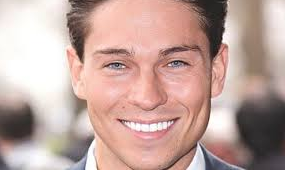
The reality star is determined to avoid any more mishaps and take his skating career seriously.

Joey Essex, the 32-year-old TV personality, is staying cautious following a serious accident that resulted in stitches to his finger. Despite the injury, Essex is determined to continue competing in Dancing On Ice, where he’s partnered with professional skater Vanessa Bauer.

Essex shared that his main concern is avoiding further injury that could prevent him from performing. “The thing I’m most scared of right now is having an injury that stops me from competing,” he said. He described a terrifying fall during his first practice session, which left him with stitches in his finger after his bone was exposed. However, Essex reassured fans that he was recovering well.

Taking the competition seriously, Essex admitted that although he enjoys the challenge, he understands the risks involved. “There’s always a chance something bad could happen, and that could take me out of the competition,” he explained. Despite this fear, he remains focused and committed, expressing his desire to perform well, even if it means not making it to the end of the series.

Essex, who has previously starred in The Only Way Is Essex, said that he signed up for Dancing On Ice to prove he’s capable of being a true performer. Alongside him, other famous faces such as Love Island’s Ekin-Su Culculoglu, actress Patsy Palmer, and Olympian Nile Wilson will also compete.

Wilson, who is used to performing as a gymnast, admitted that learning the lifts for ice skating has been “overwhelming”, but he is determined to push through and impress the audience with a unique stunt. Dancing On Ice starts on 15 January at 6:30pm on ITV1 and ITVX.

The Prime Minister highlights recent initiatives and a desire to showcase the tangible benefits of the UK Government for Scots.

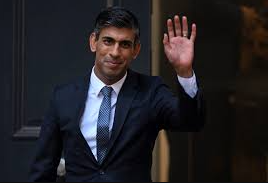
Rishi Sunak has expressed his commitment to visibly and tangibly demonstrate the UK Government’s contributions to Scotland, amidst growing support for Scottish independence. During a visit to Inverness, the Prime Minister highlighted new initiatives, including the establishment of two green freeports in Scotland, as part of efforts to show Scotland the UK’s positive impact.

Sunak, who spent two days in the country, met with First Minister Nicola Sturgeon to address shared challenges facing both the UK and Scottish governments. When questioned about a recent surge in support for Scottish independence, with some polls suggesting more than 50% in favour of a Yes vote, Sunak reinforced his determination to deliver for Scotland.

“I’m really keen to make sure that everyone in Scotland knows that I am passionately committed to delivering for them,” Sunak told reporters. He stressed the importance of maintaining a constructive relationship with the Scottish Government, noting his ongoing engagement with Sturgeon since becoming Prime Minister.

He added: “Through my visit and the announcements we’ve made, I want to continue to show that the UK Government is here, working to make a tangible difference in the lives of people in Scotland.”

In addition to the freeports, Sunak pointed to the UK Government’s levelling up funds benefiting Scottish communities, stressing these initiatives as clear evidence of the UK Government’s value.

Regarding the Scottish National Party’s (SNP) proposal to treat the next general election as a referendum on independence, Sunak focused on the importance of addressing key national priorities. “What I’m focused on is delivering on the people’s priorities,” he said, referencing shared challenges like the NHS crisis, the effects of the war in Ukraine, and inflation.

Sunak concluded that today’s announcement of the new freeports was a prime example of how the UK and Scottish Governments are working together to address the pressing challenges facing the country.

The club reveals a series of tributes to players and the community, including a nod to Highbury.

Arsenal Football Club has introduced a stunning new collection of eight artworks that will soon adorn the Emirates Stadium, adding a fresh artistic dimension to the iconic venue.

The pieces, unveiled on 11 January, are set to enhance the north London skyline and celebrate the deep-rooted connection between the club and its local community. The designs, which will be prominently displayed around the stadium, feature some of Arsenal’s most celebrated figures, such as Arsène Wenger, Jack Wilshere, and Thierry Henry.

The artwork also pays tribute to the club’s historic connection to the Highbury area, marking an important milestone in the ongoing evolution of the Emirates as a symbol of Arsenal’s legacy and future. The installation of these pieces will begin on Thursday, transforming the stadium into a vibrant reflection of Arsenal’s proud heritage.

The club’s commitment to recognising both its players and the community is at the heart of this new initiative, with each piece serving as a lasting tribute to the heroes of the past and present.

Educators address the risks of harmful online content shaping students’ attitudes.

Concerns over the influence of Andrew Tate’s controversial social media presence have led a west London school to host dedicated assemblies addressing the issue. Matt Adams, the school’s head of performing arts, initiated the sessions to counteract the spread of Tate’s messages among pupils.

Teachers warn that Tate’s online content, which promotes toxic masculinity and misogyny, could act as a “gateway drug” leading children to encounter more harmful material. Mr Adams observed that some boys in his school either support Tate’s views outright, excuse them, or dismiss criticism by claiming his words are misquoted.

“Tate’s messages glorify a lifestyle of materialism and arrogance, which appeals to young men who believe they need to emulate him to succeed,” said Mr Adams. He noted that some students accept Tate’s distrust of governments and taxes as credible, leading them to assume his other views are also valid.

Andrew Tate, a former kickboxer and social media influencer, has millions of followers across platforms. His notoriety stems from controversial statements, including one suggesting women should “bear some responsibility” for their own assaults. His content has reached over 12 billion views on TikTok through hashtags associated with his name.

Another teacher, Matthew Simpson, who works at a secondary school in Bristol, reported that students often reference out-of-context memes about Tate, such as the colour of his Bugatti. “Many are unaware of the broader context of his misogynistic views and the damage they cause,” he said, adding that brief clips of Tate’s content risk leading young viewers toward his more dangerous rhetoric.

Currently detained in Romania on charges of human trafficking and rape—allegations he denies—Tate remains a divisive figure. While his following persists, educators like Geoff Barton, general secretary of the ASCL teachers’ union, recognise the need for urgent action.

“There’s widespread concern among school leaders regarding the harmful material Andrew Tate promotes. While most boys remain respectful, some are drawn to his rhetoric, posing challenges for educators and society at large,” Barton said.

These assemblies reflect a proactive effort by schools to safeguard impressionable minds from online content that undermines respect and equality, fostering critical thinking among the next generation.

A teacher shares insights on the growing influence of Andrew Tate and its implications in the classroom.

As a teacher, I’ve had an up-close view of how Andrew Tate’s polarising views are affecting my 15-year-old students. While some students unequivocally reject his controversial statements, others are more sympathetic towards him, which has raised concerns among staff. To address this, our school has introduced “Andrew Tate assemblies” for all year groups to foster dialogue and understanding.

Among the students, opinions about Tate are split. Many girls and LGBT+ students label him a “scammer” and find his views on gender and sexual violence deeply troubling. However, some male students express strong support for him, often citing Tate’s luxurious lifestyle as a symbol of success that they aspire to emulate. Interestingly, these students tend to rely solely on Tate’s own videos to justify his rhetoric, while those opposing his views bring in external perspectives and well-researched arguments.

Tate’s extreme comments on sexual violence and his self-described misogyny have caused particular concern. His statements, such as suggesting that it’s easier to avoid rape charges in Eastern Europe and asserting that women who see themselves as equals to men are “not worth his time,” are alarming. The fact that some students continue to support him despite such harmful views is worrisome.

What’s even more concerning is the unquestioning nature of Tate’s followers. They repeat his words as if they were gospel, without critically examining the broader implications of his philosophy. His messages are steeped in toxic masculinity, victim-blaming, and a lack of empathy for others, all of which could have lasting effects on the way these young people approach relationships in the future.

I’ve noticed that many male students seem drawn to the image Tate projects—a life of wealth and power, symbolised by his Bugatti and flashy lifestyle. This aspiration to “be like Tate” is seductive, and some boys believe that if they adopt his views on topics like government distrust and taxes, they will be on the right path to success. One student even told me that since Tate was “correct” about these issues, everything else he says must also be true.

Despite these challenges, I’m proud of my school for the diverse and positive role models we have. Our teachers don’t rely on wealth or toxic masculinity to earn respect. Instead, they demonstrate that hard work, care, and kindness are the true measures of worth. These role models show our students that success and respect are earned through effort and compassion—not through the pursuit of superficial goals or embracing harmful ideologies.

Former Deputy Chief Medical Officer brings his public health expertise to global running initiative.

Sir Jonathan Van-Tam, widely recognised for his engaging Covid-19 briefings and football metaphors, has joined Parkrun as a trustee. The charity organises free community runs at over 2,200 locations in 22 countries, promoting physical activity and mental well-being.

Known affectionately as JVT, Professor Van-Tam served as Deputy Chief Medical Officer until March last year and currently holds the position of Pro-Vice-Chancellor at the University of Nottingham’s Faculty of Medicine and Health Sciences. Reflecting on his new role, he expressed enthusiasm for contributing to Parkrun’s mission of fostering accessible and inclusive participation in exercise.

“Parkrun is an incredible organisation that has inspired so many to embrace movement, sport, and mental well-being. As a public health advocate, I’m excited to support its ongoing efforts to help people live healthier, longer lives,” he said.

Parkrun, which began in 2004 with just 13 participants in London’s Bushy Park, has grown into a global phenomenon. Its weekly events now attract hundreds of thousands of runners and volunteers worldwide.

Professor Van-Tam, knighted for his contributions to public health last year, brings a wealth of expertise to the organisation. His knighthood ceremony was delayed when he contracted Covid, but he later received the honour.

Russ Jefferys, CEO of Parkrun, praised the addition of new trustees, saying, “It’s inspiring to see such passionate and skilled individuals join our team as we enter an exciting new phase for Parkrun.”

With his dedication to public health and promotion of active lifestyles, Sir Jonathan’s involvement is set to bolster Parkrun’s global impact, encouraging even more people to embrace the benefits of physical activity.

Staff to be rewarded for dedication during a turbulent time as Channel 4 remains publicly owned.

Channel 4 has announced retention bonuses for eligible staff following the government’s decision to abandon plans for privatising the broadcaster. These payments, previously outlined, will be distributed in June 2023 and vary in amount depending on the employee.

A Channel 4 spokesperson described the bonuses as recognition of the “dedication and commitment” demonstrated by staff during what was termed an “extraordinary and challenging period.” The broadcaster highlighted strong creative, commercial, and financial achievements during this time.

The privatisation proposal, championed by former Culture Secretary Nadine Dorries under Boris Johnson’s leadership, was officially scrapped by current Culture Secretary Michelle Donelan. Ms Donelan also announced that Channel 4 will now have the ability to produce and own some of its content, a shift from its current model of outsourcing all programming to independent production companies.

This decision has been praised by Channel 4 Chief Executive Alex Mahon, who called it a “sensible” move that supports the broadcaster’s commitment to fostering the UK’s creative economy. She added, “We’ve spent decades helping build the independent production sector, and we aim to remain integral to its future for the next 40 years.”

The Media Bill will introduce legislative changes to ease restrictions on Channel 4’s ability to create in-house content. Currently, hit programmes like The Great British Bake Off and Gogglebox are produced by independent companies such as Love Productions and Studio Lambert.

While welcomed by many, the decision to halt privatisation has drawn criticism from its original proponents, including Ms Dorries. Nevertheless, the move secures Channel 4’s status as a publicly owned entity while providing greater creative flexibility moving forward.

Andrew Bagshaw and Christopher Perry disappeared en route to Soledar, raising concerns amid escalating conflict in the Donetsk region.

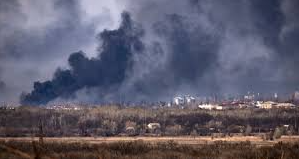
Ukrainian authorities have confirmed the disappearance of two British men, Andrew Bagshaw, 48, and Christopher Perry, 28, who were last seen on Friday heading towards Soledar in the war-torn Donetsk region. This area has been the site of some of the most intense fighting in the ongoing conflict.

According to local reports, Bagshaw, a New Zealand resident, was in Ukraine to assist with the delivery of humanitarian aid. Ukrainian police reported that contact with the pair was lost after their departure for Soledar.

A spokesperson for the UK’s Foreign, Commonwealth and Development Office stated: “We are providing support to the families of two British men who have gone missing in Ukraine.”

This incident follows the release of five British nationals in September. Aiden Aslin, Shaun Pinner, John Harding, Dylan Healy, and Andrew Hill were freed from captivity by Russian-backed forces and later returned to the UK.

Soledar, located in eastern Ukraine, remains a focal point of the conflict, with significant military activity reported in the region. The fate of Bagshaw and Perry highlights the growing risks faced by international volunteers and humanitarian workers in the area.

Further updates are awaited as efforts continue to establish their whereabouts.

The highly anticipated memoir blurs the line between personal revelations and overexposure, leaving even royal enthusiasts hesitant.

Prince Harry’s memoir, Spare, is undoubtedly the most talked-about book release of 2023, promising unprecedented insight into royal life. Yet, for someone who thrives on royal intrigue, the prospect of reading it feels more daunting than exciting.

Revelations from the book’s leaked excerpts have dominated headlines: Harry pleading with King Charles not to marry Camilla, a heated altercation with Prince William that led to a broken necklace and a dog bowl incident, and Meghan accusing Kate of having “baby brain.” For a casual royal watcher, these deeply personal stories go beyond the light drama of The Crown or a juicy biography—they feel invasive.

The timing of Spare also raises eyebrows. Following Queen Elizabeth II’s passing in September, the release of such a candid book feels poorly timed, exacerbating the fractures within the royal family. The title alone, Spare, underscores themes of isolation and grievance, making it clear this isn’t a story of reconciliation.

It’s not just the content but the sheer volume of it. From their six-hour Netflix series to repeated interviews, Harry and Meghan’s narrative has become inescapable. Their portrayal as a couple consumed by bitterness has led many to question if their relentless criticism of the monarchy overshadows their initial goals of freedom and privacy.

The memoir continues this trend, revealing intimate family conflicts that most would prefer to keep private. While tales of royal disputes and dysfunction are compelling, Spare ventures into territory that feels uncomfortably voyeuristic. It’s a far cry from the distant glamour and historical intrigue that draw many to the royal story.

Some may draw parallels between Spare and Princess Diana’s Diana: Her True Story, but the context is vastly different. Diana, still within the royal system, had limited avenues to share her perspective. Harry, on the other hand, has had ample opportunity to voice his grievances.

Royal stories often function as escapism, blending historical fascination, gossip, and a touch of fantasy. But Spare veers into the realm of a family therapy session, stripping away the mystique that makes the royals both fascinating and relatable.

While the royal family will endure as symbols on coins and stamps, Spare pushes boundaries, leaving readers unsure if they’ve gained insight or simply invaded private pain. Perhaps this memoir is less a revelation and more a step too far into personal space.