



Candidates and critics urge the party to allow media access and public broadcasting for open and transparent leadership debates.

SNP leadership candidates are advocating for greater transparency in the hustings process, pushing for media access and livestreaming of events. Initially, the party intended for these hustings to remain private, describing them as a “safe space” for members to engage directly with candidates.

One candidate emphasised the importance of inclusivity, stating, “Democracy and transparency are fundamental. Livestreaming would allow the SNP’s 100,000 members to participate, far exceeding the few hundred who can attend in person.” She added that opening the events to media coverage could serve as a positive example of respectful and informed political discourse.

Humza Yousaf’s campaign spokesperson said he welcomed media access and was already participating in televised debates to reach a broader audience. However, he acknowledged that the decision ultimately lies with the SNP’s National Executive Committee (NEC). Ash Regan echoed these sentiments, asserting that candidates should be subject to scrutiny and urging fair and comprehensive media reporting of the proceedings.

The NEC has since confirmed discussions with media outlets regarding access to upcoming hustings. They are also exploring ways to make content accessible to the broader membership. However, details remain unclear regarding the number of journalists to be admitted and which outlets will gain access.

Opposition parties have criticised the SNP’s initial decision to limit access. Scottish Tory leader Douglas Ross accused the party of “hiding from proper scrutiny,” while Labour’s Shadow Scottish Secretary Ian Murray wrote to SNP Chief Executive Peter Murrell, urging transparency. Murray highlighted that previous leadership elections in Labour and the Conservatives allowed media and public involvement, contrasting this with the SNP’s earlier approach.

“The people of Scotland deserve to hear from the candidates seeking to become their next first minister,” Murray stated. “Conducting this contest behind closed doors undermines the democratic process.”

The debate over transparency in the leadership contest reflects broader concerns about accountability and public engagement as the SNP prepares to elect its next leader and Scotland’s potential first minister.


The Austrian captain clarifies his team’s collective decision after facing racist abuse for not supporting Real Madrid’s Karim Benzema.

David Alaba has spoken out after receiving a wave of racist abuse online following Austria’s FIFA Best Award vote, which went to Lionel Messi instead of his Real Madrid teammate Karim Benzema. The defender clarified that the decision was made collectively by the Austrian national team, not by him alone.

Messi claimed the FIFA Men’s Player of the Year title during the Paris ceremony, a win that followed his historic leadership of Argentina to their World Cup triumph. Benzema, who won the Ballon d’Or last year, and Kylian Mbappé were also shortlisted for the prestigious award, with both included in the FIFA Men’s World XI.

The voting process involves contributions from national team coaches, captains, journalists, and fans worldwide. When Austria’s vote for Messi came to light, some Real Madrid supporters were quick to criticise Alaba, with many resorting to racist comments.

In response, the 30-year-old took to Twitter to provide clarity:
“The Austrian national team’s vote is a collective decision, not mine alone. The team council discusses and agrees on our choice before submitting it,” Alaba explained.

He added, “Karim knows how highly I regard him. I’ve always said he’s the best striker in the world, and that hasn’t changed. My admiration for his performances remains steadfast.”

Alaba’s statement sought to emphasise both the democratic nature of the voting process within his national team and his unwavering respect for Benzema, despite the controversy surrounding the final decision.

This incident has once again highlighted the challenges athletes face on social media and the ongoing need to combat racism within the sport.

Scientists warn that the shrinking sea ice is exacerbating the risk to glaciers and ice shelves, contributing to global sea-level rise.

Antarctic sea ice has likely reached its lowest extent in recorded history, according to recent findings by US scientists, highlighting the escalating effects of climate change on the frozen continent. The 2023 sea ice minimum, reported by the National Snow and Ice Data Center (NSIDC) at the University of Colorado Boulder, marks a significant new low in the 45 years of satellite observations, with the extent shrinking to 691,000 square miles by 21 February, surpassing last year’s record by 52,500 square miles.

While this figure is preliminary, with continued melting potentially lowering the final count even further, researchers stress that this drop could have serious consequences for Antarctica’s ice shelves. Ted Scambos, senior research scientist at the Cooperative Institute for Research in Environmental Sciences, explained that the trend of decreasing sea ice could signal a broader impact of global warming on Antarctica, which has so far been more resistant to melting than the Arctic or Greenland. However, Scambos added that it will take years to fully confirm the long-term effects.

The reduction in sea ice means that the coastline of Antarctica is exposed to stronger ocean waves, which can erode and destabilise the ice shelves, further accelerating the melting process. Scientists warn that the loss of sea ice diminishes a natural buffer for the glaciers, including the Pine Island and Thwaites glaciers, both major contributors to rising sea levels.

Julienne Stroeve, a senior research scientist at NSIDC and professor at the University of Manitoba, cautioned that the destabilisation of ice shelves could lead to rapid ice loss from these glaciers. If such a “runaway loss” were to occur, it could significantly accelerate global sea-level rise, potentially triggering drastic changes before the end of the century.

The data comes on the heels of 2022 being recorded as Earth’s fifth or sixth warmest year, according to global agencies such as NASA and the European Space Agency, further underscoring the urgency of addressing climate change. With the polar regions experiencing the fastest warming rates, the consequences of melting sea ice in Antarctica could become more pronounced in the coming decades.

The 42-year-old’s family and friends express heartbreak after her death in the US Virgin Islands following a medical emergency at home.

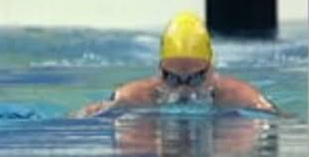
Jamie Cail, a former swimming champion, has passed away at the age of 42 after being discovered unresponsive at her home in the US Virgin Islands. The tragic incident occurred on February 21 when her boyfriend returned home from a bar and found her on the floor. After calling for assistance, her boyfriend and a friend rushed Cail to the Myrah Keating-Smith Community Health Center. Despite efforts to revive her with CPR, she was later pronounced dead. Authorities have launched a criminal investigation into the circumstances surrounding her death.

Cail, originally from New Hampshire, was a standout athlete throughout her high school and college years. She was part of the relay team that clinched a gold medal at the 1997 Pan Pacific Championships, and she later represented the University of Southern California and the University of Maine in swimming competitions.

Her family and friends have expressed deep sorrow following her untimely death. Cail’s father, Gary, shared his devastation on social media, while her cousin, Jessica DeVries, wrote a heartfelt tribute on Facebook, stating the family was “shook to the core” but deeply touched by the outpouring of love and support.

In addition to her family, former teammates have shared moving memories of Cail. Jooyoung Lee, a high school teammate, praised her work ethic and dedication to her sport. “Jamie had an unmatched work ethic,” he said on Twitter. “She left everything in each practice and became a world-class distance swimmer through grit.”

Cail’s untimely passing has left a profound impact on those who knew her, with tributes pouring in from all corners of her life, remembering her not only as a champion in the pool but also as a dedicated and determined individual who inspired everyone around her.

Legal experts and lawmakers seek revisions to the state’s strict abortion ban to address potential court challenges and ensure protections for women’s health.

The Attorney General of Tennessee, Jonathan Skrmetti, has expressed concerns about the state’s current abortion law, prompting increased debate among Republicans over the need for exemptions in one of the strictest bans in the United States. According to House Speaker Cameron Sexton, Skrmetti has advised lawmakers that adjustments to the state’s so-called “trigger” law would provide stronger protection against potential legal challenges. These concerns were echoed by Senator Richard Briggs, who participated in a recent teleconference with Skrmetti and other legislators.

Tennessee’s controversial abortion ban, which came into effect after the Dobbs decision overturned Roe v. Wade, has no explicit exemptions, but includes an “affirmative defense” for doctors. This means that physicians must prove that an abortion was necessary to protect the life of the mother or prevent severe physical harm, placing the burden of proof on the doctor rather than the state.

While Tennessee’s law has yet to face a lawsuit, Skrmetti’s concerns about its vulnerability in court are shared by several lawmakers. Both lawmakers and legal experts have pointed to similar legal battles, such as in Idaho, where a judge blocked a similar “trigger” law. In light of these developments, proposals are emerging to amend the law, including suggestions for extended Medicaid coverage for pregnant women and parents, and potential sales tax breaks for essential baby products.

Briggs, a physician, discussed Skrmetti’s insights during the teleconference, revealing that the Attorney General is focused on clarifying what constitutes a criminal abortion. This focus aims to prevent confusion and ensure proper legal protections for doctors who act within the boundaries of the law. Skrmetti’s office confirmed that the Attorney General has approved an exemption bill focused on protecting the life of the mother, which lawmakers believe will be more defensible in court than the existing law.

Despite the concerns raised by some Republican lawmakers, other prominent figures, including Governor Bill Lee, have defended the current law, stating that the affirmative defense offers adequate protection for both women and the unborn. Lee emphasized that the law safeguards women’s health, even in cases where life-threatening complications arise during pregnancy.

Democratic lawmakers, however, continue to voice strong opposition. Senator London Lamar, who has personal experience with pregnancy complications, argued that the current law could lead to dangerous consequences for women. Lamar warned that the law could cause significant harm to women, particularly those who face life-threatening pregnancy complications.

As the Tennessee legislature prepares to revisit the abortion law, the debate over its impact on women’s health and legal protections remains a deeply divisive issue.

In a remarkable display of resilience, the 35-year-old British tennis star defeats Jiri Lehecka to set up a final clash with Daniil Medvedev.

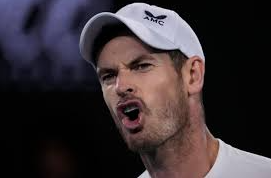
Andy Murray produced a stunning comeback to secure his place in the Qatar Open final, saving five match points to defeat Jiri Lehecka in a thrilling semi-final. The 35-year-old, playing in his first semi-final in eight months, displayed remarkable composure as he triumphed 6-0, 3-6, 7-6, a victory that further emphasised his fighting spirit.

The match began with Murray cruising through the first set, claiming it 6-0 without dropping a game. However, the tide turned as Lehecka found his rhythm, levelling the match and taking a break lead in the deciding set. With Murray serving at 3-5 down, the pressure mounted, and Lehecka had three match points at 40-0. But Murray, who has demonstrated incredible resilience in recent matches, managed to save all three.

The drama continued as Murray broke back and, despite failing to convert his first match point in the tie-break, held his nerve to secure the win at the second attempt after Lehecka missed a volley. This victory sees Murray maintaining a perfect 6-0 record in deciding set matches this year.

In the final, Murray will face Daniil Medvedev, aiming to clinch his first ATP Tour title since 2019. Reflecting on the match, Murray admitted: “That was one of the most amazing turnarounds I’ve had in my career. I knew it was his first time serving for a final, so I had to keep the pressure on at the end.”

Murray’s victory sets up an intriguing final against Medvedev, one of the most in-form players on the circuit. This marks Murray’s fifth appearance in a Qatar Open final, with past victories in 2008 and 2009, although he has yet to win a set against Medvedev in their previous encounters.

The Conservative MP shares her disappointment over not being selected to contest Stafford seat again, along with personal abuse linked to her maternity leave.

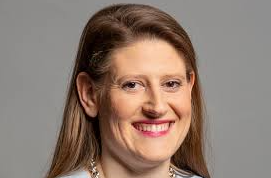
Theo Clarke, a Conservative Member of Parliament, has expressed her profound disappointment after being rejected as the party’s candidate for the newly redrawn Stafford constituency. In a message posted on Twitter following Friday’s selection meeting by the Stafford Conservative Association, Clarke stated that while the committee’s decision was final, she was upset by the personal abuse she had faced since announcing her pregnancy.

Clarke, who recently returned from maternity leave, revealed that some individuals had been critical of her six-month absence from Parliament. She shared the emotional toll of the situation, highlighting how the abuse had made her feel undervalued, despite her record of securing significant investments for the Stafford constituency.

“My record of bringing millions in investment to Stafford, including crucial funding for mental health services and infrastructure, stands as a testament to my hard work,” she said. “I’ve campaigned tirelessly to make Stafford a better place for people to live, work, and raise families.”

The rejection comes as Clarke had hoped to continue her service for Stafford after a significant victory in 2019, where she secured a majority of over 14,000 votes. Clarke’s candidacy in 2015 and 2017 for the Bristol East seat had been unsuccessful, but she ultimately won in Stafford, a constituency she has since worked to improve.

The new boundaries for constituencies, intended to make voter representation more equal, will come into effect for the next general election, expected by January 2025.

In her statement, Clarke further revealed that the abuse she endured, particularly in connection with her pregnancy, had been “disappointing,” as she returned to work this week. “It has been very disheartening,” she added.

Her comments echo broader frustrations within the party, especially in light of the rejection of another senior Tory, Damian Green, for the newly formed Weald of Kent seat. Green, a centrist Conservative and former deputy prime minister under Theresa May, has also faced the fallout from party leadership changes, with some suggesting his rejection was tied to his role in Boris Johnson’s resignation.

Clarke had previously resigned as trade envoy to Kenya in protest against Johnson’s leadership in July 2022, adding a further layer of complexity to her current situation.

The late actor is celebrated for his remarkable career and lasting impact on cinema, with his family and colleagues in attendance at the ceremony.

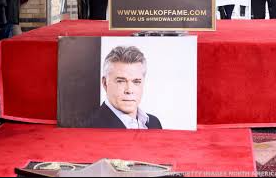
Ray Liotta has been posthumously recognised with a star on the Hollywood Walk of Fame, celebrating his extraordinary contributions to the film industry. The ceremony, held on Friday in Los Angeles, honoured the late actor, known for his unforgettable role in Goodfellas, with friends, family, and colleagues gathering to pay tribute to his legacy.

Liotta, who passed away unexpectedly in May at 67 while filming in the Dominican Republic, was praised for his “unparalleled capacity for vulnerability” and his “charm and mischievousness,” which left a lasting impression on audiences and his peers alike. His illustrious career spanned over 60 films, where he showcased his talent in a wide range of roles, from the comedy Something Wild (1986) to his portrayal of Shoeless Joe Jackson in Field of Dreams (1989), before cementing his place in cinema history as Henry Hill in Goodfellas (1990).

The ceremony, held under the rain, saw emotional tributes from his family, including his daughter Karsen Liotta, who expressed how proud she was of her father’s achievements. “I couldn’t be more proud of him,” she said tearfully. “He was a one-of-a-kind actor, and the best friend, brother, and father anyone could ask for.”

A heartfelt letter from director Martin Scorsese was read aloud, in which he remembered working with Liotta on Goodfellas. Scorsese described him as “one of the greats” and praised his ability to improvise and fit seamlessly into the team. “Ray jumped right in… he never missed a beat,” the director wrote, reflecting on their years of collaboration. “He was truly one of the greats – if anyone deserves a star, it’s Ray.”

Liotta’s recent roles included performances in Marriage Story, No Sudden Move, and the Apple TV series Black Bird, where his “compelling screen presence” was lauded by his co-stars. Taron Egerton, who worked with Liotta on Black Bird, shared how the actor’s vulnerability and depth made an indelible impact on his own career. “When I watch those scenes, I know they are the best acting of my career. That’s because of Ray,” Egerton remarked.

The star, now the 2,749th on the Walk of Fame, is a tribute to Liotta’s legacy in the motion pictures industry. Located at 6201 Hollywood Blvd, in front of Eastown, it serves as a lasting reminder of his talent and the influence he had on the film industry and beyond.

The Indian chart-topping hit takes centre stage alongside musical giants Rihanna and Lady Gaga at the 95th Academy Awards.

The globally acclaimed song Naatu Naatu from the Indian blockbuster RRR has been confirmed as part of the performances at the 95th Academy Awards. The track, nominated for Best Original Song, will compete against powerhouses such as Rihanna’s Lift Me Up and Lady Gaga’s Hold My Hand.

Naatu Naatu, with lyrics by Chandrabose and music by MM Keeravaani, has already gained significant recognition this awards season, winning Best Song accolades at both the Golden Globes and Critics Choice Awards. Known for its infectious energy, the track has captured hearts worldwide and is now set to make history on the Oscars stage.

The Academy previously revealed that all contenders for Best Original Song would be performed live during the ceremony. Among them, Sofia Carson and Diane Warren will deliver Applause from Tell It Like A Woman. The song marks Warren’s 14th Oscar nomination, following her honorary award at the Governors Awards in November 2022.

Rihanna will also perform her poignant song Lift Me Up, created for Marvel’s Black Panther: Wakanda Forever. The track has garnered multiple nominations and is the artist’s first Oscar nod. Her Oscars performance comes just a month after her Super Bowl halftime show, where she announced her second pregnancy.

The 95th Academy Awards, scheduled for 12 March, promises an evening filled with star-studded performances and musical highlights, with more names expected to be announced in the coming weeks.

Colorado leads efforts to challenge industry immunity, with other states following suit in tightening gun laws.

In the wake of increasing mass shootings, lawmakers in Colorado, along with at least five other states, are working to curb the legal immunity that has shielded gun manufacturers and dealers from being held responsible for the misuse of their products. This new legislative push aims to hold the gun industry more accountable for the role it plays in mass violence.

Colorado’s proposed bill, which is expected to be formally introduced Thursday, seeks to repeal a 2000 law that has protected firearm companies from liability for crimes committed with their products. The bill also proposes a code of conduct that targets how firearms are marketed and designed, with particular attention to advertising practices that may appeal to vulnerable groups, such as young men at risk of violence.

The bill draws from recent high-profile cases, such as the 2012 Sandy Hook Elementary School shooting, where families of victims reached a $73 million settlement with the gun manufacturer. In that case, plaintiffs argued that the company’s marketing strategies, which aimed at young, at-risk men, contributed to the tragedy.

If passed, Colorado would join states like California, New York, Delaware, and New Jersey, all of which have recently passed similar laws. However, these states are now facing legal challenges, as a federal law passed in 2005 offers the gun industry broad immunity from lawsuits related to the use of its products.

Gun control advocates, including Ari Freilich from Giffords, argue that this exemption from accountability is unprecedented and harmful, preventing victims of gun violence from pursuing justice. Freilich believes that the new legislation will allow these victims to hold the gun industry accountable for failing to take reasonable precautions in designing and selling firearms.

Mark Oliva, of the National Shooting Sports Foundation, which has launched lawsuits against similar state laws, warns that Colorado’s bill would likely face significant legal challenges. He compares the situation to the case of Coors Brewing Company, arguing that if the beer manufacturer is not held responsible for drunk driving, gun manufacturers should not be held liable for how their customers use firearms.

Despite these concerns, the sponsors of Colorado’s bill argue that it offers some leeway, giving states the power to regulate the gun industry. For example, the bill would prevent companies from marketing firearms in a way that encourages illegal conversions, such as advertising semi-automatic rifles capable of holding large-capacity magazines, which are illegal in Colorado.

The bill also aims to eliminate a provision in Colorado law that requires plaintiffs to pay the defendant’s attorney fees if their case is dismissed. This provision previously led to the financial ruin of two parents of a woman killed in the 2012 Aurora theater shooting.

Rep. Sonya Jaquez Lewis, a Democrat and one of the bill’s sponsors, emphasised the importance of ensuring that victims, including those affected by the Club Q shooting, have access to the legal system. She also stated that the bill would help level the playing field with other industries that do not enjoy the same legal protections as the gun industry.

Supporters of the bill believe that by holding the industry liable, it will create an incentive for companies to better regulate themselves. Rep. Javier Mabrey, another sponsor, argued that civil liability would encourage the gun industry to adhere to existing laws.

However, the bill may face opposition from Republicans in Colorado’s statehouse. Republican Rep. Mike Lynch, the minority leader in the Colorado House, declined to comment on the bill, as he had not seen the draft. Senate President Steve Fenberg expressed support for the bill, stating his excitement about the legislation’s progress.

Governor Jared Polis has yet to publicly state his stance on the bill, leaving uncertainty around the potential for its passage.