



Energy, water, council tax, transport, and broadband costs are all set to rise, adding further strain to residents already struggling with the cost of living.

As April approaches, London residents are bracing themselves for a wave of financial pressures, with multiple bills set to rise across various sectors. From energy and water prices to council tax, transport fares, broadband, and mobile bills, many will see their outgoings increase, adding to the already heavy cost-of-living burden.

The energy price cap is expected to rise by £111 on average, which will increase household energy bills by 6.4% starting April 1. This follows a spike in wholesale energy prices, exacerbated by cold weather and reduced renewable energy generation. Households on standard variable tariffs are advised to explore alternative deals and discounts.

Additionally, water bills for Thames Water customers are set to rise by 31%, with some households facing an annual bill increase of up to £203. Across England and Wales, average water bills will rise by 26%, the most significant hike since the privatisation of the water industry.

Council tax is also going up, with 22 of London’s 33 boroughs seeing band D bills exceeding £2,000. The average increase in council tax across the capital is around £90, with some areas, such as Kingston, experiencing bills approaching £2,500.

Public transport fares are not spared, with Tube and rail fares set to increase by an average of 4.6% in March. While bus and tram fares remain frozen, the increased revenue will be reinvested into Transport for London (TfL) services.

In the telecommunications sector, both broadband and mobile prices are rising, with customers of Vodafone, EE, and Sky facing increases ranging from £1.50 to £4 per month. Sky’s broadband and TV package customers can expect an average hike of 6.2% starting April 1.

Finally, alcohol duties have already seen an increase earlier this month, with new tax structures raising prices on wines and spirits, particularly those with higher alcohol content.

Charities have voiced concern about the combined effect of these price hikes, warning that they will significantly impact vulnerable households, including those with children and those already in debt.
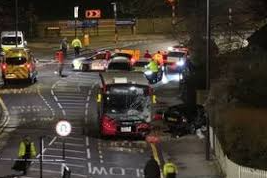

Fatal crash at bus stop leaves one dead, including a child, and raises concerns over dangerous driving

A tragic crash in Harrow, northwest London, has resulted in the death of a woman and left two others injured after a collision involving a London bus and a car. The incident occurred on Bessborough Road at around 9:20pm on Monday, with the victims waiting at a bus stop at the time.

The woman, believed to be in her 40s, was pronounced dead at the scene. Among the injured, a nine-year-old child was rushed to the hospital, though their injuries are not life-threatening. Two other pedestrians were also taken to a hospital, but their conditions are not considered critical.

The driver of the car, who remained at the scene, was arrested on suspicion of causing death by dangerous driving and remains in custody.

Emergency services were quick to respond to the scene, with multiple resources including ambulance crews, paramedics, and a trauma team from London’s Air Ambulance. Sadly, despite the efforts of medical staff, one of the victims could not be saved.

Authorities have appealed to the public for any witnesses or dashcam footage from the incident. Road closures were in place temporarily but have since been lifted as the investigation continues.

Anyone with information is encouraged to contact the police or Crimestoppers.

Residents voice concerns over potential return to Soho’s past, while others support preserving its nightlife identity.

Plans to open a new adult entertainment venue in Soho’s Walker’s Court have sparked controversy, with some residents worried it could revive the area’s former red-light district reputation.

The Penthouse Club, an international chain with locations in the United States, Australia, and Russia, has applied to open at the former Madame JoJo’s site. While the club promises a high-end experience featuring live music, drag acts, and acrobatic performances, its proposed full-nudity striptease shows have drawn criticism.

Opponents argue that Soho’s evolving character now attracts families and tourists, making a late-night adult venue unsuitable. A local resident wrote in an objection letter to Westminster City Council, stating: “Soho is no longer the seedy red-light district of old. Do we really want strip club clientele mixing with families exploring the area?”

Another resident raised concerns about safety, particularly for women walking alone at night. “Soho already feels unsafe in the evenings. Adding a 300-capacity venue where patrons spill out onto the streets at 3 am will only make things worse.”

Despite the backlash, supporters insist Soho is the perfect place for such a venue. A resident in favour of the proposal commented: “This club could help protect the unique nightlife culture that makes Soho famous, especially in an era of increasing gentrification.”

The club’s president, Caroline Kirkendoll, defended the project, highlighting an £8 million investment into an empty building. She emphasised that the club would host diverse events beyond traditional strip performances.

Under the proposed licensing terms, full nudity would be restricted to private VIP rooms, while topless and semi-nude performances would be allowed on the main stage and at tables.

Westminster Council is set to review the application in a Thursday morning hearing, where the future of this controversial Soho venue will be decided.

Neighbours divided as furniture and exercise equipment take over common walkway.

A resident’s decision to fill a shared corridor with personal belongings has stirred debate online, with opinions split between resourcefulness and selfishness.

A social media post featuring images of a residential corridor cluttered with furniture, plants, and gym equipment asked whether the resident was making smart use of the space or unfairly occupying a communal area. The discussion quickly gained traction, drawing mixed reactions.

The post described how some viewed the resident’s actions as harmless, praising the creative use of otherwise empty space. Others, however, criticised it as inconsiderate, arguing that shared areas should not be monopolised and raising concerns over fire hazards and blocked access panels.

One commenter, taking a light-hearted approach, remarked: “I don’t mind, as long as I can do the same without complaints.” However, a community enforcement officer had a firmer stance: “If it violates SCDF regulations, it should be removed immediately.”

Others compared the situation to panic buying, where one person’s advantage leads to scarcity for others. “This space should be for everyone. By taking over, the resident creates an unfair situation where only they benefit,” another commenter wrote.

Safety concerns were also raised. “A table blocking maintenance access is a problem. A cupboard in a shared walkway could become a fire hazard. If this is allowed, what stops others from doing the same?” one user pointed out.

Despite the heated discussion, some questioned whether the resident’s actual neighbours had raised complaints. “If those living there have no issue with it, does it really matter what outsiders think?”

The debate highlights a broader question: where do we draw the line between personal convenience and respect for shared spaces?

Renowned Chef Complains About Couples Using Restroom as a “Mile High Bathroom”

Gordon Ramsay has shared a lighthearted but surprising problem he’s faced since opening his new restaurant, Lucky Cat, in London’s tallest office building at 22 Bishopsgate. Despite the venue’s sleek Asian-inspired menu and panoramic city views, Ramsay has encountered an issue that he hadn’t anticipated when starting the business.

During an appearance on ITV’s The Jonathan Ross Show, the famous chef revealed that the restaurant’s luxurious toilets have become a hotspot for amorous couples. “We’ve got a problem with the toilets,” Ramsay explained. “There are lots of couples going in there and treating it like the ‘mile high’ bathroom.”

However, the amorous behaviour is not the only thing troubling Ramsay. He also expressed frustration over the restaurant’s lucky cat statues, which have been disappearing at an alarming rate. “The cats are getting stolen. There were 477 stolen last week – they cost £4.50 each!” he lamented.

Ramsay’s appearance on the show also saw him share a funny incident involving a fan, who gave him a backhanded compliment. “A lady said to me ‘you look so much better in real life and so much taller’,” Ramsay chuckled.

As the father of six, Ramsay also discussed his family life, including the prospect of more children with his wife, Tana. With their eldest child now 26 and their youngest just 14 months, Ramsay hinted that their family might be complete. “I’d like to think so, yes,” he laughed.

On a happier note, Ramsay revealed that his daughter Holly is preparing for a “Christmas wedding” to Olympic swimmer Adam Peaty. Ramsay praised Peaty, saying, “He’s so grounded. Those two get on so well. It’s a blessing.”

Julia Wandel Accused of Disturbing the Family Through Multiple Unwanted Contacts

A 23-year-old Polish woman, Julia Wandel, has been charged with stalking the family of missing British girl Madeleine McCann, after repeatedly making unwelcome contact with them, including sending messages, voicemails, and even appearing at their home. Wandel, who claims to be Madeleine, is accused of causing serious distress to the McCann family over the past year.

Between May 2022 and February 2025, Wandel allegedly engaged in persistent harassment, including turning up at the McCann family home and sending letters, making phone calls, and leaving voicemails. She is also accused of contacting Madeleine’s siblings, Amelie and Sean, and attempting to interact with them via WhatsApp and Instagram.

The court heard that Wandel travelled from Poland to attend an annual vigil for Madeleine in August 2024. During this visit, she allegedly delivered a handwritten letter to the family. The prosecutor stated that Wandel had become obsessed with the idea of being the missing girl, even requesting a DNA test from the family.

Wandel was arrested upon her arrival at Bristol Airport on Wednesday. A 60-year-old friend, who was with her, was also detained in connection with the stalking case but has been released on bail. Both arrests were carried out by Avon and Somerset Police on behalf of Leicestershire Police, who are investigating the case.

Wandel appeared in court for the first time on Friday and was remanded in custody. She faces charges related to stalking offences occurring in various periods from May 2024 to December 2024. The next court hearing will be held on April 7, 2025, at Leicester Crown Court.

Madeleine McCann, who disappeared in May 2007 while on holiday in Portugal, remains one of the most high-profile missing person cases in the UK.

New Initiative Aims to Improve Transparency and Reliability in the Building Industry

The Master Builders Association Singapore (MBAS) has unveiled a new certification initiative designed to help property owners identify reliable builders. The Certified BuildTrust Manager emblem, alongside an online directory, will serve as a quality assurance measure, ensuring that construction professionals meet industry standards.

With concerns over workmanship and accountability in the building sector, MBAS aims to increase transparency by providing property owners with a verified list of professionals. The Certified BuildTrust Manager title will be awarded to builders who demonstrate compliance with rigorous quality and ethical standards.

Through the newly launched online directory, property owners can conveniently search for certified builders, making it easier to engage trusted professionals for their projects. The certification process includes thorough assessments, background checks, and adherence to safety and industry regulations.

MBAS emphasised that the initiative is part of a broader effort to elevate industry professionalism and strengthen consumer confidence. By enabling homeowners and businesses to make informed choices, the BuildTrust certification seeks to foster a more accountable and high-quality construction landscape in Singapore.

Dr Ang Expresses Sadness as He Vacates Premises After Nearly Two Decades of Practice

Psychiatrist and politician Dr Ang Yong Guan has announced the closure of his clinic at Paragon Medical Singapore, where he has treated patients since 2005. In a video posted on Monday (Feb 17), Dr Ang shared that he was vacating the clinic after nearly two decades, having provided psychiatric care to around 7,000 individuals.

His departure follows a ruling by the Court of Three Judges on Feb 5, which imposed a three-year suspension for exceeding prescribed medication dosage limits in a past case. Despite this, Dr Ang revealed that the Singapore Medical Council has yet to confirm when the suspension will officially commence. Until then, he intends to continue seeing patients at his Novena Medical Centre practice for a few more weeks.

“It’s a difficult moment, but life must go on. I deeply appreciate the support from everyone over the years,” he said, reflecting on his clinic’s closure.

Aside from his medical career, Dr Ang has been active in politics. He was Head of Training and Development for the Progress Singapore Party from 2020 to 2023 and later became its Second Assistant Secretary-General in April 2023. Previously, he was affiliated with the Singapore Democratic Party in 2011 and SingFirst in 2014. Over the years, he contested multiple General Elections, including in Holland–Bukit Timah GRC, Tanjong Pagar GRC, and Marymount SMC, where he narrowly lost in 2020.

Dr Ang’s public service extends beyond politics. He was awarded the Public Service Medal in 1995 for his contributions as a community leader in Kembangan, working alongside former MP George Yeo for 15 years. A former colonel in the Singapore Armed Forces, he also received the Public Administration Medal in 1996. Before retiring from military service in 2003, he served as the Chief Psychiatrist of the SAF’s Psychological Medicine Branch.

Legal Case and Suspension
Dr Ang’s legal troubles stem from a case dating back to 2012, involving a patient, Quek Kiat Siong, who died of multiple organ failure four days after receiving a prescription that exceeded recommended dosage limits. The patient had been undergoing treatment for conditions such as depression, anxiety, PTSD, and insomnia.

At the time, Dr Ang prescribed 60mg of Mirtazapine and 25mg of Zolpidem Controlled Release per day—both exceeding the respective maximum dosages of 45mg and 12.5mg.

Initially, a disciplinary tribunal convened by the Singapore Medical Council imposed a two-year suspension, which was appealed by both Dr Ang and the SMC. The Court of Three Judges later found him guilty of three counts of professional misconduct and increased his suspension to three years, finalising the decision on Feb 19.

As Dr Ang prepares to step away from his long-standing medical practice, his case continues to spark discussions about professional accountability in Singapore’s healthcare sector.

Majority of Local Authorities Set to Raise Taxes by Near Maximum Allowed Without Referendum

The vast majority of councils in England are planning to impose a near-maximum increase in council tax this year, with most opting for a 4.99 per cent rise. Data from 139 top-tier local authorities indicate that nearly 90 per cent will apply this increase, while a handful have been permitted to exceed the usual cap due to severe financial challenges.

Among those facing steeper increases, Somerset has been authorised to raise council tax by 7.5 per cent, while Birmingham and Trafford have received approval for 7.49 per cent. Newham and Windsor & Maidenhead stand out with planned hikes of 8.99 per cent.

Only 15 councils have proposed smaller increases, with Wandsworth at the lowest rate of 2 per cent, maintaining its position as one of the least expensive areas for council tax in the country. Other councils opting for more modest rises include Rotherham (3 per cent), Essex (3.75 per cent), and Doncaster (3.99 per cent).

Despite the widespread increases, experts and local leaders have raised concerns over the fairness of the council tax system. Martin Hill, leader of Lincolnshire County Council, which proposed a 2.99 per cent rise, criticised the disparity in tax-setting rules, saying: “We have always managed our finances responsibly, yet some councils receive permission to raise taxes beyond the threshold while we continue to operate within our means.”

The government’s financial projections assumed that all councils would raise tax by 4.99 per cent, contributing to an estimated 6.8 per cent overall increase in council spending power for 2025-26. However, some critics argue that the poorest households bear a disproportionate burden.

Analysis from the Resolution Foundation reveals that the lowest-income households now spend an increasing share of their income on council tax—4.8 per cent in 2020-21 compared to 2.9 per cent in 2002-03. This is significantly higher than the 1.5 per cent paid by the wealthiest fifth of households.

The current council tax framework, based on outdated property valuations from 1991, has long been criticised for being inefficient and unfair. Lalitha Try, an economist at the Resolution Foundation, described the tax as “flawed” and argued that it increasingly resembles the poll tax it was designed to replace.

As councils finalise their budgets, the impact of these tax increases on households and local economies remains a pressing concern, with many calling for urgent reforms to the system.

Government’s Choice to Prioritise Credits Over Direct Cash Assistance Divides Public Opinion

Singapore’s Prime Minister Lawrence Wong delivered his first Budget statement on 18 February, outlining key measures such as increased support for skills development, expanded financial incentives for families, and major investments in infrastructure and research. However, much of the public discourse ahead of the announcement centred on whether direct cash payouts would be included, especially with a general election on the horizon.

Rather than large cash disbursements, the Budget introduced a variety of credits under schemes like ActiveSG, LifeSG, SG Culture Pass, and the Climate Voucher programme. Additional financial assistance will come in the form of Edusave and Medisave top-ups, personal income tax rebates, and utility bill discounts.

A notable component of the Budget is the SG60 Vouchers, with every Singaporean receiving $600, while seniors will get an extra $200. In addition, all households will be granted $800 in Community Development Council (CDC) vouchers. The only direct cash payout will come via the GST Voucher scheme, with eligible individuals receiving either $450 or $850 in August 2025.

This approach has sparked significant discussion online, with some Singaporeans expressing frustration over the preference for vouchers instead of cash. Many argue that cash would provide greater flexibility in addressing rising living costs, whereas vouchers restrict spending to specific merchants and services.

One Facebook user, Sky Tan, commented, “Why not just give cash? Too many restrictions.” Another, Kamen Augustine Tan, added, “Cash is better than all these vouchers.” Others pointed out the inconvenience of finding businesses that accept CDC vouchers, questioning why unrestricted financial aid was not provided.

Some netizens also speculated that, given this is an election year, they had anticipated a more generous payout. Facebook user Ismail Ismael remarked, “I was expecting $2,000—this amount feels like peanuts.” Another, Edward Sim, referenced a local saying, warning that pre-election benefits could be followed by post-election cost increases: “We get the chicken drumsticks now, but they’ll take back the whole chicken farm later.”

While some voiced disappointment, others defended the government’s strategy, arguing that vouchers ensure targeted assistance while simultaneously supporting local businesses. Several commenters urged critics to consider the long-term benefits of the Budget rather than focusing solely on immediate financial relief.

As Singapore moves closer to the general election, Budget 2025 has ignited a lively debate about the balance between immediate cost-of-living relief and long-term national economic stability. Whether this approach will win public approval remains to be seen in the months ahead.