


Planned industrial action will severely affect train services, leaving London and other areas facing chaos.

London and parts of the UK are bracing for significant travel disruption as train strikes over pay disputes take place this weekend. The industrial action begins on Friday with train drivers from the ASLEF union walking out, followed by a separate strike by RMT members on Saturday.

The strikes are expected to cause severe disruption, with major rail operators either cancelling or limiting services. Southeastern Trains, which connects London to Kent and East Sussex, has announced it will not run any services on Friday, and only 58 out of 180 stations will be operational on Saturday, with Kent services restricted to Sevenoaks and Dartford.

Southern, which operates services from London to the South Coast, will also suspend operations on Friday and offer reduced services on Saturday, with many trains running shorter hours. Transport for London has confirmed that parts of the Elizabeth Line, London Overground, and the District Line will experience disruptions throughout the weekend.

Adding to the travel chaos, the northbound A12 will be closed between junctions 12 and 15 from Friday evening to Monday morning for improvement works. National Highways has apologised for the timing but said the work is necessary to minimise future disruptions.

Air travel is also impacted, with Gatwick Express cancelling its services on Friday and offering limited operations on Saturday. Avanti West Coast, which connects London to the North, has warned passengers of reduced service availability. This includes trains to Liverpool, where the Eurovision Grand Final is taking place, which will run at only two-thirds capacity.

Richard Burge, Chief Executive of the London Chamber of Commerce and Industry, criticised the strikes, calling them a “lose-lose situation” for the economy. “London’s reputation as a global destination depends on its functioning transport network,” he said, urging unions and employers to resolve the issue quickly.

ASLEF General Secretary Mick Whelan defended the strike, blaming the employers’ refusal to negotiate fair pay deals. He noted that while agreements had been reached with some operators, many are constrained by the Department for Transport.

The Rail Delivery Group, representing train companies, apologised for the disruption but criticised the strikes’ timing, particularly with Eurovision and the FA Cup final approaching. Passengers have been advised to check schedules in advance and apply for fee-free refunds if their tickets are affected.

Further strikes are planned for May 31 and June 3, ensuring ongoing disruption unless negotiations between unions and operators progress.

The government’s move adds to its crackdown on opposition groups, religious orders, and civic organisations amid growing international condemnation.

Nicaragua’s government has passed a law ordering the closure of the Red Cross, marking a significant escalation in its crackdown on civil society organisations. This latest move follows the closure of numerous charities, religious orders, and non-governmental groups critical of the government.

The Nicaraguan legislature, controlled by President Daniel Ortega’s Sandinista party, accuses the Red Cross of contributing to unrest during the 2018 anti-government protests. The Red Cross has defended itself, stating that it merely provided medical aid to the injured during the demonstrations.

As part of the new legislation, the government has directed the Health Department to establish a “new Nicaragua Red Cross,” although the financial feasibility of this plan remains unclear. The existing Red Cross, which has operated since 1958 and is funded by domestic donations, will have its assets seized and transferred to the state.

The 2018 protests resulted in the deaths of at least 355 people, with many more injured, according to human rights organisations. Since then, the Ortega government has been on a mission to silence dissent, jailing or forcing into exile nearly all of the country’s organised opposition. More than 3,000 civic organisations and NGOs have been outlawed or shut down, many of which were involved in providing essential services such as healthcare in one of the region’s poorest countries.

In addition to the Red Cross, the government has also targeted other civic institutions, including the 94-year-old Nicaraguan Academy of Letters and an equestrian centre. Ortega’s administration has accused these organisations and activists of colluding with foreign powers to destabilise his government.

The crackdown has extended beyond secular groups, with the Vatican recently closing its embassy in Nicaragua following the government’s proposal to sever diplomatic ties. Last year, two orders of Catholic nuns, including the Missionaries of Charity, were expelled, and prominent Bishop Rolando Álvarez was sentenced to 26 years in prison after refusing to board a flight that would have sent him into exile.

Álvarez was also stripped of his Nicaraguan citizenship as part of the government’s broader efforts to silence opposition voices.

The New York congressman faces serious federal charges but insists he will fight and continue his re-election campaign.

Following his arrest on federal charges, George Santos, the Republican congressman from New York, has categorically dismissed the accusations as a “witch hunt” and vowed to continue his political career.

Santos, 34, was arrested on Wednesday morning and arraigned on charges including fraud, theft of public funds, and money laundering. Speaking to the media outside a federal courthouse, he expressed his intention to clear his name.

“It’s a witch hunt,” Santos said defiantly. “I’m going to fight my battle. I’ll fight this witch hunt, and I’m going to take care of clearing my name. I’m going to run for re-election.”

The charges against Santos stem from a series of allegations related to his congressional campaign. Federal prosecutors claim that Santos falsified financial disclosure forms and used political donations for personal expenses, including luxury items and credit card payments. They also allege that he engaged in an unemployment insurance fraud scheme before his successful election campaign.

Santos, who represents New York’s 3rd District, faces up to 20 years in prison if convicted. The 13-count indictment, unsealed on Wednesday, highlights a pattern of dishonesty, with prosecutors accusing Santos of using deception to secure his seat in Congress and to enrich himself.

A New York Times investigation revealed numerous fabrications about Santos’s personal life, including false claims about his education, employment history, and involvement in charity work. The revelations have sparked local protests calling for his resignation, with many Republicans urging him to step down. However, Republican leaders, including House Speaker Kevin McCarthy, have shown reluctance to take action, leaving his future in Congress uncertain.

Despite the growing pressure, Santos maintains his innocence and has refused to resign. He was released on a $500,000 bond after his arraignment and is expected to face trial in the coming months.

The charges are part of a broader scrutiny of Santos’s conduct since his election in November 2022, including past allegations of writing bad checks for purchasing puppies.

New therapy shows promise in helping allergic toddlers tolerate peanuts safely.

A novel skin patch therapy could become a game-changer for toddlers with severe peanut allergies, showing potential to train their bodies to handle accidental exposure safely.

Peanut allergies, among the most dangerous and common food allergies, leave families of allergic children in constant vigilance against triggers that could lead to severe or even life-threatening reactions. Currently, no cure exists, and available treatments are limited to older children consuming controlled doses of peanut powder.

The Viaskin patch, developed by DBV Technologies, seeks to deliver a similar desensitisation therapy through the skin. In a major study involving toddlers aged 1 to 3, the patch enabled children previously unable to tolerate even trace amounts of peanut protein to safely ingest small quantities after a year of use.

“This could address a significant unmet need,” said Dr. Matthew Greenhawt, an allergist at Children’s Hospital Colorado and a co-lead researcher on the study.

The patch works by delivering small doses of peanut protein through the skin. It’s worn daily on the upper back, out of reach of curious toddlers. In a trial of 362 participants, about two-thirds of those using the Viaskin patch were able to tolerate the equivalent of three to four peanuts after 12 months, compared to a third of children using placebo patches.

Despite its promise, the treatment isn’t without risks. Four participants experienced severe allergic reactions, including three who required epinephrine. Skin irritation at the patch site was the most common side effect.

Published in the New England Journal of Medicine, the study has been hailed as a significant step forward. “These results offer hope for families navigating the challenges of peanut allergies,” wrote Dr. Alkis Togias of the National Institutes of Health in an editorial accompanying the research.

Experts caution, however, that oral and skin-based therapies might serve different roles, with oral treatments potentially offering stronger desensitisation but at a higher risk of side effects. Further research is needed to compare their long-term efficacy and safety.

DBV Technologies has faced challenges in bringing the patch to market. The U.S. Food and Drug Administration recently requested additional safety data for toddlers, and a separate long-term study is underway. Trials are also being conducted for children aged 4 to 7.

Deputy Premier dismisses reliance on RAF and emphasises national defence capacity improvements.

Ireland’s Deputy Premier, Micheal Martin, has refuted claims that the country relies on the RAF for airspace defence, asserting that Irish skies are not patrolled by the UK’s Royal Air Force.

Addressing recent reports of a longstanding defence arrangement between the UK and Ireland, Mr Martin described the claims as inaccurate, particularly concerning airspace interdiction. Speaking ahead of a conference for Irish soldiers, he stressed that all agreements entered into by the Irish government align with national sovereignty and military neutrality.

“We’re not relying on the RAF, as some reports suggest,” Mr Martin clarified. “Our capacity is limited, but efforts are underway to enhance it over time. Perspective and calm are necessary when discussing national security.”

When questioned about previous statements by the British Secretary of State indicating RAF presence in Irish airspace, Mr Martin acknowledged rare occurrences in the past but insisted such instances were exceptional and should not fuel alarm. He also downplayed concerns about Russian naval activities near Ireland, stating that monitoring operations have been ongoing for decades.

In response to criticism portraying Ireland as Europe’s weakest link in defence, Mr Martin expressed impatience with such language. He highlighted ongoing investments in defence capabilities, including radar systems and naval assets, as recommended by the Commission on Defence Forces report. “Let’s approach this with realism,” he said. “The entirety of Europe isn’t relying on us for its security.”

Speaking at the Annual Delegate Conference of the Permanent Defence Force Other Ranks Representative Association (PDFORRA) in Co Meath, Mr Martin announced enhanced starting pay for personnel and new healthcare provisions. These measures were welcomed by Lieutenant General Sean Clancy, Chief of Staff of the Defence Forces, who emphasised the importance of health and wellbeing for military personnel.

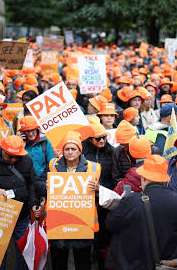
Simultaneous action by nurses and junior doctors could compromise patient safety, warns NHS Confederation chief.

The NHS faces potential disruption if junior doctors and nurses coordinate strikes, with a health leader warning that such action could make maintaining patient safety “incredibly difficult.”

Matthew Taylor, chief executive of the NHS Confederation, told MPs that simultaneous walkouts by the Royal College of Nursing (RCN) and British Medical Association (BMA) would leave the health service struggling to uphold patient care. While no joint strike is currently planned, the warning follows ongoing disputes over pay.

Sir Julian Hartley, chief executive of NHS Providers, echoed these concerns, noting that co-ordinated strikes would significantly limit the options available to NHS managers for mitigating disruption. Despite these challenges, Hartley stated that there is no evidence linking past strikes to patient deaths, though delays in care during industrial action carry inherent risks.

The RCN recently announced plans to ballot members for a further six months of industrial action after rejecting a government pay offer. Voting will take place between 23 May and 23 June, with at least 50% turnout required to authorise strikes. Meanwhile, the BMA’s junior doctors, whose mandate extends until August, have staged two strikes involving approximately 47,000 members.

RCN General Secretary Pat Cullen reiterated that the union has “no plans in place” to coordinate strikes with the BMA. However, Dr Arjan Singh, from the BMA’s junior doctors committee, has refused to rule out the possibility, stating that “all options are on the table.”

Cullen urged the government to improve its pay offer, emphasising the importance of resolving the dispute to prevent further industrial action. She expressed hope for a resolution, stating: “If we get a resolution to the current dispute, our nurses wouldn’t have to take to the picket lines again.”

While the BMA’s representatives described recent negotiations with Health Secretary Steve Barclay as “painfully slow,” they noted progress and expressed cautious optimism about the ongoing talks.

Patients advised to replace Emerade pens due to potential activation issues.

The Medicines and Healthcare products Regulatory Agency (MHRA) has issued an urgent recall for Emerade 300 and 500 microgram adrenaline auto-injector pens, citing potential faults that could cause failure to activate or premature activation if dropped.

Patients and their carers are instructed to immediately contact their GP to obtain a prescription for alternative brands such as EpiPen or Jext before returning Emerade pens to their local pharmacy. Pharmacies can assist with the prescription process and supply of replacement pens.

According to MHRA data, Emerade pens were prescribed over 20,000 times in England between March 2022 and February 2023. The regulator highlighted that replacement brands may have different usage instructions, so patients should familiarise themselves with the new pens.

The recall follows the manufacturer’s design assessment, which detected that some pens may fail to deliver adrenaline or activate prematurely due to internal component damage caused by being dropped. Additionally, exposure to temperatures above 25°C can increase the risk of pen failure, prompting the MHRA to advise against storing pens near radiators or fires.

Dr Alison Cave, the MHRA’s Chief Safety Officer, emphasised the importance of patient safety: “This precautionary recall is essential to protect patients after detecting potential damage to internal components. We urge all patients to follow guidance and ensure they carry two adrenaline pens at all times.”

The Department of Health and Social Care has confirmed sufficient supplies of alternative pens are available across the UK. Patients are reminded to consult their healthcare provider promptly to secure replacements and ensure continuity of emergency anaphylaxis treatment.

The coronation at Westminster Abbey will combine centuries-old rituals with a reflection of modern diversity.

King Charles III is set to be crowned in a grand ceremony at Westminster Abbey, presided over by the Archbishop of Canterbury, Justin Welby. The coronation, steeped in tradition, will culminate in the placing of St Edward’s Crown on the King’s head, followed by the resounding cries of “God Save the King” echoing through the abbey.

On the eve of the event, Archbishop Welby described the coronation as “a profound celebration of who we are today in our wonderful diversity,” combining “majesty and sacred wonder” with a message of “ancient wisdom and new hope.”

The event will host around 100 heads of state, members of royal families worldwide, and notable public figures, including David and Victoria Beckham, musician Lionel Richie, French President Emmanuel Macron, and US First Lady Jill Biden. President Joe Biden will not attend. Celebrities and invited guests will join everyday heroes and close family members, including Prince Harry, in the historic celebration.

In addition to the ceremonial splendour, the day will feature an extraordinary display of military pageantry. Over 9,000 servicemen and women will participate, with 7,000 performing ceremonial roles, making it the largest military operation since Queen Elizabeth II’s 1953 coronation. The King and Queen will process through London streets in a spectacle promising unforgettable grandeur.

A surprise walkabout on The Mall on Friday saw a relaxed King Charles accompanied by the Prince and Princess of Wales. Kate described the coronation as “a wonderful moment for celebration,” sharing that her children were “excited, though a bit nervous, for the big day ahead.”

Security for the event, under the codename Golden Orb, will involve 11,500 police officers, heightened following a security incident near Buckingham Palace earlier in the week.

For the first time, representatives of the nation’s faith communities will actively participate in the coronation, reflecting the diversity of contemporary Britain. The ceremony will include contributions in Welsh, Scottish Gaelic, and Irish Gaelic, and female bishops will be involved for the first time.

However, one element—the “homage of the people,” inviting viewers to pledge allegiance to the King—has sparked controversy. Broadcaster Jonathan Dimbleby, a close friend of Charles, remarked that the King might find this aspect “abhorrent.”

Archbishop of Canterbury highlights the historic and inclusive nature of the event.

The Archbishop of Canterbury has described the coronation of King Charles III and Queen Camilla as “a profound celebration of our nation’s diversity,” blending tradition, joy, and historic significance.

Ahead of the ceremony, Most Revd Justin Welby emphasised the event’s dual nature as both a spiritual reflection and a moment of national unity. He stated, “This coronation is a beautiful and historic occasion, filled with sacred wonder and an invitation to embrace new hope.”

The Archbishop will lead the service, including the significant task of anointing and crowning the King and Queen during the globally televised event. For the first time, representatives from the country’s diverse faith communities will actively participate. Sikh, Hindu, Muslim, and Jewish peers will present items of regalia that lack Christian symbolism, marking a significant step toward inclusivity.

Other groundbreaking elements include the use of Welsh, Scottish Gaelic, and Irish Gaelic in the ceremony, as well as the “Homage of the People,” inviting viewers worldwide to swear allegiance to the King. Faith leaders from Jewish, Hindu, Sikh, Muslim, and Buddhist communities will jointly deliver a message to the King in the Abbey following the service.

Reflecting on the ceremony’s broader significance, Archbishop Welby remarked, “The coronation connects us to our Christian heritage, from the sacred anointing ritual to the use of the sixth-century St Augustine Gospels, uniting us with our national story.”

King Charles III will become the 40th monarch crowned at Westminster Abbey, continuing a tradition dating back to William the Conqueror in 1066. The ceremony will see the iconic St Edward’s Crown placed upon his head, symbolising his role in the nation’s history.

The Archbishop also called on people to reflect during the occasion, stating, “This is not merely a moment of history. It is an opportunity to hear words of hope and to consider how we, like the King and Queen, can dedicate our lives to the service of others.”

He concluded, “I pray this event inspires us to recognise the beauty in our diversity and embrace both ancient wisdom and the promise of the future, united in purpose and hope.”

The Prime Minister calls the Westminster Abbey ceremony a moment of hope and national pride.

Prime Minister Rishi Sunak has described the coronation of King Charles III and Queen Camilla as more than a “spectacle,” calling it a “proud expression” of Britain’s rich history and cultural heritage.

Speaking ahead of Saturday’s event at Westminster Abbey, Mr Sunak emphasised that the occasion is an opportunity to reflect on the monarchy’s enduring commitment to duty and service, while also inspiring hope for the future.

“The coronation of King Charles III and Queen Camilla is a moment of extraordinary national pride,” he stated. “Joined by friends from the Commonwealth and beyond, we will honour the constancy and dedication that define our great monarchy. This is not just an event; it’s a celebration of our history, traditions, and the modern character of our nation.”

For the first time in the Abbey’s near-thousand-year coronation history, representatives of all faiths will take central roles in the ceremony, underscoring the inclusivity of today’s Britain.

The Prime Minister also highlighted the spirit of service exemplified by the thousands of acts of kindness planned by people across the UK during the coronation weekend, describing it as a fitting tribute to the Carolean era’s ethos.

“Let us celebrate with pride in our identity and values, look to the future with optimism, and create memories to share with future generations about the day we united to sing God Save The King,” Mr Sunak added.