



Rani Soetjiati Faces Unbearable Medical Costs Following Devastating Health Setback

A family in Singapore is reaching out for assistance after their beloved 92-year-old grandmother, Rani Soetjiati, suffered a severe stroke that has left her unable to speak or move. Once a pillar of strength and support for her family, Rani now finds herself in urgent need of care, and her relatives are struggling to meet the growing medical expenses.

Rani, who moved to Singapore decades ago, has always been the heart of her family, providing love and support without hesitation. Despite her own health issues as she grew older, she continued to selflessly care for others. However, as a long-term visit pass holder and not a Singapore citizen, Rani is ineligible for most local financial aid programmes, leaving her family in a state of heartbreak.

On February 5, 2025, Rani was admitted to Changi General Hospital for what was initially thought to be a mild lung infection. Unfortunately, her condition took a turn for the worse. On February 8, her family received the devastating news that she had suffered a major stroke. The cause of the stroke remains unclear, but it has left Rani requiring full-time care in a geriatric ward after being transferred from the Acute Stroke Unit.

The family’s financial strain has been exacerbated by rapidly accumulating medical bills, now amounting to S$42,000 and expected to exceed S$80,000. Prior to her stroke, Rani had been hesitant to seek medical treatment due to the financial burden it would place on her family, often expressing concerns about the high costs of healthcare. Despite efforts to secure permanent residency for Rani, delays and eventual rejection have left her without access to any government financial assistance.

To help cover her medical expenses, the family is urgently seeking donations. Every penny raised will go directly towards her hospital bills and ensuring that Rani receives the necessary care in this critical time. Donations will be managed by Give.Asia and paid directly to the hospital to support her ongoing treatment.

Workers’ Party Chair Regrets the Transfer of Voters to Tampines GRC in Electoral Review

Sylvia Lim, the chair of the Workers’ Party (WP), has expressed her disappointment with the recent boundary adjustments to Aljunied GRC, as outlined in the Electoral Boundaries Review Committee (EBRC) report published on March 11. The changes, marking the first realignment in over a decade, will see three polling districts from Tampines West, with a total of 3,834 voters, moved from Aljunied GRC to the People’s Action Party-held Tampines GRC.

Describing the shift as “a pity,” Lim reflected on the connection WP MPs had forged with the residents in the affected areas. “Just last month, we had a tea event with these residents and were looking forward to continuing to serve them,” she told Channel 8 News. “Now, it’s unfortunate that we have to pass on the work we’ve done to Tampines GRC.”

In response to the changes, the Workers’ Party issued a statement acknowledging the “significant changes” to the constituencies it has been actively involved in. While the WP recognised the reasoning behind the boundary adjustments, it did not elaborate on the potential impact of these alterations on its election strategy.

Although the party has yet to reveal which constituencies it intends to contest in the next general election, it assured that more details would be disclosed in the near future.

Harris Hawk Responsible for Over 20 Attacks in Two Weeks, Leaving Victims with Bloody Injuries

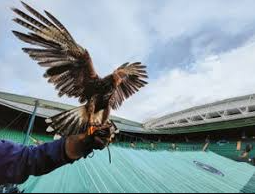
A Harris hawk has been causing chaos in the village of Flamstead, Hertfordshire, where it has been attacking the heads of tall men. Over the past fortnight, the bird, native to South America but sometimes kept in the UK, has been responsible for around 20 incidents, each one leaving its victims with injuries.

The hawk’s unusual behaviour has left residents and professionals alike puzzled. On one occasion, 68-year-old Roy Lambden was struck while walking, only realising he had been hit by a bird when he noticed it flying away. “I felt a whack on my head and saw blood,” Lambden recounted. “It was one of the first attacks, and since then, 20 others I know have been attacked. My bald friend now has two scars from it.”

The hawk has become a local nuisance, with the local zoo in Whipsnade confirming that the bird is not one of theirs. As the hawk’s whereabouts remain unknown, residents are left wondering where it has come from. One local, Paul Boys, 64, has resorted to wearing a hat to protect himself, after being attacked while gardening.

Neighbouring police have stated that the bird appears to favour taller individuals, with most reports coming from men aged between 40 and 60. The situation has prompted local authorities to seek advice from organisations like the RSPB and the British Bird Council, as the bird’s unpredictable behaviour continues to cause concern.

While the Harris hawk is highly intelligent and used in falconry to clear pigeons from public spaces, such as at Wimbledon, its recent attacks on humans are unusual. It is advised that residents do not feed the bird, as it may perceive people as threats.

Unexploded WWII Bomb Disrupts Train Services, Leading to Special Flight for Designers and Stylists

Paris Fashion Week, which concluded with dazzling shows from Miu Miu and YSL, was marred by a transportation crisis last Friday due to an unexploded World War II-era bomb near Gare du Nord. This discovery caused the cancellation of all 32 scheduled trains between London and Paris, leaving many fashion professionals stranded.

Among the events missed by those affected was Sarah Burton’s debut at Givenchy, but there was still hope for reaching Victoria Beckham’s show later that day. British Airways came to the rescue with an emergency flight, dispatching a Boeing 787-9 Dreamliner, which is usually reserved for long-haul flights, to transport those who needed to get to Paris.

This special “fashion jet” was a true luxury, offering First Class cabins for the passengers—designers, stylists, and other industry professionals—who had been impacted by the disruption. One passenger described the flight as “ginormous” and “fabulous,” with 45 minutes in First Class making for an enjoyable experience despite the chaotic circumstances.

With the flight lasting just long enough to get up to altitude before turning back, the passengers were greeted with familiar faces, including renowned designer S.S. Daley. Some were still disgruntled by the delay, but others took it in stride, sharing a laugh over the exclusive nature of the flight.

Many attendees managed to make it to Victoria Beckham’s show that evening, some even arriving with their suitcases in tow. The jet was a lifeline for those determined to attend the event, showcasing how British Airways stepped in to support the fashion industry during a time of crisis.

Captain’s Airbus A320 comes dangerously close to disaster over Egypt’s Red Sea resort

A captain at EasyJet has been suspended after a harrowing incident in which his Airbus A320 came perilously close to crashing into a mountain in Egypt. Captain Paul Elsworth’s aircraft, carrying 190 passengers and crew, was descending towards Hurghada, a Red Sea resort, when it flew dangerously close to a 2,329ft peak, just 770ft away from potential disaster, according to reports.

The incident, which occurred on February 2, prompted the aircraft’s ground proximity warning system to activate, alerting the crew with a “Pull up, terrain, terrain” warning. The 61-year-old captain, flying at only 3,100ft instead of the typical 6,000ft to clear the mountain, executed a swift manoeuvre, pulling the joystick to level the plane and avoiding a catastrophe.

Experts stated that the aircraft should have been descending at a slower speed and with a more gradual descent angle to prevent such a close call. Following the flight, which had departed from Manchester, Captain Elsworth was grounded and has been officially suspended pending the outcome of the ongoing investigation.

The incident has led to an official probe into the flight, EZY2251, while EasyJet reassured that passenger safety is their top priority, with the captain’s conduct currently under review in accordance with company procedures. The airline confirmed that the flight landed without further incident.

Captain Elsworth, a veteran pilot, previously gained attention in 2016 when his son, Luke, became the youngest professional pilot, also working with EasyJet.

Footage reveals mistreatment of cows, prompting calls for action from supermarkets and authorities

Disturbing undercover footage from Lowfields Farm, located in Northallerton, North Yorkshire, has revealed severe abuse of cows at the facility, which supplies milk to the UK’s largest dairy producer, Arla. The footage shows farm workers slapping newborn calves, kicking cows, and twisting their tails, while injured animals are allegedly left untreated. In one case, dead calves and an adult cow were left in the open, and lame cows were violently forced into trucks, violating animal transport laws.

The farm, which is part of a cooperative group of Arla-affiliated farmers, is under scrutiny after the release of the footage by the Animal Justice Project. Although Arla is not directly responsible for the farm, it sets standards for its members to follow. The charity is now urging supermarkets to sever ties with Arla, which reported £1.2 billion in revenue for the first half of 2024.

Arla responded by stating that the staff involved in the abuse have not worked at the farm since the summer of 2024 and that an internal investigation is underway. However, Claire Palmer, director of the Animal Justice Project, highlighted that such mistreatment appeared to be a routine practice, raising concerns about Arla’s oversight and commitment to animal welfare.

In addition to this investigation, a legal complaint has been filed with trading standards. Animal welfare experts, including former UK government veterinary officials, have expressed deep concern, with some of the footage showing potential breaches of the Animal Welfare Act 2006.

Arla has suspended the farmer involved while the investigation continues, promising to work with independent auditors and external standards organisations to address the issue. Meanwhile, North Yorkshire Council is also conducting its own investigation into the alleged mistreatment at Lowfields Farm, vowing to take action if necessary.

Government plans for harsh welfare cuts risk worsening the system—targeted investment could offer real solutions

Major reforms to disability and health benefits are once again being shaped by political rhetoric, rather than practical solutions. The UK government is pushing ahead with plans to reduce welfare spending by increasing employment among disabled people, but campaigners warn that proposed cuts and coercive policies will only create further barriers.

Instead of investing in proven solutions, such as the long-standing Access to Work scheme, ministers appear to be considering reductions to its funding. This programme, designed to support disabled workers with additional needs, has helped thousands secure and maintain employment. However, with over 37,000 unresolved applications, it already struggles due to insufficient resources. Proper investment, rather than budget cuts, would be a far more effective approach.

Further concerns surround the government’s planned overhaul of Work Capability Assessments. Many fear that reforms will retain a punitive nature, pushing individuals into roles that may be unsuitable or unsustainable. Additionally, proposals to means-test Personal Independence Payments (PIP)—which cover essential costs for many disabled individuals—could have unintended consequences, such as preventing recipients from affording transport to work.

Health Secretary Wes Streeting himself has described the NHS as “broken.” Long waiting lists, particularly in mental health services, are a major factor keeping people out of work. Instead of punitive benefit reforms, addressing healthcare delays would be a more effective step toward improving employment rates among disabled individuals.

Another key issue is the stark health disparity between rich and poor communities. People in deprived areas tend to develop serious health conditions decades earlier than those in wealthier regions. A government serious about reducing long-term disability claims should prioritise a robust public health strategy aimed at preventing illness, rather than short-term cost-cutting measures that may do more harm than good.

While bold reform requires political courage, the benefits of targeted investment would outweigh the savings from immediate cuts. Instead of forcing disabled people into unsuitable jobs, the government should focus on policies that genuinely improve opportunities and long-term outcomes.

Workers’ Party MP calls for formal recognition of caregiving as essential labour with structured compensation

Family caregiving plays a crucial role in Singapore’s social framework, yet remains largely unpaid. On Friday (Mar 7), Workers’ Party MP Gerald Giam (Aljunied GRC) emphasised the need for financial recognition of this work, proposing allowances and CPF contributions for caregivers who dedicate their time to looking after family members.

Speaking during the Committee of Supply debate for the Ministry of Social and Family Development, Giam called for a shift in how caregiving is perceived, arguing that it should be treated as essential labour deserving of proper compensation rather than mere financial relief.

He highlighted the heavy burden borne by caregivers, particularly in the face of Singapore’s ageing population. Many give up their careers, deplete their savings, and endure immense physical and emotional strain while providing care. Without their contributions, the state’s healthcare costs would be significantly higher.

Citing a study by researchers at Duke-NUS Medical School, he noted that informal elder care for those aged 75 and above incurs an estimated cost of S$1.28 billion annually, equating to 11% of the government’s total healthcare spending.

While acknowledging the recent increase in the Home Caregiving Grant to S$600 per month, Giam argued that the current approach still places caregiving responsibility primarily on families, with government support being supplementary. He suggested a tiered caregiver payment scheme for those who reduce their working hours or leave employment to provide care, ensuring they meet a minimum caregiving threshold. Additionally, he proposed CPF contributions to secure their long-term financial well-being.

Recognising caregiving as a skilled profession, he advocated for a national certification framework to equip caregivers with formal training, enhancing their employability when they return to the workforce.

“Caregivers are the backbone of our long-term care system. If we truly appreciate their contributions, we must compensate them fairly,” he stated. “This isn’t just about increasing support—it’s about rethinking our approach to prepare Singapore for an ageing society.”

Following his speech, Giam reiterated his stance in a Facebook post on Monday (Mar 10), responding to Minister of State Sun Xueling’s comment that “it is difficult to put a monetary value on love.” He agreed but stressed that the issue at hand is alleviating caregivers’ financial hardships rather than assigning a price to familial care.

During the Budget debate, Non-Constituency MP Leong Mun Wai (Progress Singapore Party) also proposed a S$1,250 monthly allowance for parents or grandparents who serve as full-time caregivers for children under the age of seven.

From unexpected pests to constant repairs, living on the water is not as idyllic as it seems

Living on a houseboat, especially in central London, is often romanticised, but the reality can be far from idyllic. While the notion of life on the canal seems enchanting, the challenges that come with it are rarely discussed.

For example, I had no idea that rats scream in the night. This unpleasant surprise was just one of many that awaited me when I impulsively bought a boat, without fully considering the implications of living on the water.

The decision to purchase a houseboat came on a drunken night out in Peckham, where my friend and I, after a few drinks, became convinced that canal life would be the perfect adventure. After a few more drinks, we impulsively searched for boats on Gumtree, finding a 70ft vessel for sale. Despite the boat’s impractical engine and the questionable condition of the boat, we proceeded with the purchase. Within a week, we were living on it, thrilled at the thought of saving on rent.

The initial months were great. There’s something undeniably charming about waking up on the canal in summer and sipping a cup of tea by the water. Plus, at £400 a month, the cost was significantly cheaper than my previous £800 rent for a room in Dulwich. However, the novelty wore off quickly as we transitioned into the colder months.

Living on a metal boat in winter is not for the faint-hearted. The coal-burning stove, while intended to provide warmth, had an extreme effect – either it was off and we froze, or it was on and we sweltered. As winter dragged on, the boat became unbearably cold. The solution to this was a repair on the chimney, which turned out to be a more complicated and expensive process than anticipated, especially when we had to cover the hole with a bin bag.

When the Beast from the East hit, temperatures plummeted, and I found myself bundled in multiple layers of clothing, including a duvet, to survive. But that was just the beginning of the challenges. By spring, we faced another issue: coots nesting on the tyres of the boat, preventing us from moving. This meant our water supply dwindled, and we had to cart heavy water bottles across marshland. Even worse, the toilet tank was filling up, and we had to transport it to the nearest station using a broken wheelbarrow.

The rats, however, were by far the worst part of living on the boat. With nowhere to move the boat due to the nesting birds, the rats became more curious, making their way inside through a small gap in the boat’s battery box. I was horrified to discover how large they were – bigger than my forearm – and how loud they could be at night. Despite laying traps, it took time for the rats to be caught, and I found myself terrified of them, even when off the boat. The situation led to sleepless nights and a near breakdown.

But it wasn’t just the rats or the weather that made life difficult. The canal community, often portrayed as laid-back and friendly, was far from it. With many boaters fiercely protective of their mooring spaces, finding a place to dock became a constant challenge. People would police how fast we moved, even though we weren’t speeding.

After a few years, the charm of canal living had worn off, and we decided it was time to leave. While there were moments of joy – like summer days on the boat with friends – the daily struggles of maintenance, pests, and the harsh conditions ultimately led to the decision to move on. For me, the dream of living on the canal was short-lived, and I’ve since moved on to a more conventional lifestyle.

As the Moon receives 4G, west London residents continue battling for basic network coverage

While 4G connectivity is being introduced on the Moon, residents of the Ashburton Estate in west London are left grappling with poor mobile signal, a persistent issue for many. Fleur Anderson, the MP for Putney, has been campaigning for five years to get more phone masts installed in the area, yet many residents still find themselves without reliable network access.

One local, David Henderson, has lived near the Ashburton Estate for two decades and describes the area as a “dead zone” for phone reception. As mobile phones have replaced landlines as the primary communication tool, this lack of signal has become an even greater inconvenience. “All my friends try to call me on my mobile, but they just can’t get through,” says Henderson, explaining the frustration of not being able to access basic services like banking, which rely on phone signal.

The lack of phone coverage extends beyond personal communication, with many unable to receive essential text messages, such as those needed for two-factor authentication for online services. Delivery companies also struggle to reach residents, as contact by phone is often impossible.

This is not a problem isolated to Putney. A 2023 report by Ofcom revealed that 7% of the UK still lacks 4G coverage, and a study by Opensignal highlighted the country’s poor 5G speeds. London itself faces greater difficulties in constructing new phone masts compared to other regions in the UK, as shown by a report from London Centric.

Despite these challenges, there is some hope for improvement. Following consultations with various telecom companies, Vodafone has agreed to install phone masts on rooftops in the area. While the installation is in the planning stages, residents are optimistic that this will soon improve their connectivity.

The journey to resolve these connectivity issues has been slow, despite various government efforts, such as Boris Johnson’s 2019 pledge to invest £1bn in improving mobile signal in rural areas. However, recent government decisions to scale back plans for new masts have left many questioning the speed of progress.

For now, residents of the Ashburton Estate will continue to wait, hopeful that better signal is on the horizon.