

Following recent violent incidents in schools, union leaders call for increased safety measures and better youth services.

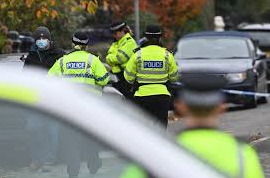
Union leaders have urged the Government to take immediate action to address rising violence in schools after a violent incident at The Birley Academy in Sheffield, where two adults and a child were injured. A 17-year-old boy was arrested on suspicion of attempted murder after the attack on Wednesday, which follows a stabbing incident just a week earlier at Amman Valley School in Wales, where two teachers and a pupil were injured.

Daniel Kebede, the general secretary of the National Education Union (NEU), condemned the violence, stating that it was unacceptable for staff and students to feel unsafe in their schools. He called for a public health approach similar to the one implemented in Scotland in the 1990s, which aimed to tackle youth violence comprehensively. Kebede emphasised the urgent need to reinvest in youth services that had once played a key role in preventing violence.

Patrick Roach, general secretary of the NASUWT teaching union, expressed concern for the wellbeing of both staff and students affected by the Birley Academy incident. He stressed the importance of providing adequate support for those impacted by such traumatic events.

While violent incidents involving weapons are still relatively rare in UK schools, unions have raised alarm about the increasing levels of disruptive behaviour and violence among pupils in recent years. A recent Government survey revealed that only 39% of pupils in England felt safe at school every day, a statistic that has sparked further concern over the state of school environments.

The Department for Education’s (DfE) research also found a decline in the number of school leaders and teachers who reported that their schools were “calm and orderly.” Tom Bennett, a behaviour advisor to the DfE, warned that violence in schools, although not frequent, was a significant indicator of deeper problems within school environments. Bennett highlighted that violence is only the “tip of the iceberg” and pointed out that teachers and students deserve safe and peaceful workplaces.

In response to the Sheffield incident, Education Secretary Gillian Keegan expressed her distress, offering her support to the school community. Keegan confirmed that the Government was in contact with the academy and extended her thoughts to those affected by the situation.

The Government has already committed resources to addressing youth violence, including funding 20 Violence Reduction Units across England and Wales. These initiatives have reached over 271,000 vulnerable young people through early intervention programmes. Additionally, the Government has invested £200 million into the Youth Endowment Fund to help identify effective strategies for preventing serious violence. Specialised support in schools is also being bolstered, with over £50 million dedicated to helping schools in areas where violence impacts children the most.

Despite these efforts, unions maintain that more must be done to ensure the safety of staff and pupils in schools, and they continue to push for a stronger, more comprehensive approach to combat youth violence and disruptive behaviour in educational settings.
Queen Camilla discusses King’s recovery and relaunches vital project supporting sexual assault victims.

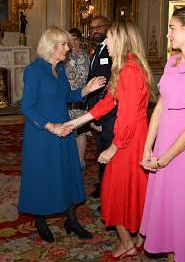
Queen Camilla shared her joy over King Charles’s return to public life after his recent health challenges, saying that the King was “really thrilled” to be back in the public eye. Speaking at a Buckingham Palace event on Thursday, the Queen revealed how she had been “trying to hold him back” as he eagerly resumed his royal duties following his cancer treatment.

The Queen’s remarks came during a reception attended by over 300 guests, including high-profile figures like Cherie Blair, Theresa May, and Carrie Johnson, to highlight the launch of The Wash Bag Project. This initiative, which supports survivors of sexual assault, provides victims with wash bags containing toiletries to offer a small sense of normalcy after forensic examinations.

The Queen also shared an update on King Charles’s health, just one day after his return to front-line royal duties. He had visited University College Hospital Macmillan Cancer Centre, where he expressed his shock at his diagnosis while meeting with patients and staff. The visit aimed to raise awareness of the latest cancer treatments and the excellent care provided at the centre.

In her speech, Camilla, 76, acknowledged the importance of the Wash Bag Project, which she first conceived in 2013 after visiting Sexual Assault Referral Centres (SARCs). The project has now partnered with In Kind Direct, a charity founded by King Charles in 1996. The scheme offers a simple but impactful gesture to those affected by rape and sexual violence, with the wash bags containing essential toiletries such as toothpaste, shampoo, and body lotion.

Zara McDermott, who has campaigned on the issue of rape culture, praised the Queen’s efforts, calling the wash bags a “simple idea” that makes a significant difference in the lives of survivors. “It’s a passion project for the Queen,” McDermott said. Carrie Johnson, wife of former Prime Minister Boris Johnson, also commended Camilla for her dedication to the cause, recognising the Queen’s commitment to giving victims a voice in the fight against sexual violence.

During the event, Queen Camilla read a letter from a mother whose daughter had received a wash bag following a traumatic experience. The mother described the gesture as “such a lovely and completely unexpected gesture, which reminded my daughters and I of the kindness of strangers at a very dark time.”

The Queen’s words reflected the core mission of the project: to provide “a crumb of comfort” to those in dire situations, offering kindness and hope to those who are often left feeling dehumanised. “The kindness of strangers at a very dark time,” the Queen said, is the guiding principle behind the work of everyone involved in these vital initiatives.

Prime Minister calls for transparency over £200,000 donation linked to Vaughan Gething’s leadership campaign.

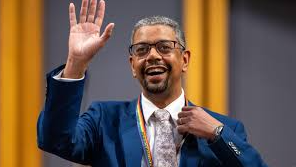
Rishi Sunak has endorsed calls for an independent inquiry into a significant donation received by Vaughan Gething, the Welsh First Minister, amid growing concerns of a potential conflict of interest. The donation, totalling £200,000, was made by Dauson Environmental Group, owned by David Neal, a man previously convicted of environmental offences. Gething received the funds during his campaign to become the leader of Welsh Labour in early 2021.

During Prime Minister’s Questions on Wednesday, Sunak described the matter as “incredibly important,” emphasising the need for transparency and a thorough investigation. The donation has sparked controversy, with opposition parties questioning whether it constitutes a conflict of interest, particularly given Neal’s links to the Welsh government’s Development Bank.

Gething, however, has consistently defended the donation, insisting that all rules and regulations were followed. He stated that he had no involvement in any decisions concerning Dauson Environmental Group or the Development Bank of Wales, and maintained that there was no conflict of interest in accepting the funds.

Despite Gething’s insistence that the process was transparent, he has faced mounting pressure. A Conservative motion is scheduled for a vote in the Senedd, calling for the appointment of an independent adviser to investigate any potential breaches of the ministerial code. In addition, Plaid Cymru has introduced a motion proposing a cap on the maximum amount of political donations an individual Member of the Senedd (MS) can receive annually.

The opposition’s concerns are compounded by the fact that Dauson Environmental Group’s subsidiary, Neal Soil Suppliers, received a loan of £400,000 from the Welsh government’s Development Bank in 2023, which was used to purchase a solar farm. Critics argue that this financial involvement raises questions about the influence of the donation on the Welsh First Minister’s actions.

While Gething rejected calls for an independent investigation into the donation, he appointed former First Minister Carwyn Jones to review the party’s electoral processes, including the scrutiny of campaign financing. The Dauson Group has also faced criticism for ongoing odour problems at its Pembrokeshire landfill site, with local MP Stephen Crabb, who represents the area, highlighting the concerns of his constituents during the Prime Minister’s Questions session.

Crabb pointed out that thousands of residents in Pembrokeshire had been living with foul air due to the landfill, which he described as an ongoing environmental problem. He also underscored the donation’s connection to the company and called for an independent investigation, arguing that the matter was far more than just an internal Labour Party issue.

In his response, Sunak agreed with Crabb, stressing that the issue required transparency and the need for answers. While Gething has previously argued that a “reasonable person” would not see a conflict of interest, the Prime Minister supported further examination into the matter, suggesting that the current situation lacked clarity.

As the controversy continues, the Welsh First Minister faces growing scrutiny from both the media and opposition parties, with the public awaiting a detailed investigation into the circumstances surrounding the £200,000 donation.

Defence claims finance professor, charged with murder of Boston officer, is the victim of a conspiracy as trial begins.

The trial of Karen Read, a college finance professor charged with the murder of her boyfriend, John O’Keefe, began on Monday with explosive revelations regarding the investigation into his death. O’Keefe, a Boston police officer, was discovered in the snow outside a home in Canton, Massachusetts, on 29 January 2022, after a night of partying. Read was arrested days later and accused of running him over during a snowstorm, leaving him to die on a freezing front lawn.

In the trial’s opening statements, defence attorney David Yannetti revealed that the lead investigator, Massachusetts State Police Trooper Michael Proctor, had shared disturbing details about the case with his high school friends. Proctor reportedly said he had searched Read’s phone for nude images and expressed disappointment that he hadn’t found any. Yannetti pointed out that this raised serious concerns about Proctor’s professionalism and objectivity in handling the investigation.

In addition, it was disclosed that Proctor was under investigation himself for possible misconduct, including his failure to disclose personal relationships with individuals involved in the case. This included his connection to the Albert family, whose home was the location where O’Keefe’s body was found. Evidence also suggested that Proctor had exchanged texts with the Alberts in which they promised him a thank-you gift for his work on the case.

The prosecution presented evidence of a broken tail light found on Read’s car, which allegedly matched fragments found on O’Keefe’s body. They also argued that Read’s relationship with O’Keefe had deteriorated prior to his death, claiming she had accused him of infidelity. They highlighted a Google search conducted by Read’s friend about the time it would take for someone to die in the cold as evidence of Read’s involvement.

In her defence, Read’s attorneys argued that she had been framed for the murder, accusing investigators of mishandling the case. They suggested that other potential suspects, including members of the Albert family, should be investigated more thoroughly. The defence also contended that O’Keefe’s injuries, which included multiple skull fractures, were inconsistent with being struck by a car at low speed.

Read’s legal team also presented the possibility that the victim had been ambushed by someone else, claiming that other individuals, such as a law enforcement officer and a federal agent, may have had motives for killing O’Keefe. These individuals have not been charged, but their connection to the case raised questions about the integrity of the investigation.

As the trial continues, supporters of Karen Read have staged protests outside the courthouse, declaring her innocence. Legal proceedings are expected to last six to eight weeks, with the jury set to hear from various witnesses, including a snow plough driver who may provide crucial testimony. Read faces multiple charges, including second-degree murder and manslaughter, and her defence continues to challenge the prosecution’s evidence.

Research highlights potential risks to brain and organ development linked to frequent e-cigarette use, especially with sweet flavours.

A recent study has suggested that teenagers who frequently use e-cigarettes may be at an increased risk of exposure to toxic metals, which could negatively impact their brain and organ development. The research, conducted by US scientists, also pointed out that sweet-flavoured vapes might carry an additional risk.

The study used data from the Population Assessment of Tobacco and Health (PATH) survey, which included teenagers aged 13 to 17. It focused on 200 vapers, categorising them into three groups based on their frequency of use: frequent, occasional, and intermittent. The study assessed biomarkers in their urine to check for traces of lead, uranium, and cadmium.

The findings revealed that both frequent and intermittent vapers had higher levels of lead in their urine compared to those who vaped less often. Frequent users also showed elevated levels of uranium. Additionally, the study found that the type of vape flavour could affect the amount of uranium present in the urine. Teenagers who preferred sweet-flavoured e-cigarettes had notably higher uranium levels than those who used menthol or mint-flavoured vapes.

The researchers acknowledged the limitations of the study, such as the possibility that environmental exposure or dietary intake could contribute to the presence of uranium in urine. Nonetheless, they warned that frequent e-cigarette use in adolescence could increase the likelihood of heavy metal exposure, which might be detrimental to the development of vital organs and the brain.

The study’s authors urged for more research and public health interventions to address these risks, especially among younger users. They also suggested that vaping regulations should be revised to mitigate potential harms.

Professor Lion Shahab, co-director of the UCL Tobacco and Alcohol Research Group, reinforced the importance of monitoring e-cigarette exposure carefully. He pointed out that although the study was well-conducted, it could not establish a direct correlation between e-cigarette use and absolute increases in heavy metal exposure. He stressed that future research should explore the types of e-cigarette devices used and how they may vary in the levels of heavy metals they expose users to.

This research comes amidst growing concerns about adolescent vaping, with a report by Action on Smoking and Health (ASH) revealing that 20.5% of children in the UK had tried vaping in 2023. This figure marks a steady increase from previous years, highlighting the need for tighter regulations to protect young people.

The UK Government’s Tobacco and Vapes Bill, introduced in October, aims to curb the rise in vaping among children and teenagers. The legislation proposes measures to limit the appeal of vapes through stricter controls on flavours, packaging, and in-store displays.

The chaotic and campy event in LA takes the disastrous Glasgow Willy Wonka event to new heights of absurdity, attracting an adult crowd for a night of bizarre performances and over-the-top fun.

Standing in front of a graffiti-covered warehouse in LA’s Arts District, I had no idea what to expect from the Willy Wonka Experience, a chaotic remake of Glasgow’s infamous event that became an internet meme. What had originally been a disastrous children’s experience was transformed into a meta and campy performance art show aimed at adults, embracing the absurdity of the original.

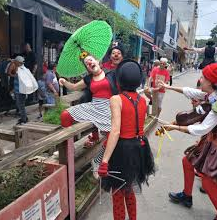
The evening kicked off with a parody of Grandpa Joe, who was wheeled out on a shopping trolley while wielding a candle and shouting improvised lines. This absurd character set the tone for the rest of the event, which included Mr Wonka himself, barely distinguishable from others except for his top hat. The audience, consisting mainly of adults, laughed along, ready for the absurdity ahead.

Inside, we encountered a blue-haired Oompa Loompa running a makeshift lab, complete with laboratory tubes and an oversized bong he referred to as Mr Wonka’s “personal meditation device.” The Oompa Loompa offered attendees THC-infused cotton candy, adding to the event’s bizarre atmosphere. Drinks like passionfruit mezcal, Modelos, and Thai iced teas with whipped cream further enhanced the experience, creating a surreal atmosphere where candy, alcohol, and weirdness collided.

Compared to the sparse, low-budget sets from the Glasgow event, this LA version embraced creativity with new elements like a balloon art installation by local artist Molly Balloons. The technicolour design seemed more suited for a Museum of Ice Cream pop-up than a Willy Wonka event, but it provided a perfect backdrop for photos.

Some characters closely resembled the original, such as the AI-generated “Unknown,” who wore a mask and carried a mirror, while another new character named Meaghan warned attendees against looking at or speaking about him. Later in the night, comedy duo “Clowns of Colour” appeared, protesting for “reparations” for the Oompa Loompas, rubbing chocolate on each other’s faces before performing a dance routine to Michael Jackson.

The quirky cast also included “Swoly Wonka,” a bodyguard for Mr Wonka, played by fitness influencer Thomas Ashman. He spent the night flexing his muscles and stealing Wonka’s hat, adding to the absurdity of the event.

Attendees had various motivations for coming – some were in it for the meme, others discovered it through TikTok. Mandy, an attendee, said, “I would’ve paid anything to be here.” Others, like Jesse and Tori, initially sceptical, found themselves won over by the event’s escalating weirdness.

The night blended performances, including stand-up comedy, music, and DJ sets, all contributing to the chaotic yet hilarious vibe. Kirsty Paterson, the original “sad Oompa Loompa” from the Glasgow event, was flown out to Los Angeles for the event. She reflected on how her role had turned her into a meme, but expressed how the LA event felt like a complete transformation from the disaster she had experienced in Glasgow.

Event organisers, House of Illuminati LA, wanted to make the absurdity of the original event into something positive. The LA experience was sold as exactly what it was—a night of unpredictability and humour—turning the infamous Glasgow event into a joke that was embraced by those attending.

The event was a bizarre mix of bad design, tongue-in-cheek performances, and outlandish creativity. As guests sipped cocktails and laughed at the absurdity around them, it became clear that the event was less about mimicking the original and more about celebrating its failure, transforming it into something entirely new. Guests enjoyed dressing up as characters from the story, reveling in the silliness of the night, and fully immersing themselves in the chaos of the Willy Wonka Experience.

Angela van den Bogerd responds to accusations at the Horizon IT Inquiry, asserting that she did not engage in misconduct with subpostmistress Jennifer O’Dell.

Angela van den Bogerd, a former senior Post Office executive, has strongly denied accusations of bullying and intimidating a subpostmistress wrongly convicted of theft. The allegations were raised during her second day of testimony at the Post Office Horizon IT Inquiry in central London.

Van den Bogerd was questioned about several subpostmasters and their branches, with Sam Stein KC accusing the helpline of committing fraud by asking subpostmasters to pay shortfalls. Van den Bogerd was asked if she believed such practices were fair, to which she responded that she had expected subpostmasters to receive assistance in understanding any discrepancies.

The inquiry turned its focus to subpostmistress Jennifer O’Dell, who had been accused of stealing thousands of pounds from her Cambridgeshire branch. O’Dell had called the helpline multiple times to contest the charges. Van den Bogerd admitted that O’Dell’s case should have been escalated and she should have received a call back, but denied any involvement in intimidation. When Stein suggested she had bullied O’Dell by claiming she had stolen money and threatened to take her home away, van den Bogerd firmly rejected the accusation. “That conversation did not happen,” she stated.

Additionally, an email from fraud analyst Helen Rose, sent to Van den Bogerd in February 2013, raised concerns over the accuracy of audit record logs being used in court. Van den Bogerd claimed she did not address the issue at the time, as it fell outside her knowledge scope. When asked by the inquiry’s lead counsel, Jason Beer KC, whether the email raised any alarm bells for her, she replied, “Not for me at the time.”

The inquiry also examined the tragic case of Martin Griffiths, a subpostmaster from Cheshire, who was sacked from his branch and later took his own life after being blamed for an armed robbery. Emails from Griffiths’ mother suggested the Post Office’s treatment had driven him to suicide. However, Van den Bogerd confirmed that her first response to the situation was not to offer support to the grieving family but rather to consider hiring a media lawyer.

When questioned about her reaction to the suicide email, Van den Bogerd admitted that public relations were highly prioritised during her time at the Post Office. “I was very conscious that PR was very important,” she explained.

Van den Bogerd, who held various roles during her 35-year career at the Post Office, including director of people and change, left the organisation in 2020. Her testimony has been a critical element of the inquiry into one of the UK’s most significant miscarriages of justice. The Horizon IT system, which falsely indicated missing money in branch accounts, led to the wrongful conviction of over 700 subpostmasters between 1999 and 2015.

Despite the quashing of over 100 convictions, many victims are still awaiting compensation, with the government pledging £600,000 payouts to those whose convictions were overturned.

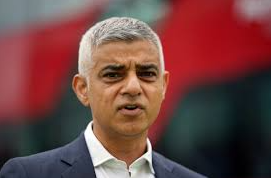
With the race for Mayor of London tight, Khan warns that young voters could face regret if they don’t turn out at the polls.

Sadiq Khan has issued a stark warning to young Londoners, urging them to vote in the upcoming mayoral election or risk being “shocked” by the result, similar to the surprises of Brexit and Donald Trump’s 2016 election win.

With the race tightening ahead of the May 2 election, Khan, who is seeking a historic third term, said that if younger voters fail to show up at the polls, the Conservatives could “sneak in” under the radar. His comments come as polling shows his lead over Tory candidate Susan Hall narrowing, particularly among younger voters.

The Mayor expressed concern that the upcoming election could echo the 2016 referendum and the US presidential race, where young people’s lack of participation left them waking up to unexpected outcomes. “I’m worried we could see a repeat of the Brexit referendum and Trump’s 2016 victory, where young people were shocked because they didn’t voice their opinions at the ballot box,” he told The Guardian.

According to a YouGov poll, only 30% of 18 to 24-year-olds are certain to vote, compared to 67% of over-65s, where Hall has a clear lead. “If younger Londoners don’t vote, the Tories will sneak in,” Khan added.

Khan urged young voters to follow the example set in the 2020 US elections, where a high youth turnout helped defeat Trump. “I’m asking young Londoners to do the same here, and ensure that we don’t let the Tory candidate win,” he said, describing Hall as a “hard-right Tory candidate” who could set the city back.

As the election draws near, Khan’s message is clear: “Please come out and vote. Your voice matters. Every vote counts.”

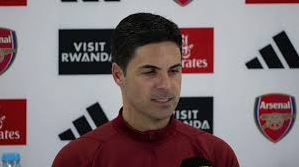
The Arsenal manager reveals the advice from the club legend that could help the Gunners secure the Premier League crown.

Mikel Arteta has been seeking guidance from Arsène Wenger as Arsenal fights to maintain their position at the top of the Premier League. Despite being just one point ahead of Manchester City, with the reigning champions holding a game in hand, the Gunners are determined to avoid a repeat of previous title challenges that ended in disappointment.

Arsenal’s last league title came in 2004 under Wenger, and now Arteta has reached out to the Frenchman for insights on how to manage the crucial final stages of a title race. Wenger, who secured three league titles during his 22-year tenure at the club, shared valuable advice with Arteta on how to handle tight matches and maintain composure in critical moments.

“I’ve spoken to him a few times, especially about the later stages of the season,” Arteta said. “He used to discuss these topics when I was a player, and those words are always in my mind.”

Arteta explained that winning in the final stages of the season often comes down to small details and fine margins. He mentioned how Wenger frequently spoke about stepping up when the team needed it most, a mentality that could make all the difference in the race for the title.

As Arsenal prepares for a pivotal north London derby against Tottenham, Arteta reflects on his experience playing in these high-stakes matches, which he now relishes as manager. “The history and significance of this fixture are always present,” he said. “Elite football requires facing challenges from rivals that push you to prove you’re the best.”

The pressure is on for Arteta’s side as they aim to secure their first Premier League title since 2004, with his former manager’s advice resonating as they push towards the finish line.

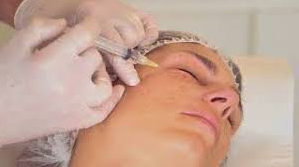
Counterfeit Botox administered in unlicensed settings causes severe reactions, prompting warnings from U.S. health officials.

U.S. health officials have issued a warning about counterfeit Botox injections that have led to 22 people falling ill, with half of them requiring hospitalisation. The alert, released by the Centers for Disease Control and Prevention (CDC) on Tuesday, follows incidents involving botulinum toxin administered by unlicensed or untrained individuals. These injections were given in settings like homes or spas, primarily for cosmetic purposes.

The outbreak, which began in early November, spans 11 states, with six individuals suspected of contracting botulism—a potentially deadly illness caused by botulinum toxin. Symptoms of botulism include blurred or double vision, drooping eyelids, slurred speech, difficulty swallowing, and in severe cases, trouble breathing. Health officials emphasised the importance of receiving Botox injections only from licensed medical professionals to prevent exposure to dangerous counterfeit products.

The CDC has urged the public to report any suspicious Botox products and warned that such counterfeit treatments could pose significant health risks.