


40 years after Mommie Dearest, it’s time to reconsider the truth behind the actress’s complex legacy

Faye Dunaway, an Oscar-winning actress, has spent much of her career battling a powerful myth that has overshadowed her brilliance: the label of being “difficult.” Often associated with tales of feuds, tantrums, and eccentric demands, this narrative has lingered throughout her career, particularly linked to her notorious performance in Mommie Dearest (1981). Forty years after the film’s release, it remains polarising, with some seeing it as a committed and extreme portrayal of Joan Crawford, while others view it as an over-the-top misstep. Dunaway’s reputation has long been tangled with this myth, despite her undeniable contributions to cinema.

In her 1995 autobiography Looking for Gatsby, Dunaway opens up about her experiences in the film industry, writing with the same raw intensity that characterised her acting. “You’re damned lucky to ever get out alive,” she says about life in Hollywood, an industry rife with pressure, misogyny, and exploitation. Her personal and professional life has often been shaped by the clash of her ambition and the expectations placed upon women in the public eye. She reflects on how the label “difficult” is unfairly applied to women, while men are often praised for the same behaviours. “A label I dislike: ‘difficult,’” Dunaway writes, suggesting that “perfectionist” might be a more accurate term. As a woman who demanded excellence, she felt that her drive was often misinterpreted, especially when compared to the more acceptable behaviour of her male counterparts.

Dunaway’s early career was filled with iconic roles that showcased her immense talent and influence on cinema, particularly in Bonnie and Clyde (1967), Chinatown (1974), and Network (1976). Her portrayal of Bonnie Parker, the ambitious bank robber, cemented her place in Hollywood history, while her intense performances in Chinatown and Network became benchmarks for dramatic roles in cinema. Her characters often blended glamour with wildness, creating unforgettable portrayals that still resonate today. Yet, behind this professional success, Dunaway’s personal reputation was being shaped by public incidents, some of which have since become infamous.

Her clash with directors such as Roman Polanski on Chinatown has been well-documented, with both parties offering conflicting accounts of the tensions on set. Dunaway has been accused of being difficult, while Polanski’s treatment of her has been described as cruel and manipulative. In her book, she recounts how she clashed with men who expected women to be passive and submissive, a trait she was unwilling to adopt. “He had a taste that ran to young, malleable girls,” Dunaway writes about Polanski, adding that her independence and strong opinions made her a target. The legend of Dunaway throwing a cup of urine at Polanski during the filming of Chinatown only added to her notorious image, although she has repeatedly dismissed this as a ridiculous urban myth.

Despite these controversies, there is another side to Dunaway that has often been overlooked: her professionalism and commitment to her craft. Producer Rik Hall and filmmaker David Howard, who worked with Dunaway on the 2007 film Flick, recall her as a dedicated and hardworking actress. In stark contrast to her diva reputation, Dunaway showed a deep respect for the filmmaking process, treating everyone on set with kindness and staying committed to her role. Hall recalls her being meticulous about the lighting and framing of shots, never asking for special treatment, but always pushing for the highest standards on screen. “She’s aware of her image and being a star and maintaining that image,” Hall says, “but she doesn’t have an ego about herself.”

The complex legacy of Faye Dunaway challenges us to reconsider the myths that have defined her career. While she may have had her moments of volatility, these stories shouldn’t overshadow her vast talent and the immense impact she had on Hollywood and popular culture. Rather than fixating on the drama that has often surrounded her, it’s time to recognise Dunaway for what she truly is: a brilliant, determined actor whose influence has shaped cinema in profound ways. Her story, like the best movie stars, is one of contradictions, but it’s these contradictions that have made her an unforgettable icon.

Labour leader presents vision for a new Britain, tackling the fuel crisis, crime, and NHS funding

In a powerful address at Labour’s annual conference, Sir Keir Starmer took aim at Prime Minister Boris Johnson over the ongoing fuel crisis, delivering the stinging remark: “Level up? You can’t even fill up.” His speech came amid widespread shortages at petrol stations, with many Britons struggling to refuel, sparking frustration across the country.

Starmer used the moment to distance himself from the Corbyn era, positioning himself as a leader ready to address the pressing challenges of the nation. In a tone both serious and personal, the Labour leader promised to rejuvenate Britain, stating: “Let’s get totally serious about this. We can win the next election.”

Throughout his speech, Starmer shared heartfelt personal stories, including a poignant reflection on his mother’s battle with illness and the care she received from NHS nurses. These experiences, he said, shaped his political outlook. “I learnt the value of hard work around the kitchen table,” he explained, referencing his upbringing as the son of a factory worker and a nurse.

Addressing the many crises facing the nation—fuel shortages, cost of living pressures, and a growing pay gap—Starmer declared: “Prime Minister, either get a grip or get out of the way and let us clear up this mess.” His words resonated with the Labour faithful, as he promised to focus on policies prioritising work, care, equality, and security. He also responded to critics questioning his leadership style, emphasising that his leadership would be rooted in “dignity of work,” shaped by his own upbringing.

On the policy front, Starmer avoided unveiling drastic new proposals, but outlined key areas where a Labour government would focus. He pledged to invest in new technologies, committing to a target of 3% of GDP for science and research. He also voiced strong support for the NHS, emphasising that a Labour government would always ensure proper funding and recruit more mental health professionals to meet growing demands.

In a nod to the growing concerns over crime, Starmer vowed to expedite the handling of rape and sexual assault cases and to introduce tougher sentences for perpetrators. Drawing on his previous role at the Crown Prosecution Service, he promised to strengthen legal protections for victims and fight for justice in violent cases.

On education, Starmer laid out an ambitious plan to recruit thousands of new teachers and overhaul the schools watchdog, Ofsted. He also committed to introducing a Clean Air Act and a net zero test for all government activities.

Although the speech focused heavily on addressing the nation’s current issues, it was clear that Starmer aimed to position Labour as the party capable of providing leadership, unity, and pragmatic solutions for a better future.

From luxury pyjamas to personalised keepsakes, find the perfect present for your beloved nana this Christmas

Choosing the right gift for your grandma can sometimes feel like a challenge, especially when she insists she doesn’t need anything. But just like any special person in your life, she deserves a thoughtful present that reflects how much she means to you. Whether your grandma is the elegant type or prefers something more practical, finding the perfect gift that she’ll truly appreciate is key to making her Christmas memorable.

Instead of opting for generic items, consider gifts that combine luxury, sentiment, and functionality. Think cosy throws for winter nights, or a personalised photo frame that showcases her grandchildren. For the grandmother with a green thumb, a stylish houseplant can brighten up her home, while those who enjoy comfort will love a fresh set of pyjamas and slippers.

To help make your Christmas shopping a little easier, we’ve compiled a list of the best gifts for grandmas in 2023. Here’s a selection of presents that are sure to put a smile on her face:

Best gift overall: Tartan Blanket Co recycled wool extra large blanket – £110, available at Tartanblanketco.com
Best for book lovers: Words With Wine subscription box – £27.99, available at Wordswithwine.co.uk
Best for foodies: Yiayia: Time-perfected Recipes from Greece’s Grandmothers by Anastasia Miari – £21.22, available at Amazon.co.uk
Best for green-thumbed grandmas: Patch Plants Lizzie plant – £18, available at Patchplants.com
We’ve curated this list by consulting our own grandmas, ensuring these suggestions are both practical and filled with love. Whether she’s into self-care or enjoys cooking, there’s something on this list to make her holiday season extra special.

The 39-year-old entrepreneur’s startup, Multiverse, secures major funding from America’s wealthiest family.

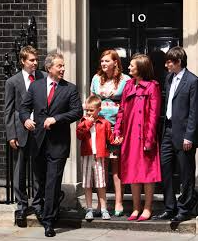
Euan Blair, the son of former Prime Minister Tony Blair, has made waves in the business world, securing a fortune of £345 million through his startup, Multiverse. At 39, Blair, once known for a drunken public incident after his GCSEs, is now being hailed as a future billionaire after receiving significant backing from the Walton family, the owners of Walmart. This move has pushed his company to a valuation of £1.4 billion, with Blair holding a 25% stake.

Blair’s journey to success has been unconventional. His business, Multiverse, challenges the traditional educational path, especially one endorsed by his father, who famously aimed to get half of young adults into university. Euan, however, argues that apprenticeships offer a better alternative to university degrees, which he believes do not guarantee employment. His company connects young talent with apprenticeship opportunities at major companies like Google, Depop, and Facebook, disrupting the notion that a degree is essential for success.

Despite growing up in Downing Street and benefiting from significant advantages, Blair’s success has been praised by many, including his business partner Sophie Adelman. Critics, however, point to his privileged background, questioning whether his achievements are due to nepotism. Blair’s supporters argue that his business acumen and dedication to improving social mobility through apprenticeships speak for themselves.

Now valued at £1.4 billion, Multiverse has expanded into the US, and Blair plans to grow further, with a focus on social mobility and inclusivity. His story demonstrates how a fresh approach to business and education can lead to remarkable success, potentially even surpassing his father’s political legacy.

Broadcasting Disruption Affects Multiple Channels Across the Network

On Saturday, Channel 4 and its sister channel More4 experienced a significant technical disruption, leaving viewers with frozen screens for approximately 25 minutes before briefly returning to normal. However, the issue recurred shortly thereafter, with some users reporting persistent problems. Additionally, flashes were observed on More4’s screen, while other channels, such as Film4 and E4, were also reported to be impacted.

The exact cause of the technical glitch remains unclear, and it is unknown how long the disruption will last. Channel 4 confirmed the problem on social media, stating that both Channel 4 and More4 were temporarily off air due to a technical issue. The broadcaster assured viewers that efforts were underway to resolve the situation as swiftly as possible.

S4C, the Welsh-language broadcaster, also reported issues on the same day, attributing the disruption to a fire at a London distribution centre. The broadcaster apologised for the inconvenience, stating, “Unfortunately, following a fire at a London distribution centre, we are experiencing technical problems.”

Channel 5 was also affected by technical difficulties, with some viewers receiving a message stating: “We apologise for the interruption. We’ll be back with you as soon as we can.”

Channel 4 has assured its audience that the technical problems were addressed as quickly as possible, and Channel 5 has been contacted for further comment.

The Luxury Brand Launches New Online Initiative Showcasing Refurbished Pieces and Emerging Designers

During Milan Fashion Week, Gucci introduced its new e-commerce platform, Vault, which features a curated collection of refurbished vintage items from the brand, alongside exclusive capsule collections created by young, innovative designers. This new project, championed by creative director Alessandro Michele, reflects his lifelong passion for fashion and collecting, which even predates his work with Gucci.

Michele explained that his deep connection with fashion objects drove the creation of Vault, revealing how the project also allowed him to reconnect with his personal history of collecting. The site features vintage Gucci treasures, such as a meticulously preserved white Jackie bag, and promises to breathe new life into the brand’s iconic pieces.

Among the young designers showcased on the platform is Priya Ahluwalia, a London-based talent of Nigerian and Indian descent. Known for her sustainable, upcycled collections, Ahluwalia was delighted to receive a personal invitation from Gucci, admitting that the message initially seemed too good to be true.

Vault is a strategic move for Gucci to engage with younger, eco-conscious audiences while expanding its narrative beyond traditional fashion shows. By tapping into its vast archive and collaborating with fresh talents, the brand is challenging conventional fashion cycles and embracing the future of sustainable luxury.

AJ’s Ambitions Dashed by Usyk’s Masterful Performance, Ending His Title Reign

Anthony Joshua’s hopes of holding onto his world heavyweight titles were decisively crushed by Oleksandr Usyk in a stunning performance at Tottenham Hotspur Stadium. The Briton suffered only his second career defeat in front of 67,000 fans on a night that ended any possibility of a future all-British clash with Tyson Fury, who holds the WBC belt.

Usyk, who entered the ring undefeated, displayed an incredible display of boxing mastery to dethrone Joshua, becoming only the third fighter in history to claim world titles in both cruiserweight and heavyweight divisions.

Joshua, left to digest his first loss since his shocking defeat to Andy Ruiz Jr. in 2019, will undoubtedly be looking to exercise his rematch clause as soon as possible in an effort to reclaim his titles. Meanwhile, Fury is set to defend his belt against Deontay Wilder in a third bout in Las Vegas in the coming weeks.

The undercard featured several exciting bouts, including Lawrence Okolie easily defending his WBO cruiserweight title against the outmatched Dilan Prasovic. Callum Smith delivered a devastating knockout on his light-heavyweight debut against Lenin Castillo, who required hospital treatment post-fight. Additionally, Campbell Hatton was fortunate to escape with a win in his fourth professional fight, edging out Uruguay’s Sonni Martinez after six rounds.

Boxing Schedule and Results:

Oleksandr Usyk bt Anthony Joshua
Lawrence Okolie bt Dilan Prasovic
Campbell Hatton bt Sonni Martinez
Callum Smith bt Lenin Castillo
Florian Marku bt Maxim Prodan
Christopher Ousley bt Khasan Baysangurov

Leaders Around the World Use the Pandemic to Promote National Agendas and Criticise Global Inequality

Unsurprisingly, COVID-19 dominated the discussions at this year’s United Nations General Assembly, with world leaders using the pandemic as both a reflection of global challenges and a platform to push for their own political objectives. From vaccine inequality to economic devastation, and from social isolation to misinformation, each country leader framed the pandemic in a way that highlighted their unique concerns.

For many, the pandemic was more than just a health crisis; it became a tool for political messaging. Palau, for example, praised Taiwan’s pandemic response, highlighting the nation’s support in ensuring vaccines and medical supplies were delivered to the island, and used the moment to advocate for Taiwan’s membership in the UN. Palau President Surangel S. Whipps Jr. also thanked Taiwan for facilitating safe travel routes, ensuring Palau avoided isolation.

In stark contrast, the United States used COVID-19 as a symbol of hope and leadership. President Joe Biden’s address underscored America’s return to global prominence, pledging to deliver vaccines to 100 countries as part of its commitment to supporting global health. “Planes carrying vaccines from the United States have already landed in 100 countries, bringing people all over the world a little ‘dose of hope,’” Biden proclaimed, signalling his country’s generosity and commitment to international cooperation.

On the other hand, Iranian President Ebrahim Raisi’s speech centred around condemnation of U.S. sanctions, which he argued exacerbated the pandemic. He decried the sanctions on medical supplies, calling them crimes against humanity, and emphasised Iran’s efforts to produce its own vaccines in the face of these challenges.

Meanwhile, Namibia’s President Hage Geingob drew attention to the issue of vaccine inequality, comparing the current situation to apartheid. He highlighted the stark disparities in vaccine distribution, with some countries already rolling out booster shots while others still struggle to secure initial doses. Geingob’s remarks also resonated with the UN’s ongoing discussions on racism and reparations, linking vaccine access to broader historical injustices.

Several leaders shared their personal experiences with COVID-19. Polish President Andrzej Duda reflected on his own battle with the virus, which he said made him more aware of global solidarity. He asked whether the post-pandemic world would embrace cooperation or return to old patterns of division.

In stark contrast, Brazil’s President Jair Bolsonaro used his address to defy the mainstream medical consensus, continuing his scepticism of vaccines and early treatments. Despite the pandemic’s toll on his country, Bolsonaro stood by his belief in the autonomy of doctors and the importance of personal medical choice, refusing to comply with vaccination requirements for the UN assembly.

The diverse range of political agendas tied to COVID-19 underscores how deeply interconnected global health challenges are with national politics. Each leader has framed the pandemic to reflect their own values, whether pushing for greater international cooperation, denouncing perceived injustices, or defending personal freedoms.

The Supermodel’s Experience with Cosmetic Surgery Reveals the Enduring Pressure of Unrealistic Beauty Standards

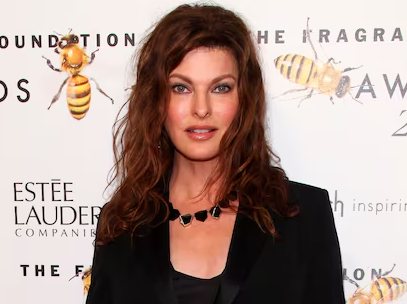
When Linda Evangelista, the Canadian supermodel renowned for her beauty, revealed that a fat-freezing procedure had left her “permanently deformed,” it underscored a sobering reality: even those who epitomise conventional beauty are not immune to the unattainable standards that burden women. Evangelista’s tale is a glaring example of how society’s beauty ideals remain deeply ingrained, despite cultural progress and the rise of movements such as body positivity.

Growing up, I obsessed over my own facial features, especially my lack of prominent cheekbones, a trait I often thought would define my future. I was far from alone in this fixation, as many women my age were similarly influenced by images of angular faces seen in fashion magazines and teen publications. Even now, I occasionally catch myself pulling my cheeks back in front of the mirror, trying to recreate what I once imagined was the ideal face.

Evangelista’s career was built on her extraordinary looks, gracing almost 700 magazine covers, earning high-paying contracts, and becoming synonymous with the height of glamour. Yet, despite being one of the most celebrated models in the world, she now faces a reality where her face, once her most valuable asset, has been altered beyond recognition due to a procedure intended to remove fat from her jawline. This is a stark reminder of the relentless pursuit of beauty and the fear of losing what is often referred to as “pretty privilege”—the social and economic advantages conferred on those who meet conventional beauty standards.

Despite the increasing visibility of diverse body types and the embrace of body positivity, beauty standards continue to dominate. The fashion industry, for example, may have started showcasing a wider range of models, yet these advancements are still overshadowed by an underlying pressure to conform to a particular aesthetic. As “pretty privilege” remains an unspoken but powerful force, women who do not fit into these narrow definitions are often excluded from the same opportunities.

Evangelista’s personal struggle highlights the damaging impact of these beauty standards, particularly in a world where social media platforms amplify them. The emergence of trends such as “Instagram Face”—the highly stylised look characterised by features like those of Bella Hadid or Kendall Jenner—has created a new set of expectations. Filters and photo-editing tools now allow users to alter their appearance to fit this ideal, making it increasingly difficult for women to feel secure in their natural looks.

While Linda Evangelista once represented the pinnacle of beauty, her current situation poses a challenge to the very notion of beauty itself. Would she still be as celebrated if her face no longer met the conventional standards of attractiveness? Would society embrace her disfigured face as a symbol of diversity, or would it simply mark a step towards more inclusivity, much like the fashion industry’s token “ageless” cover featuring Jane Fonda?

Ultimately, Evangelista’s story reflects the ever-present and escalating pressure on women to look a certain way. With beauty standards continually evolving and social media exacerbating their reach, it’s clear that the battle for body positivity is far from won. For many, including Evangelista, these unrealistic ideals remain an inescapable force, making it difficult to break free from the desire to conform.

Heartbroken Family and Supporters Gather in Kidbrooke to Pay Tribute to Teacher Killed Near Her Home

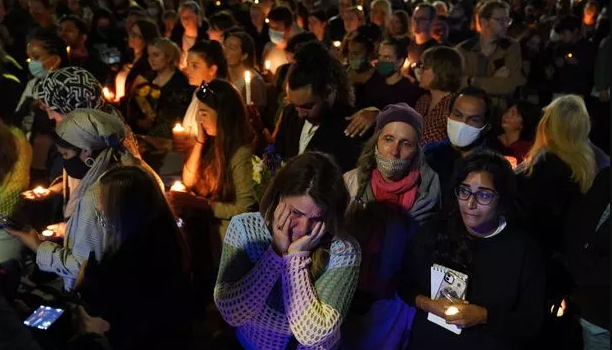
On Friday evening, over 500 people gathered in Pegler Square, Kidbrooke, London, for a candlelit vigil to remember Sabina Nessa, the primary school teacher tragically murdered while walking just minutes from her home. The event, held from 7pm, allowed the community to honour her memory and show solidarity with her grieving family.

Sabina, 28, was killed on her way to meet a friend at The Vault pub, but she never made it. The vigil was a poignant moment for those who knew her and those who were touched by her story. Those unable to attend were encouraged to light candles at home in solidarity.

Sabina’s sister, Jebina Yasmin Islam, spoke through tears at the vigil, expressing the family’s deep grief: “We have lost an amazing, caring, beautiful sister who left this world far too early. She didn’t reach her 29th birthday next month.” She continued, “Sabina loved her family. We have lost a sister, my parents have lost their daughter, and my girls have lost such a brilliant, loving auntie who dearly loved them.”

The Duchess of Cambridge expressed her sadness over Sabina’s murder, noting the loss of another innocent woman in the streets of London. Prime Minister Boris Johnson also marked the occasion, sharing a candle-lit tribute from outside Downing Street.

A large photograph of Sabina, beaming in her graduation gown, was displayed at the vigil, accompanied by heartfelt speeches from community leaders. The Deputy Leader of Greenwich Council, Denise Scott-McDonald, addressed those in attendance, encouraging them to demand change in the fight against violence towards women. “What happened to Sabina is a tragic reminder that tackling violence against women must be a top priority,” she said. “We must confront those who perpetrate violence.”

The vigil also saw prayers and a minute’s silence to remember Sabina’s life. Mayor Sadiq Khan emphasised the importance of standing together, adding, “Sabina’s death is a tragedy, and I stand with the community in Kidbrooke and all Londoners in grief and in our determination that justice is done.”

Lisa Williams, the headteacher at Rushey Green Primary School where Sabina worked, expressed the sorrow of the school community, saying, “We are taking our time to reflect on the devastating news and will be commemorating Sabina in our own way.”

Tributes continue to pour in, with floral arrangements and handwritten notes left at the spot where Sabina’s body was found. One note reads, “Miss you so much. RIP my beautiful friend,” while another reads, “She just wanted to meet her friend. She was minutes from her home. She didn’t deserve this.”