



Long-standing MP Remembered for His Dedication to Southend’s City Status and Public Welfare

Sir David Amess, a Conservative MP with nearly four decades of parliamentary service, became widely recognised for his unwavering campaign to grant city status to Southend. Representing Basildon from 1983 before transitioning to Southend West in 1997, Sir David devoted much of his parliamentary focus to local and national causes, notably animal welfare and pro-life advocacy.

Sir David’s efforts to elevate Southend’s status culminated in a 2019 Commons debate, where he declared his confidence in securing city status, citing the town’s community spirit, infrastructure, and proximity to a thriving airport. His enthusiasm extended to championing a city status competition during the Queen’s Platinum Jubilee celebrations and advocating for a statue in her honour.

His dedication to public causes went beyond Southend. He sought a memorial for Dame Vera Lynn on the White Cliffs of Dover and even pursued a role as a deputy speaker in Parliament in 2019, though his bid was unsuccessful. Despite his campaign losses, Sir David remained a vocal Brexit supporter, celebrating its completion with a tribute to former Prime Minister Margaret Thatcher.

One of Sir David’s frustrations involved his association with the satirical Channel 4 show Brass Eye. In a 1997 episode, he was inadvertently involved in a hoax about a fake drug called “Cake,” leading to mockery on social media. He openly criticised the younger generation and the media for perpetuating the joke.

Sir David was not only a persistent advocate for Southend but also a staunch defender of politicians’ dignity. In various debates, he decried the coarseness of election campaigns and the abuse faced by MPs. His legacy remains a testament to passionate public service and tireless advocacy for his community.

Settlement Advancements Continue Under the Radar in Jerusalem and the West Bank

Israel has discreetly progressed with settlement plans in Jerusalem and the West Bank, sidestepping major announcements that could provoke the Biden administration. These projects, while incremental, lay the groundwork for significant future developments.

A local planning committee in Jerusalem recently approved land expropriations for the Givat Hamatos settlement, which could further isolate Palestinian communities in the southern West Bank. The committee also moved forward with plans for 470 new homes in Pisgat Zeev, an existing East Jerusalem settlement, and set a hearing for a 9,000-home project in Atarot this December.

Critics argue that these settlements, particularly in sensitive areas like E1, risk bisecting the West Bank, making a two-state solution nearly impossible. Despite this, Israeli officials describe these moves as routine, asserting no substantial changes to prior plans.

Settlement expansion has long been a contentious issue. Although President Biden’s administration opposes unilateral actions that hinder peace, it has largely avoided direct confrontation with Israel over this matter, prioritising other global challenges. This restrained response has enabled Israel to proceed with little immediate international pushback, complicating prospects for resolving the Israeli-Palestinian conflict.

Some observers warn that ongoing settlement growth undermines any potential for a viable Palestinian state, leaving millions of Palestinians under permanent Israeli control. Critics assert this trajectory could entrench unequal rights and deepen existing tensions in the region.

Essential Tips for Watering, Positioning, and Propagation

The Scindapsus pictus, or satin pothos, is a stunning climbing houseplant with velvety, silver-speckled leaves. Native to the humid forests of Southeast Asia, this plant thrives in natural settings by climbing tree canopies for light, making it an ideal indoor plant for spaces like kitchens or bathrooms.

To maintain a healthy Scindapsus, ensure consistent but moderate watering. Allow the top few centimetres of soil to dry out before watering again. Avoid letting water accumulate in reservoirs, as excessive moisture can lead to root rot. For plants with shrunken compost, rehydrate the soil by submerging the pot in water and allowing it to drain.

Position the plant to suit its growth habits. It can elegantly trail from a hanging pot or climb with the help of a rough wooden board or branch. Use string to gently secure the stems, enabling natural attachment over time.

Propagating satin pothos is straightforward. Select healthy stems, cut below a node, and remove a few leaves near the cut to prevent rot. Place the cuttings in water, ensuring they remain in a warm, bright area away from direct sunlight. Once roots grow to about 10 cm, transplant the cuttings into a pot with peat-free compost. For a fuller plant, group several cuttings in one container.

With the right care, satin pothos can enhance any indoor space with its lush greenery and adaptability.

Volcanic Eruptions Continue to Wreak Havoc, Destroying Homes and Livelihoods

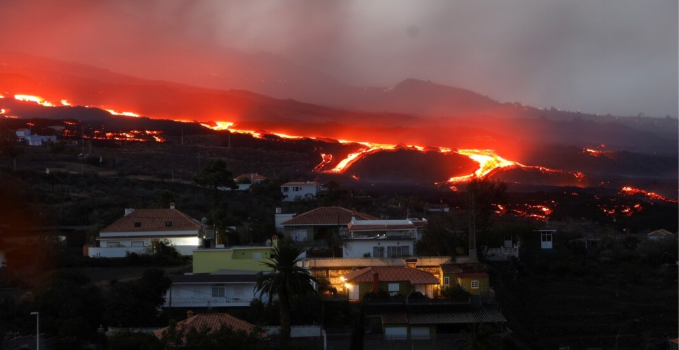
La Palma has experienced its most powerful earthquake since the Cumbre Vieja volcano began erupting 26 days ago. The 4.5-magnitude quake, among 60 tremors recorded overnight by Spain’s National Geographic Institute, highlights the ongoing seismic activity in the Canary Island region.

Rivers of molten lava, now spreading across a mile-wide area, continue to devastate everything in their path. The La Palma government reports that over 1,500 buildings have been partially or completely destroyed, displacing more than 6,000 residents. Despite the destruction, timely evacuations have prevented casualties.

The volcanic eruptions have not only obliterated homes and infrastructure but also threatened the island’s tourism-dependent economy and plantain cultivation, crucial to the livelihoods of many residents. Molten rock spilling into the Atlantic adds further uncertainty, as scientists monitor potential environmental impacts.

La Palma, part of Spain’s Canary Islands, remains in a state of emergency as residents and authorities grapple with the aftermath of this ongoing natural disaster.

Funding Stalemate Challenges Vision of Clean, High-Speed Transit

California’s ambitious high-speed rail project faces renewed uncertainty as debates emerge over the electrification of its initial line between Bakersfield and Merced. Lawmakers are divided on releasing the remaining $4.2 billion in voter-approved bond funds, a critical resource for continuing construction.

The California High-Speed Rail Authority insists electrifying the track is essential to achieving the clean energy and speed objectives promised to voters. However, some legislators, including Assemblywoman Laura Friedman, suggest a phased approach, using diesel trains temporarily to connect the Central Valley to urban centres while prioritising a unified transit station in Merced.

The $98 billion project, significantly over its initial $33 billion estimate, has already faced delays, with the first operational leg now expected in 2029. Governor Gavin Newsom advocates for electrification, citing environmental benefits, while critics argue against allocating more resources without a clear completion strategy.

The decision on bond allocations will influence California’s ability to secure federal infrastructure funding and shape the nation’s approach to high-speed rail. Supporters view the project as transformative for travel and emissions reduction, but detractors label it an expensive misstep with questionable feasibility.

The coming months will determine whether the project can proceed as a symbol of innovation or stall amid logistical and financial hurdles.

Struggles Intensify as Loved Ones Remain Separated During Critical Moments

A year and a half into the COVID-19 pandemic, with over 700,000 deaths in the U.S., families of patients are pleading for hospitals to reassess visitor policies. While some facilities have eased restrictions, others remain firm, citing safety concerns.

Jayden Arbelaez, a 17-year-old in Jacksonville, Florida, was forced to climb onto a hospital roof to see her dying mother through a window. Despite vaccines and improved safety protocols, policies remain inconsistent. Some families and medical experts argue these restrictions cause psychological and emotional harm, with many relatives showing signs of post-traumatic stress disorder.

Research highlights that isolation impacts not only families but also patients, potentially leading to delirium and delaying crucial treatments. Dr. Lauren Van Scoy, a pulmonary and critical care physician, advocates for balanced measures, noting that families can also support overburdened healthcare staff.

Exceptions for dying patients, like Arbelaez’s mother, reveal inconsistencies in enforcement. Although some hospitals, like the University of Utah Health, now allow limited visitors with strict guidelines, others maintain stringent bans, prioritising staff burnout and infection control.

Calls for change have led to petitions and public outcry, urging policymakers and hospitals to reconsider the balance between safety and compassion. For many, the lack of access remains a source of profound grief and frustration, underscoring the enduring challenges of the pandemic.

Affected Areas Still Struggle with Supply Amid Rising Petrol Prices

Petrol shortages continue to cause disruption across London and the Southeast, with 10% of stations in these regions out of fuel, according to the Petrol Retailers Association (PRA).

PRA chairman Brian Madderson highlighted the lack of consistency in fuel deliveries as a significant concern. Many forecourts remain uncertain about their next supplies, leading to a cycle of stations running out of fuel soon after restocking. The situation has been exacerbated by panic buying and a higher concentration of vehicles in these urban areas.

Recent government interventions, including deploying military drivers and relaxing competition laws, aim to stabilise supplies. However, the crisis has driven fuel prices to their highest levels since 2013, with petrol averaging 137.17p per litre and diesel at 140.66p.

The initial shortage arose after BP’s announcement on 23 September about temporary closures due to a lack of HGV drivers, sparking a surge in demand and public alarm. Efforts to mitigate the impact continue, but challenges remain acute in heavily trafficked regions like London.

Industry experts call for improved logistics and further measures to address delivery gaps to restore confidence and supply continuity.

Practical Advice for Balancing Holiday Costs Without Debt

The festive season often brings financial pressure, but with some planning, you can manage holiday spending effectively and stay debt-free.

Set a Holiday Budget Aligned with Goals
Start by assessing your finances and setting a realistic holiday budget. Avoid overspending by keeping your gift list manageable. If funds are tight, consider low-cost alternatives like homemade gifts or shared experiences. If using credit, opt for options with lower interest rates, such as balance transfer cards, to minimise costs.

Leverage Seasonal Opportunities
For those without debt, signing up for a credit card offering rewards or a bonus can offset expenses. Ensure your spending aligns with the card’s requirements to unlock these benefits.

Maximise Rewards Apps
Cash-back and coupon apps like Ibotta and Fetch Rewards can offer valuable savings on everyday purchases. Pairing them with a rewards credit card boosts your savings potential.

Try a ‘No-Spend Challenge’
Save by temporarily cutting out non-essential expenses. Dedicate the saved funds to your holiday costs. This approach not only builds savings but also encourages mindful spending habits.

Boost Your Income with a Side Job
Consider gig work or selling unused items to earn extra holiday funds. This strategy provides financial flexibility while decluttering your space.

By implementing these strategies, you can enjoy the holidays without compromising your financial stability or long-term goals.

Proactive Tips for Building Resilience During Seasonal Health Challenges

As seasonal colds make a return, many people seek ways to strengthen their overall health. While there is no guaranteed “immunity booster,” experts agree that adopting targeted nutrition, physical activity, and self-care strategies can help enhance your body’s resilience to infections.

Nourishment for Health:
Prioritise a balanced diet that supplies essential vitamins and minerals like A, C, D, E, and K, alongside zinc, selenium, and iron. Nutritional therapist Alice Mackintosh recommends incorporating nutrient-rich foods, such as citrus fruits for vitamin C, or liver and seafood for vitamin A and zinc. Furthermore, fibre-rich foods, diverse in origin, promote gut health, which plays a pivotal role in immunity. Don’t forget protein sources, as they provide building blocks for immune function.

Targeted Supplements:
Consider vitamin D supplementation, especially during winter, or if your sunlight exposure is limited. Omega-3 fats and occasional zinc or vitamin C supplementation can help manage symptoms when ill. If your diet lacks fermented foods like kimchi or kefir, a probiotic supplement might support gut bacteria balance, further aiding immune health.

Staying Active:
Exercise is key to maintaining a responsive immune system. Activities that elevate your heart rate, even briefly, help circulate immune cells efficiently. Incorporate strength training twice weekly and break up sedentary hours to optimise overall health.

Lifestyle Tweaks:
Quality sleep, stress management, and mindfulness practices, like meditation, significantly impact immune responses. Techniques such as the Wim Hof cold exposure method or sauna sessions may provide additional benefits for both immunity and stress relief.

By addressing diet, activity, and overall wellness, you can prepare for health challenges ahead while cultivating a balanced and sustainable approach to self-care.

Major destinations like South Africa, Brazil, and Mexico removed, marking a new chapter for global travel.

In a significant move for travellers and the UK tourism industry, the government has reduced the red list to just seven countries, down from 54. Popular holiday spots such as South Africa, Brazil, and Mexico are now free from the strict quarantine measures.

Effective from 4am on Monday, travellers arriving from the 47 removed nations will no longer face the £2,285 cost of an 11-night quarantine stay. The remaining red list countries include Colombia, Dominican Republic, Ecuador, Haiti, Panama, Peru, and Venezuela.

Transport Secretary Grant Shapps described the decision as a “major step forward” for the UK travel industry, coinciding with the upcoming half-term and winter travel season. “This significant reduction in restrictions will help families reconnect and boost traveller confidence. By leveraging increased global vaccination rates, we are moving safely towards recovery,” he stated.

The changes also include expanded vaccine recognition for arrivals from 37 new locations, such as India, Turkey, South Africa, and Brazil. Fully vaccinated travellers from these countries will now be exempt from pre-departure testing, day-eight testing, and quarantine requirements upon entering England.

Health Secretary Sajid Javid highlighted the role of the UK’s vaccination efforts in enabling these relaxed measures. “Our border policies have protected the gains of our vaccination programme, allowing us to open up travel further while maintaining safety. This means more opportunities to reconnect with loved ones abroad.”

With fewer restrictions, this announcement brings a much-needed boost to the travel sector, signalling renewed optimism for global mobility and economic recovery.