


Season 30 Highlights, Contestants, and How to Tune In

The 30th season of Dancing With The Stars is in full swing, featuring an exciting mix of celebrity contestants. This year’s lineup includes Spice Girl Mel C, fitness star Cody Rigsby, and Olivia Jade Giannulli, among others. The competition began on 20 September and continues weekly, with eliminations now underway after the premiere focused on introducing the 15 celebrity contestants.

Each participant is paired with a professional dancer, and as per tradition, one team is eliminated every week. Tyra Banks has returned as the sole host this season, having replaced former co-hosts Tom Bergeron and Erin Andrews in the previous cycle.

When and Where to Watch:
The show airs every Monday at 8 pm ET/7 pm CT on ABC in the US and will continue until the season finale. Missed an episode? Episodes are available for streaming on ABC’s website and Hulu the following day.

For viewers outside the US, while the show doesn’t broadcast in the UK, fans can catch all the performances in full on the Dancing With The Stars YouTube channel.

Contestants to Watch:
Season 30’s cast has drawn attention for its diversity and star power. Mel C has impressed fans with her flair, Cody Rigsby brings high-energy charisma, and Olivia Jade’s inclusion has sparked some debate. The full list of contestants can be accessed online for those keen to follow their favourites.

With eliminations intensifying and dazzling performances each week, this milestone season is shaping up to be one of the most memorable yet. Whether you’re a loyal fan or a newcomer, Dancing With The Stars continues to be a showcase of glittering talent and fierce competition.

British Airways and Virgin Atlantic Celebrate US Border Reopening with Unprecedented Collaboration

Heathrow Airport witnessed a historic moment on Monday morning as British Airways and Virgin Atlantic marked the return of US travel with a synchronised dual take-off. The two flights, BA001 and VS3, departed simultaneously for New York’s JFK Airport at 8:30 am, the first event of its kind in Heathrow’s history.

This milestone coincides with the reopening of US borders to most UK nationals, a development welcomed by both airlines, whose operations were severely impacted by the pandemic. It marks the first day since 16 March 2020 that the majority of British travellers can once again fly to the United States.

Despite being industry rivals, British Airways and Virgin Atlantic joined forces to commemorate this occasion. Virgin Atlantic CEO Shai Weiss described the event as a “moment for celebration, not competition,” highlighting the significance of restoring transatlantic travel. “Together, we are thrilled to celebrate this milestone, offering passengers the confidence to travel once more,” Weiss added.

British Airways CEO Sean Doyle also emphasised the emotional and economic impact of the moment, stating, “After over 600 days apart, we can finally celebrate the reopening of UK-US travel. This connectivity is crucial for the UK’s economic recovery.”

Transport Secretary Grant Shapps hailed the event as a “significant milestone” for the aviation industry, recognising its role in reconnecting families, businesses, and fostering international ties.

The synchronised take-off also symbolises the determination of the aviation sector to recover and adapt after enduring one of the most challenging periods in its history. With this iconic gesture, the UK and US have reaffirmed their commitment to revitalising travel, offering hope for a brighter future for global aviation.

England’s Star Opener Faces Bitter Setback Ahead of Semi-Finals

England’s T20 World Cup campaign has been hit with a significant setback as opener Jason Roy has been ruled out of the tournament after suffering a torn left calf. The injury, sustained during England’s 10-run loss to South Africa on Saturday, leaves the team without one of their most reliable performers as they prepare for the semi-final against New Zealand in Abu Dhabi.

Roy, visibly distressed as he hobbled off the field, expressed his disappointment, stating, “It’s a bitter pill to swallow, but I’m staying on to support the boys. I hope we can go all the way and lift the trophy.” He now shifts his focus to recovery and aims to be fit for the five-match T20 series in the West Indies early next year.

The International Cricket Council has approved travelling reserve James Vince as Roy’s replacement, joining the squad alongside players like Moeen Ali and Jos Buttler. England’s team composition could see changes, with potential shifts in the batting order or the inclusion of extra bowling options following Roy’s departure.

Roy’s contributions in the tournament were crucial, with 123 runs scored at an average of 30.75 and a strike rate of 138.2, consistently setting the tone at the top of the order with Jos Buttler. England’s leadership will also miss his calming presence on and off the field.

Moeen Ali commented on the loss: “Jason is a massive player for us. His confidence, energy, and approach with the bat have always lifted the team.” Despite the blow, England remains optimistic, with several players ready to step in and deliver under pressure.

The injury marks another setback for an England side already without key players like Ben Stokes, Jofra Archer, and Sam Curran, as well as Tymal Mills, who was earlier sidelined with a thigh strain. England now faces the challenge of overcoming these hurdles to maintain their momentum in the competition.

As England strategises for the semi-final, questions remain about the team’s approach. Options include pairing Jonny Bairstow, Dawid Malan, or Liam Livingstone with Buttler at the top or introducing David Willey to strengthen both bowling and batting depth.

With their eyes still firmly on the World Cup title, England’s adaptability and depth will be tested as they seek to replicate their 2019 ODI World Cup success. The semi-final against New Zealand is set to be another high-stakes encounter, echoing their previous clashes in major tournaments.

Nadhim Zahawi Advocates for Weekend Demonstrations as Cop26 Progresses

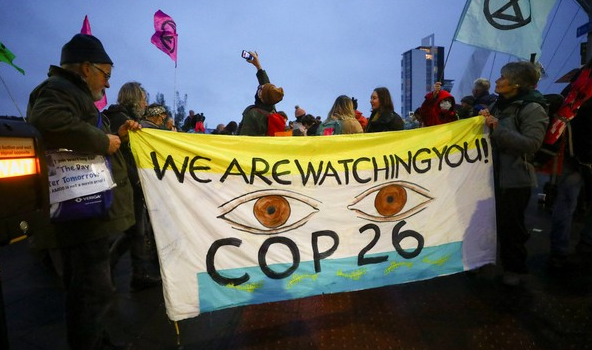
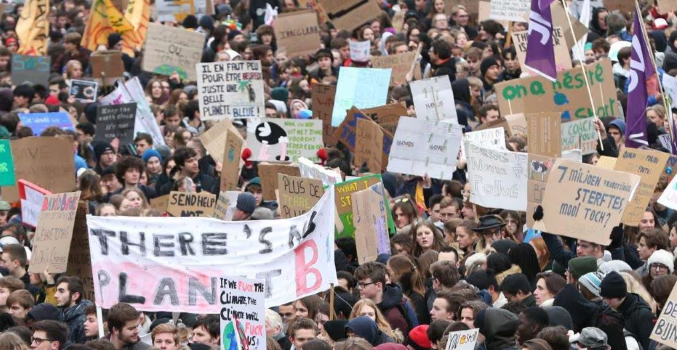
Education Secretary Nadhim Zahawi has called on young climate activists to hold their protests during weekends instead of skipping school. His remarks came as youth demonstrators gathered in Glasgow, demanding decisive climate action from world leaders amid the ongoing Cop26 summit.

Prominent activists such as Greta Thunberg and Vanessa Nakate are set to address crowds at the end of a march through the city. Speaking to Times Radio, Zahawi expressed his support for lawful demonstrations but urged students to avoid disrupting their education. “We have two weekends of Cop26 here in Glasgow. I would encourage them to make their voices heard then,” he said, adding that he is open to engaging with young people who wish to discuss their concerns.

As part of Cop26, Zahawi will outline government initiatives to place climate change at the centre of education. These include a new Climate Leaders Award, modelled on the Duke of Edinburgh scheme, recognising students’ efforts to protect the environment. Additionally, a draft sustainability and climate change strategy aims to integrate climate evidence into the curriculum, providing teachers with resources for science, geography, and citizenship education.

The strategy, however, states that schools should remain impartial. It emphasises that while encouraging interest in climate issues is important, promoting participation in specific campaigns or protests is inappropriate.

Zahawi highlighted the importance of inspiring students to pursue careers in science, technology, and innovation as a way to combat climate change. He also announced the Department for Education’s plans to test “energy pods,” a carbon-neutral alternative to traditional heating systems, in schools.

Education ministers from various countries will join Zahawi in a panel discussion during the summit, discussing innovative approaches to integrating climate awareness into education.

Nick Brook, deputy general secretary of the school leaders’ union NAHT, acknowledged the passion of young people about climate change. He emphasised the need for schools to balance supporting activism with minimising disruptions to learning.

Jim Banks Complies with Twitter’s Rules After Post About Transgender Official

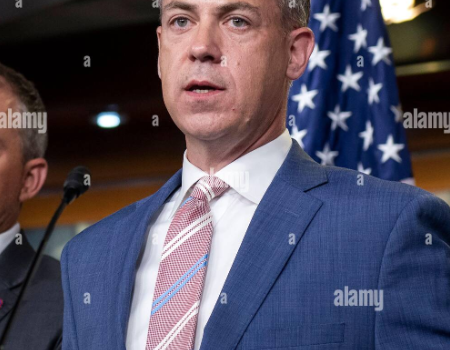
Indiana Congressman Jim Banks has regained access to his official Twitter account following the deletion of a post that violated the platform’s policies. The Republican representative complied with Twitter’s demand to remove his 19 October post about Dr Rachel Levine, the first openly transgender four-star officer in the U.S. uniformed services and the Assistant Secretary of Health.

Banks, a vocal supporter of Donald Trump and leader of the Republican Study Committee, had criticised Levine’s promotion in the U.S. Public Health Service Commissioned Corps. His tweet stated, “The title of first female four-star officer gets taken by a man,” prompting Twitter to flag the post for violating its policy against “targeted misgendering” of transgender individuals.

The post was removed, and Banks’ account was suspended on 23 October. Twitter spokesperson Trenton Kennedy confirmed that Banks followed the necessary steps to acknowledge the rule violation, allowing him to restore access and post a video announcing his return with the caption, “I’m back.”

Banks stood by his original statement despite deleting the post, describing Twitter’s enforcement as “biased and arbitrary censorship.” He added, “Twitter is a vital platform for elected officials to engage with voters, which makes its selective censorship a serious concern. Fighting against this will remain a priority during my time in Congress.”

Banks, who represents northeastern Indiana, has frequently garnered attention for his right-wing social media commentary. Earlier this year, he was appointed by House Republican Leader Kevin McCarthy to serve on the committee investigating the 6 January Capitol insurrection. However, House Speaker Nancy Pelosi rejected the nomination, citing concerns over maintaining the investigation’s integrity.

Greta Thunberg Criticises COP26 as “A Show of Empty Promises”

Climate activist Greta Thunberg has labelled COP26 a “failure,” accusing global leaders of prioritising business interests over meaningful climate action. Speaking to thousands gathered in Glasgow’s George Square after a march organised by Fridays For Future, Thunberg called the summit a “greenwash festival” and condemned leaders for delivering “empty promises.”

“This is no longer a climate conference,” Thunberg declared. “It’s a celebration of maintaining business as usual—drowning out the voices of those most affected by climate change with greenwashing rhetoric.” She criticised the persistent expansion of fossil fuel projects, including new coal mines and oil licences, despite promises to combat the climate crisis.

Ugandan activist Vanessa Nakate joined Thunberg in highlighting the disproportionate burden faced by the Global South, particularly Africa. “Historically, Africa has contributed just 3% of global emissions, yet we endure some of the worst impacts,” Nakate said, lamenting the erasure of activists from vulnerable regions in global discussions. “How can we achieve climate justice if their voices are excluded?”

Despite frustration, Nakate emphasised the power of grassroots efforts: “No action is too small to matter, and no voice is too insignificant to create change.”

The protest drew an estimated 8,000 participants, many of them schoolchildren defying government warnings against skipping classes. Downing Street criticised the timing of the protests, citing concerns about pandemic-related disruptions to education. However, young activists like 14-year-old Charlie O’Rourke from Glasgow defended their decision. “Leaders need to stop prioritising profit and start listening to what the planet needs,” he said.

UK officials have attempted to channel youth passion into structured initiatives, such as incorporating climate education into curricula and reducing school building emissions. However, activists remain sceptical of these measures, stressing the need for immediate and bold action.

As protests continue, the resounding message from Glasgow is clear: words are no substitute for action. Thunberg urged attendees to hold leaders accountable and to remain hopeful, stating, “Faith in the future will drive us toward the world we imagine—a sustainable one.”

From Teaching to Heroism: How Ridloff’s Journey Redefines Representation in Film

Lauren Ridloff’s portrayal of Makkari in Chloé Zhao’s Eternals marks a historic moment as the Marvel Cinematic Universe introduces its first deaf superhero. Ridloff, a former kindergarten teacher turned Tony-nominated actor, reflects on her transformative journey and the responsibilities of representing the deaf community on a global platform.

Three years ago, Ridloff expressed a desire to play a superhero in an interview with The New York Times, despite her doubts about Hollywood’s readiness for a deaf actor. That aspiration materialised in Eternals, where Makkari, an immortal with super-speed, brings a fresh dynamic to Marvel’s superhero roster. “It felt like a manifestation,” Ridloff said. “At the time, I wasn’t even sure if I wanted to continue acting. I had left teaching, and Broadway was ending. I was terrified of what might come next.”

The film challenges traditional superhero narratives, incorporating diverse characters and addressing underrepresented communities. For Ridloff, stepping into the role was initially daunting. “The weight of being the first deaf superhero overwhelmed me,” she said. Yet, during a meditative jog, she had an epiphany: “Focusing on my personal story and using ‘I’ instead of ‘we’ allowed me to authentically represent myself and connect with others.”

Ridloff’s acting career began unexpectedly when she worked as a sign language consultant for Children of a Lesser God. A table read turned into a starring role, earning her critical acclaim. Since then, she has appeared in The Walking Dead and Sound of Metal. “Teaching kindergarten prepared me for storytelling. Children are the toughest audience—they taught me how to captivate,” she said.

Director Chloé Zhao praised Ridloff’s charisma, calling her “joyful, mischievous, and captivating.” Zhao saw the actor’s qualities shine, infusing elements of her personality into Makkari’s character.

Ridloff’s role in Eternals is part of a broader effort to diversify the MCU. The film introduces milestones such as its first Asian-American lead and the franchise’s first on-screen same-sex kiss. Zhao believes this signals a shift in the genre: “We’re revisiting traditional superhero tropes, challenging them, and expanding what this genre can be.”

Ridloff is excited about the growing representation of deaf characters, noting the upcoming introduction of another deaf superhero in the Hawkeye series. “I’m thrilled that I won’t be the only one. It’s inspiring to see progress,” she said.

Beyond the superhero realm, Ridloff dreams of venturing into period dramas. “I’d love to be part of something like Bridgerton. Deaf characters in historical settings are rarely explored, and I’d like to change that,” she said with a smile.

Scotland’s First Minister Advocates for Bold Emissions Targets Despite Challenges

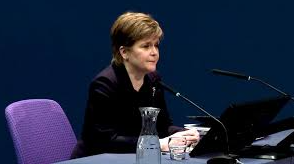
Nicola Sturgeon, Scotland’s First Minister, has stood by her government’s ambitious target of cutting emissions by 75% by 2030, calling it a necessary step in combating the global climate crisis. Speaking at the Cop26 climate summit in Glasgow, she acknowledged criticism from Chris Stark, Chief Executive of the Climate Change Committee, who recently described the targets as “overcooked” during a BBC Scotland interview.

During a discussion hosted by the New York Times, Ms Sturgeon conceded the targets were “ambitious,” but emphasised that pushing for higher reductions would likely lead to greater progress overall. “In a world where under-ambition is the norm, I’d rather be critiqued for aiming too high,” she said.

Sturgeon also highlighted the pressing need for developed nations to take the lead in emissions reduction, stating they bear greater responsibility for the climate crisis. “We must raise our ambition. Science warns that failing to limit global warming to 1.5°C will have catastrophic consequences,” she said.

The First Minister remained measured on the controversial Cambo oil field project near Shetland, arguing it should undergo a thorough climate assessment despite its existing licence. She stressed the importance of balancing the transition to renewable energy with ensuring communities reliant on oil and gas are not left behind.

At another Cop26 event, Sturgeon partnered with London Mayor Sadiq Khan to discuss collaborative approaches to achieving net-zero goals. She highlighted the complementary strengths of Scotland and London, suggesting that partnership would yield more substantial results than rivalry.

The session concluded with questions about whether Scotland, as an independent nation, could manage the financial demands of meeting its climate targets. Sturgeon responded confidently, noting that Scotland is already handling much of this responsibility under devolved powers.

The President Urges Democrats to Deliver Results Amid Challenges

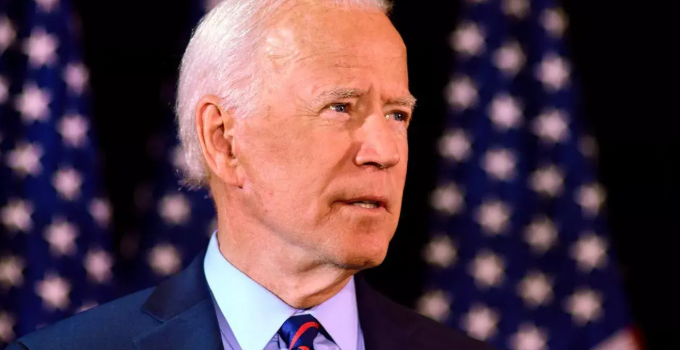
President Joe Biden responded to the Democratic Party’s losses in Tuesday’s elections, emphasising the need for his party to “deliver for the American people.” However, he dismissed the idea that the results were a direct rejection of his presidency.

Speaking on Wednesday, Biden argued that the failure to pass his $1 trillion infrastructure plan and the $1.75 trillion social and climate spending package prior to the elections did not significantly impact voters’ decisions.

In Virginia, a state Biden won by 10 percentage points in 2020, Democrat Terry McAuliffe lost the governor’s race to Republican newcomer Glenn Youngkin. Reflecting on the loss, Biden admitted, “I think we should have passed it before Election Day,” but also suggested that the outcome was unlikely to sway Republican-leaning voters regardless.

Biden noted that public frustration with issues like the pandemic, employment concerns, and rising fuel prices played a critical role in voter sentiment. “People are upset and uncertain about a lot of things,” he acknowledged.

Indigenous Communities Seek Recognition and Support Amid Climate and Housing Crises

Theresa Dardar, a member of the Pointe-Au-Chien Indian Tribe, recalls a time when Louisiana’s coastal landscape was a network of recognisable waterways. Today, she barely recognises the area, as rising sea levels and stronger storms have turned once-protected marshlands into open waters.

“We’ve lost all our markers,” Dardar explains from her community centre in Pointe-Aux-Chenes. “It’s so open now. Without guidance, I wouldn’t know where to go.”

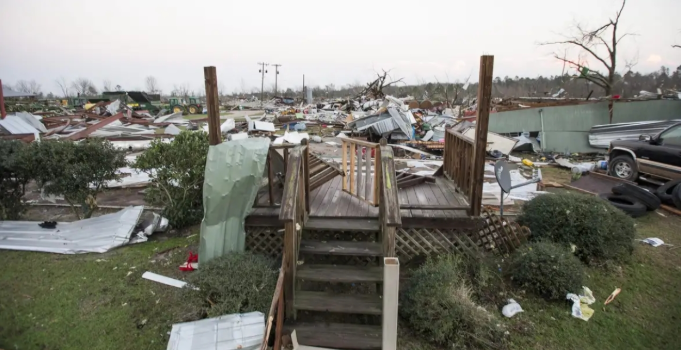
The impacts of the climate crisis, including land erosion, increased salinity, and extreme weather, have devastated Louisiana’s Indigenous Tribes, particularly after Hurricane Ida struck in August. Winds exceeding 200 mph levelled homes, leaving thousands of residents in Terrebonne and Lafourche parishes homeless. Dardar fears another storm of this magnitude could obliterate what remains of their community.

“We’ve always been neglected,” she says. “If FEMA doesn’t help, I don’t know what we’ll do. Most people don’t have the funds to rebuild.”

Despite state and federal promises, aid has been slow. Residents remain scattered across temporary shelters, while others continue living in storm-damaged homes or vehicles. Requests for 10,000 FEMA trailers have gone unanswered, and many feel abandoned in the face of worsening conditions.

Coastal Indigenous Tribes like Pointe-Au-Chien, with roots tracing back to Chitimacha and other groups, face layered crises of colonisation, environmental degradation, and lack of federal recognition. This status limits access to essential funding and disaster relief, exacerbating their vulnerability to climate disasters.

The Isle de Jean Charles, home to the Biloxi-Chitimacha-Choctaw Tribe, exemplifies the crisis. The island has lost 98% of its land due to rising waters and erosion. While a federal grant in 2016 enabled plans to relocate inland, Tribal leaders argue that state interference undermined their vision for sustainable resettlement.

Hurricane Ida left the Isle further battered. Tribal councilman Chris Brunet posted a defiant sign outside his home reading, “ISLE DE JEAN CHARLES IS NOT DEAD. CLIMATE CHANGE SUCKS.”

Experts warn that Louisiana’s coastline could vanish within decades. Tulane University’s Torbjörn Törnqvist reports that sea-level rise exceeding 6-9 millimetres annually will overwhelm remaining wetlands.

For Dardar and others, immediate action is critical. “The coast is the last thing on their minds,” she laments. “If we want to save anything, we have to protect it—and nothing’s being done.”