


Black individuals remain seven times more likely to face stop and search than white counterparts

New figures from the Home Office show a small reduction in racial disparities in police stop-and-search practices, though Black individuals remain significantly more likely to be stopped than white people. Data reveals that Black people were searched at a rate seven times higher in the year ending March 2021, compared to 8.8 times the previous year.

The use of stop and search rose during the pandemic, reaching its highest level since 2014. Officers conducted 695,009 searches, a 24% increase from the previous year. Arrests followed in 79,391 cases, but concerns remain about the disparity and its impact on community trust.

The slight decrease in disparity is linked to a rise in stops among white individuals, which increased by 26% (from 280,952 to 354,098). However, young males aged 15-34 from Black, Asian, or other minority ethnic groups accounted for 32% of all stop and searches, despite representing only 2.6% of the population. Among Black, Asian, and minority ethnic males aged 15-19, the search rate was 208 per 1,000 people—three times higher than their white peers.

Drug-related searches saw the most significant increase, rising by 36% to 478,576 compared to the previous year. Despite this, four out of five searches resulted in no further action, raising questions about the efficacy and fairness of the tactic.

Sgt Andy George, President of the National Black Police Association, expressed concern over the findings. “The fact that one in five young people from ethnic minority backgrounds were stopped is alarming. Policing must address why so many searches lead to no further action and how the approach to stops may alienate entire communities,” he said.

Martin Hewitt, Chair of the National Police Chiefs’ Council, acknowledged the ongoing challenges in police relations with Black communities. “The confidence gap between Black communities and policing is unacceptable. We cannot claim to police by consent if any segment of society doesn’t trust us or believe in our work,” he stated.

The Home Office defended stop and search as a critical tool in addressing serious crime, emphasising that safeguards are in place to prevent racial profiling. A spokesperson added, “Young Black men are disproportionately victims of knife crime, and stop and search plays a vital role in protecting the public. However, no one should be targeted based on race.”

While the data suggests progress, it highlights the need for continued reform to build trust and eliminate racial inequalities in policing.

Urbanites and Artists Collaborate to Revive Countryside Life Through Creativity

Xing Weibin finds joy in simple countryside mornings—coffee in hand, surrounded by nature at his Saxiu art space. This peaceful retreat is emblematic of a broader trend, as rural China increasingly draws urban dwellers seeking tranquillity away from city life.

Xing first visited Shishe village in Zhejiang’s Tonglu county in 2015. With its serene 13,840 acres and approximately 900 residents, the village struck him as an ideal setting for a model rural community. Envisioning art as a catalyst for economic growth, Xing began transforming local residences into creative hubs. By 2017, his Saxiu art space was open, hosting exhibitions, book-sharing events, and coffee tastings, blending art with rural revitalisation.

“Rural revival through art depends on preserving local artisanship and traditions,” Xing explains, emphasising that collaboration with villagers is essential for lasting impact.

Other initiatives echo Xing’s vision. In Zhejiang, academic Cong Zhiqiang tested his ideas on rural development in Gejia, a historic village known for bamboo weaving. Initially met with scepticism, Cong’s efforts—including simple gestures like installing benches—gradually gained villagers’ trust. Over two weeks in 2019, Cong renovated local spaces, integrating artistic approaches to solve practical challenges.

Sun Jiashan, a researcher with the Chinese National Academy of Arts, highlights the importance of grassroots culture in such projects. “Art revitalisation must utilise local resources and inspire the community,” he says.

Collaborations between local governments, academics, and artists, like Ninghai county’s “rural revitalisation through art” initiative, are transforming villages into vibrant, sustainable communities. By integrating tradition, creativity, and community effort, rural China is crafting a new narrative of artistic and cultural renewal.

UK Added to Red List, Enforcing Hotel Quarantine for Fully Vaccinated Travellers

Qatar has added the United Kingdom to its red list for international travel, requiring all UK visitors to quarantine upon arrival. Fully vaccinated travellers must now spend two nights in a designated quarantine hotel, while unvaccinated visitors face a seven-day hotel quarantine.

This new measure, introduced due to rising coronavirus cases, impacts thousands of tourists planning trips to the Middle Eastern destination, especially during its popular winter season. Alongside the UK, 20 other nations, including Russia, Turkey, and Singapore, were added to Qatar’s red list.

Travellers from red-listed countries must provide a negative PCR test taken within 72 hours before departure. For those arriving from the green list, fully vaccinated visitors are exempt from quarantine but must still undergo a PCR test. Unvaccinated individuals from green-listed countries must complete a seven-day quarantine. Exceptions apply for children and those visiting close relatives.

In contrast to Qatar’s red list, the “exceptional red list” includes countries like Egypt, India, and Sri Lanka, where stricter protocols are in place.

Qatar’s updated restrictions follow Morocco’s decision on 20 October to ban direct flights from the UK, Germany, and the Netherlands due to surging case numbers in these countries. While cases in the UK have risen recently, it remains uncertain whether this marks the beginning of a sustained increase.

Azeem Rafiq’s Brave Statements Urge Action Against Discrimination in Yorkshire Cricket

Prime Minister Boris Johnson has urged cricket authorities to respond swiftly to allegations of racism brought to light by former Yorkshire cricketer Azeem Rafiq. Speaking to MPs, Rafiq detailed the racial abuse he faced during his time at Yorkshire County Cricket Club, which he believes ended his professional career.

In a statement, the Prime Minister praised Rafiq’s courage in addressing the issue before the Commons Digital, Culture, Media and Sport Committee. “There is no justification for racism in any part of society. Cricket authorities, including Yorkshire and the England Cricket Board (ECB), must act decisively,” Johnson tweeted.

MPs expressed outrage over Rafiq’s testimony, which exposed an entrenched culture of discrimination. Labour MP Alex Sobel, representing Leeds North West—home to Yorkshire’s Headingley ground—described the revelations as “mind-blowing.” He criticised responses from the ECB as evasive and urged others in the sport to come forward with their experiences.

Health Secretary Sajid Javid described Rafiq’s testimony as “heart-rending,” emphasising that such behaviour went far beyond banter. Culture Secretary Nadine Dorries added that Rafiq’s bravery highlighted the need for significant reform. Meanwhile, Labour leader Sir Keir Starmer called for immediate measures to eliminate racism from cricket, criticising Yorkshire’s inadequate response to past complaints.

Rafiq’s testimony revealed a systemic problem in the sport, with widespread bystander inaction. Fighting back tears during the nearly two-hour session, Rafiq said his efforts aim to “give a voice to the voiceless” and shed light on patterns of discrimination.

Downing Street labelled the evidence “deeply concerning,” reiterating that racism has no place in sport or society. Other MPs, including Angela Rayner and Imran Hussein, echoed the sentiment, urging action rather than platitudes.

As cricket grapples with these revelations, Rafiq’s bravery has sparked a broader conversation about confronting racism, ensuring accountability, and fostering an inclusive culture.

Music groups are reconnecting those with dementia to their past and improving their wellbeing through creative social activities

Across the UK, an increasing number of people living with dementia are benefiting from social prescribing initiatives that integrate music and creativity into their care. These programmes are proving particularly impactful, offering individuals an opportunity to engage in music-making, songwriting, and group performances, all while helping to enhance their mental and physical wellbeing.

Graham, now 76, is one such person who has rediscovered his love for music despite living with vascular dementia. After a decade of not playing his guitar following the loss of his wife, a phone call from a local music group reignited his passion. Since joining the String of Hearts music programme in Sale, near Manchester, he has found new joy in music, which he says gives him “an incentive to carry on.” Despite the challenges dementia presents, Graham is a regular attendee at group sessions, where he plays a range of instruments and helps others with their music. The programme, run by the community arts organisation String of Hearts, has seen growing popularity, with co-director Lucy Geddes handling an increasing number of referrals each month.

Music’s benefits for those living with dementia are well-documented. It helps stimulate memory, re-establishes personal identity, and combats the apathy and agitation that often accompany the condition. Studies show that familiar music can significantly trigger reminiscence, even in advanced stages of dementia. In addition to cognitive benefits, participating in music-making has been linked to improvements in overall wellbeing. Research indicates that older adults with dementia who engage in music-making show significant improvements in cognitive functioning.

Social prescribing itself is on the rise as part of the UK’s broader healthcare response to the strain on services, exacerbated by the pandemic. Instead of offering clinical treatment, social prescribing connects individuals with activities that support their social, mental, and physical health. Music groups are increasingly part of these referrals, particularly for dementia patients, offering a non-clinical avenue to enhance their lives.

In Brighton, a singing group led by Udita Everett, initially created for those with respiratory issues, has expanded to support those living with dementia. After NHS funding was cut, Everett and her team took the initiative to continue their sessions, eventually moving them online during the pandemic, which allowed them to reach even more participants.

However, while the benefits of social prescribing are clear, maintaining sustainable funding and support for such programmes remains a concern. Music care initiatives like Musica in Devon, which studies the impact of music on dementia, are working to secure long-term funding while ensuring that the unique needs of dementia patients are met.

Through these initiatives, music not only provides a means of expression for those living with dementia but also fosters a sense of community, helping them remain connected to their identities and memories. As Graham reflects, music has given him much more than just a hobby; it has provided him with a renewed sense of purpose.

Folk band accuses retailer of copying their charity song arrangement for its 2021 festive advert

John Lewis has rejected accusations from British alt-folk band The Portraits that its 2021 Christmas advert used a music arrangement similar to theirs without permission. The retailer denies claims that their rendition of Together in Electric Dreams, originally a 1984 hit by The Human League, was copied for the ad.

The Portraits allege they reached out to John Lewis in March 2021 to propose their version for the Christmas campaign but received no reply. Their adaptation, released the previous year, was a charitable project supporting bereavement and mental health organisations during the pandemic.

In a Facebook post, the band expressed disappointment, stating: “We had a dream that our song could be part of a major campaign to maximise charitable donations. Instead, John Lewis adopted a version borrowing the ‘feeling’ and elements of our arrangement without notifying us.”

John Lewis responded by firmly denying the accusations, asserting there was “no substance to the claims.” A company spokesperson clarified that the individual reportedly contacted by The Portraits had left the organisation earlier in 2021.

They explained, “The music selection is the last step in our advert creation, finalised only in late October. The process is managed entirely by our agency, and we do not accept or review external ideas.”

This year’s soundtrack features 20-year-old London-based singer-songwriter Lola Young, joining a roster of past contributors like Ellie Goulding and Lily Allen. The Portraits maintain their stance, but John Lewis has stood by its practices in delivering one of the UK’s most anticipated annual festive campaigns.

“How the cast, challenges, and creative choices shaped the beginning of a cultural phenomenon ovThe release of Harry Potter and the Sorcerer’s Stone on November 13, 2001, marked the start of a cinematic franchise that redefined the fantasy genre. Based on J.K. Rowling’s beloved novels, the film brought the young wizard and his friends to life on the big screen in spectacular fashion, becoming the second highest-grossing movie of its time. Terms like “Muggle” and “Quidditch” became part of everyday language, and the magic of Hogwarts captivated audiences of all ages.

Director Chris Columbus, known for his ability to work with young actors, helmed the project with dedication and creativity. The primarily British cast featured emerging talents like Daniel Radcliffe, Rupert Grint, and Emma Watson, alongside seasoned stars such as Maggie Smith and Alan Rickman. Radcliffe’s casting as Harry Potter was almost derailed by his parents’ initial reluctance, but he eventually became the face of a generation’s beloved hero.

Filming, conducted in English studios and locations like Alnwick Castle, presented technical challenges and unforgettable moments. From practical effects to humorous interactions with the cast, the set was a hub of learning and camaraderie. Richard Harris, who portrayed Dumbledore, left a lasting impression with his eccentric personality, even after his departure following the second movie.

Twenty years later, Harry Potter and the Sorcerer’s Stone remains a landmark in cinematic history, turning a fictional world into a global phenomenon. The cultural impact of the series endures, with fans of all ages still celebrating its unparalleled magic.er 20 years ago”

Advice to Switch Tariffs Could Lead to Costlier Bills for Vulnerable Households

The UK Government has come under fire for encouraging energy customers to switch tariffs despite the ongoing energy price crisis. The Department for Work and Pensions (DWP) recently sent letters to recipients of Winter Fuel Payments featuring a suggestion to save money by switching energy providers. This advice, prominently displayed on the back of envelopes, could inadvertently lead to higher bills for many households.

Conflicting Messaging
The message on the envelopes read, “What would you do with an extra £290?”—a reference to average savings made by switching to cheaper tariffs in 2020. However, the energy market has since shifted dramatically, with prices surging and cheaper tariffs no longer available. Consumers on default energy tariffs are currently protected by the government’s energy price cap, which limits how much providers can charge.

Martin Lewis, founder of MoneySavingExpert.com, called the messaging “damaging,” highlighting that most customers would be better off staying on their provider’s standard variable tariff. He explained that these tariffs are price-capped and often more affordable than fixed deals, which energy firms are aggressively marketing at inflated rates.

A Dangerous Suggestion
“This is a time of extreme energy bill pressures, and clarity of advice is crucial,” said Lewis. “The Government’s suggestion to switch tariffs reinforces misleading messages from energy providers. Many are using marketing tactics to push customers into fixed deals that are up to 30% more expensive. For most people, the best course of action is to do nothing and remain on the price-capped tariff.”

The DWP admitted that the envelopes were designed before the recent price hikes. A spokesperson clarified, “We have been encouraging tariff switching for years as a way to save money, but the message on these envelopes was a general suggestion and no further envelopes with this message will be issued.”

Support for Vulnerable Households
The government has pledged to support low-income and vulnerable groups through the energy crisis. However, consumer advocates argue that the incorrect messaging undermines these efforts. Lewis stressed the importance of clear and accurate advice, particularly for those most at risk of financial hardship during the colder months.

A Call for Better Communication
The incident underscores the need for updated and context-aware public messaging. As the energy market continues to evolve, experts emphasise that advice should reflect current realities to avoid exacerbating financial burdens on households already struggling to manage soaring costs.

Intermission Youth Theatre Redefines Romeo and Juliet with a Modern, Inclusive Twist

At Chelsea Theatre in southwest London, anticipation fills the air as Intermission Youth Theatre prepares for the debut of its innovative production, Juliet & Romeo. The charity engages young people from disadvantaged backgrounds to perform Shakespeare, offering a transformative experience both on and off the stage. With rehearsals in full swing, the cast balances long days at school, work, or college with their passion for the arts.

A Radical Approach
Led by artistic director Darren Raymond, the production flips traditional narratives, placing the iconic Romeo and Juliet in a contemporary London setting, complete with references to COVID-19 and the Black Lives Matter movement. The cast, predominantly Black, brings their own experiences to the story, which opens in a modern-day testing centre.

Raymond, who founded the group in 2008, envisioned it as a way to give back to communities with high levels of deprivation, like the one he grew up in. His work has drawn the support of renowned actor Mark Rylance, a trustee of the charity, who runs masterclasses and provides mentorship.

Why It Matters
Rylance praises Intermission’s “non-precious” approach to Shakespeare, which encourages young actors to breathe life into the text. The cast has spent nearly a year exploring and shaping the play—a stark contrast to the rushed schedules of professional theatre. This freedom allows for creativity and a deep connection to the material.

Shakespeare, as Rylance notes, resonates with the times: Juliet & Romeo’s themes of quarantine and societal tension mirror modern struggles. Reflecting on his own experiences performing Shakespeare during pivotal moments, Rylance says the Bard’s work continually intersects with current events, offering profound insights into human nature.

Breaking Barriers in the Arts
For many participants, Intermission represents their first foray outside their local communities. The experience builds confidence, self-awareness, and a sense of belonging. Raymond and Rylance both emphasise the importance of addressing systemic inequality in the arts. A 2020 study revealed that feelings of exclusion often deter non-white performers from pursuing careers in theatre.

“We need grassroots initiatives like this,” Rylance says, drawing parallels to investment in youth sports that transformed British Olympic success. Raymond echoes this sentiment, calling for better funding to ensure equitable access to the arts.

A Call for Change
Both leaders stress that real progress requires tackling inequities at their root. “It’s not just about changing the face of theatre,” Rylance explains. “It’s about ensuring the system reflects the society we live in.” Raymond adds, “The Black community has been ignored for centuries. It’s time to change that.”

Juliet & Romeo is more than a play; it’s a movement for inclusivity, creativity, and empowerment—proof that Shakespeare’s stories still have the power to inspire and unite, reimagined for a new generation.

Thousands Face Freezing Conditions as Geopolitical Tensions Escalate

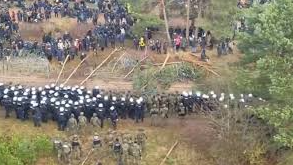
A growing humanitarian crisis is unfolding at the Poland-Belarus border, where thousands of migrants, including families with young children, are trapped in freezing conditions with little food or shelter. The situation has become a flashpoint for geopolitical tensions between Belarus, the European Union (EU), and their allies.

What’s Happening?
Since Monday, approximately 2,000 migrants have camped along the Belarusian side of the border, seeking to cross into Poland, an EU member state. They face barbed wire fences and thousands of Polish soldiers deployed to prevent illegal crossings. Videos and images have shown babies as young as a few months old enduring harsh conditions, with some families reporting days without food.

Reports suggest that Belarus has encouraged migrants from war-torn nations like Syria and Iraq to travel to its territory, with promises of access to Europe. In response, Polish authorities recorded nearly 1,000 attempted border crossings within two days and deployed additional troops. Poland has accused Belarus of attempting to provoke a larger conflict.

The Role of Belarus
Belarusian President Alexander Lukashenko has been accused of orchestrating the crisis in retaliation for EU sanctions imposed on his regime after a brutal crackdown on protests following his disputed 2020 re-election. Travel agencies reportedly offered package deals to migrants, encouraging them to fly to Belarus with the implication they could enter Europe.

Lukashenko denies using migrants as political tools and has shifted blame to Europe, criticising Poland’s military presence at the border. Belarusian officials summoned Poland’s defence attaché, rejecting claims of Belarusian military involvement.

Poland and the EU’s Response
Poland has declared a state of emergency in the border region, restricting aid workers and journalists from accessing the area. It has deployed over 15,000 troops and maintains its stance of pushing back migrants, drawing criticism from human rights groups. Poland insists it is acting to protect its borders and the EU’s eastern frontier.

The EU has backed Poland, accusing Belarus of engaging in “hybrid warfare” to destabilise the bloc. European Commission President Ursula von der Leyen announced plans to expand sanctions against Belarus, calling the exploitation of migrants unacceptable.

International Reactions
The crisis has drawn widespread condemnation. The United States has pledged additional sanctions, with President Joe Biden’s administration criticising Belarus’s “inhumane actions.” German Chancellor Angela Merkel urged Russian President Vladimir Putin to pressure Lukashenko, while Russia blamed the EU, accusing it of hypocrisy and humanitarian failures.

In a show of solidarity with Belarus, Russia dispatched nuclear-capable bombers to patrol its airspace, further escalating tensions. Meanwhile, UN human rights chief Michelle Bachelet called for immediate de-escalation, urging nations to provide migrants with adequate food, shelter, and medical care.

A Humanitarian Catastrophe in the Making
As diplomatic manoeuvres continue, the human cost remains severe. Freezing temperatures and inadequate supplies put lives at risk, while the migrants find themselves caught in the middle of a geopolitical dispute. The international community faces increasing pressure to resolve the crisis and prevent further suffering at Europe’s doorstep.