




Fishing Industry Secures Agreement for Coexistence Amid Military Exercises

Irish fishing industry leaders have secured assurances from Russia’s ambassador to Ireland, Yury Filatov, that traditional fishing activities will not face disruption during upcoming Russian naval exercises. The meeting in Dublin follows concerns over planned military drills in international waters off Ireland’s south-west coast, within its exclusive economic zone.

Brendan Byrne, CEO of the Irish Fish Processors and Exporters Association, described the discussions as highly productive. “We’ve agreed on a buffer zone to ensure safe coexistence between Russian vessels and Irish fishing trawlers during the operations,” he said. Byrne highlighted the ambassador’s deep understanding of Irish fishing and the pressures faced by the industry, contrasting it with perceived inadequate government engagement.

The exercises, set to begin on February 1, will occur in waters traditionally used by Irish fishermen. Byrne emphasised the importance of these grounds, stating, “This area is vital to our fishing industry, and we’ve ensured its protection while maintaining diplomatic dialogue.”

Patrick Murphy, head of the Irish South and West Fish Producers Organisation, echoed Byrne’s optimism, noting that fishing vessels will decide their course of action next week. “We received clear assurances that our fishing activities can proceed safely, and this meeting has brought much-needed clarity and cooperation,” he added.

However, the Russian Embassy later issued a statement suggesting no formal guarantees had been made during the meeting, though they acknowledged it as productive.

The Oireachtas Foreign Affairs Committee has also invited Ambassador Filatov to address concerns over the naval drills. Charlie Flanagan, the committee chair, expressed hope for a constructive dialogue. “This engagement is an opportunity to address any lingering questions and ensure transparency,” he said.

The developments reflect a careful balancing act as Ireland navigates its economic and security interests alongside its diplomatic relations with Russia.
Senate Minority Leader Urges a Moderate Nominee to Replace Justice Breyer

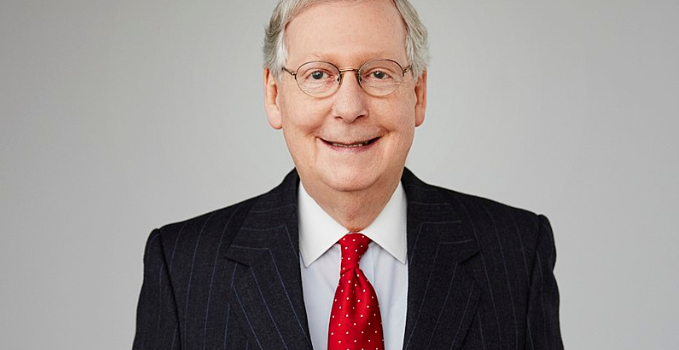
Senate Minority Leader Mitch McConnell has cautioned President Joe Biden against selecting a Supreme Court nominee influenced by what he described as the “radical left.” The warning comes as Justice Stephen Breyer prepares to retire, with Biden pledging to announce his replacement by the end of February.

McConnell, a Republican senator from Kentucky and key architect of the GOP’s reshaping of the federal judiciary during Donald Trump’s presidency, stressed the importance of a moderate choice. “President Biden must not outsource this critical decision to extreme factions,” he stated on 27 January.

With the Senate evenly split at 50-50, McConnell argued that Biden’s mandate was to “govern from the centre” and “unite America.” He called for a nominee who respects the Constitution and adheres to the written text of the law.

Past Battles Over Supreme Court Appointments
McConnell’s legacy in judicial appointments is marked by controversy. During Barack Obama’s presidency, he blocked the nomination of Merrick Garland to replace the late Justice Antonin Scalia in 2016, delaying the appointment until after Trump’s election. McConnell has described that decision as one of his proudest political achievements.

In contrast, just weeks before the 2020 presidential election, McConnell expedited the confirmation of conservative Justice Amy Coney Barrett, despite protests from Democrats who cited hypocrisy.

Biden’s Path Forward in a Divided Senate
While Democrats now hold the majority in the Senate, McConnell’s procedural changes during his tenure mean Biden’s nominee will require only a simple majority to be confirmed. However, the tight Senate split and upcoming midterm elections could complicate the process.

Senate Majority Leader Chuck Schumer has promised a “fair and swift process” for the nominee’s confirmation. Biden is expected to announce his choice by late February, with the potential to shape the court amid contentious political dynamics.

McConnell’s Reflection on Justice Breyer
Despite his criticisms, McConnell praised Justice Breyer for his dedication to a nonpartisan judiciary. “Justice Breyer commands respect across the legal spectrum, even from those who differ with his judicial philosophy,” he said, acknowledging Breyer’s exemplary service on the Supreme Court.

The forthcoming nomination will test Biden’s ability to navigate a divided Senate while balancing the expectations of his party and a volatile political landscape.

Manchester Mayor Criticises Overground Station Proposal, Calls for Greater Ambition

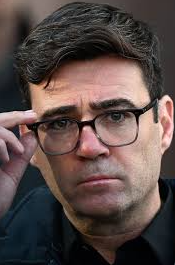
Andy Burnham, Mayor of Greater Manchester, has criticised the government’s current HS2 plans, urging them to demonstrate “greater ambition” for Northern England. His concerns focus on the proposed overground station at Manchester Piccadilly, which he labelled the “wrong solution” during a press conference on Monday.

The HS2 Phase 2b bill, introduced to Parliament, promises significant improvements to rail connectivity, including a reduction in travel times of up to 55 minutes between London and Manchester, and 45 minutes between Birmingham and Manchester. Additionally, the Department for Transport (DfT) claims the project will at least double rail capacity on these routes.

Transport Secretary Grant Shapps described the bill as a “landmark moment” for the North’s transport infrastructure. The plans include laying HS2 tracks and constructing new stations at Manchester Piccadilly and Manchester Airport. However, Burnham and Manchester City Council leader Bev Craig advocate for an underground station at Piccadilly to maximise land use and accommodate future demands.

The Debate Over HS2’s Design
Burnham argued that the overground design would waste valuable development space and create operational inefficiencies, such as requiring trains between Liverpool and Leeds to reverse out of the station. He expressed concerns about the long-term implications, stating:

“What happens here will define Northern England for the next two centuries. If billions are being spent, it must be done right.”

Craig echoed his sentiment, calling for modifications to the plan during the bill’s passage through Parliament. “We welcome high-speed rail in Manchester but need the right solution for the city’s success,” she said.

Government Response and Budget Concerns
The DfT defended its proposal, arguing that an underground station would cause significant disruption, extend passenger travel times to platforms, and add up to £5 billion to the project’s cost. A surface station, the department claimed, offers better value for money and aligns with Manchester’s broader development goals.

However, HS2 continues to face opposition from environmental and financial watchdogs, including Stop HS2 North and HS2 Rebellion. Critics highlight the project’s growing budget, which increased from an initial £55.7 billion to a revised maximum of £98 billion in 2020. Despite these concerns, HS2 Minister Andrew Stephenson reaffirmed last year that the project remains within its adjusted budget.

As the bill progresses, Burnham and his allies plan to lobby for changes to ensure HS2 meets the North’s needs while maximising its potential benefits.

Refugees Return to Roxham Road as Canada Ends COVID-Era Ban

Migrants are once again heading to Canada seeking asylum after the country lifted a 20-month ban on such requests, originally imposed to curb the spread of COVID-19.

At the Greyhound station in Plattsburgh, New York, taxi drivers wait to ferry passengers on a short drive to Roxham Road, a snowy dead-end dirt road leading to the Canadian border. Here, groups of refugees arrive daily, greeted by Royal Canadian Mounted Police officers who inform them of the illegality of their crossing. Despite this, most migrants are promptly released and allowed to pursue their asylum claims while living and working freely in Canada.

Alejandro Cortez, a 25-year-old Colombian refugee, was among those arriving last week. Standing at the border, he expressed hope for a better future. “We all dream of success and a chance to change our lives,” he said, explaining he fled Colombia to escape violence and social unrest.

Policy Shift Contrasts with U.S. Approach
Canada’s decision to reopen the asylum process on November 21 starkly contrasts with the United States, where similar restrictions under Title 42 remain in effect. This U.S. policy, invoked in March 2020, has resulted in nearly 1.5 million expulsions, denying migrants the opportunity to seek asylum under the pretext of pandemic-related public health concerns.

The lifting of Canada’s asylum ban has seen a significant rise in border crossings, particularly at Roxham Road, a well-known point of entry for migrants bypassing official crossings. In November, 832 people sought asylum in Quebec compared to just 96 in October.

Migrants entering Canada through unofficial crossings like Roxham Road benefit from a loophole in the 2002 Safe Third Country Agreement between the U.S. and Canada. This agreement requires asylum seekers to apply in the first country they enter, but it applies only to official ports of entry. Thus, those crossing at non-official locations are allowed to remain in Canada and apply for protection.

Asylum Trends and Responses
Since February 2017, nearly 60,000 individuals have entered Canada illegally to seek asylum, with Roxham Road serving as a primary entry point. Canadian government data reveals that over 45,000 claims have been processed, with approximately 54% approved.

Unlike in Canada, the U.S. approach has faced intense criticism from international bodies, legal experts, and advocacy groups. Critics argue that the Title 42 policy lacks a solid scientific foundation and violates international asylum laws.

Janet McFetridge, a member of Plattsburg Cares, has witnessed the recent surge of migrants at Roxham Road. “People are crossing quickly, fearing the border might shut again,” she said.

At the border, a Canadian officer reiterated the legal consequences to a woman carrying a baby: “If you cross here, you will be arrested.” Her reply was calm yet determined: “Yes, it’s not a problem.” Moments later, her companion pulled a suitcase across the snowy divide, embodying the resilience and urgency of those seeking a new beginning.

Boxer Refutes Rumours About Allowing Fury vs Usyk Fight to Proceed

Anthony Joshua has strongly denied reports suggesting he is set to accept a £15 million offer to step aside, clearing the path for a Tyson Fury versus Oleksandr Usyk heavyweight title clash.

The Telegraph recently reported that Joshua was close to finalising the deal, which would enable Usyk and Fury to fight for the undisputed heavyweight title in April, likely in the Middle East. Despite these claims, Joshua, who invoked a rematch clause after his loss to Usyk, has stated no such agreement exists.

In a video shared online, Joshua addressed the speculation: “It’s crazy the interviews I’m seeing. People are quoting me saying I’ve accepted £15 million to step aside. I haven’t signed any contract or seen one. Until you hear it from me, ignore the nonsense. I control my destiny and handle my business smartly.”

Joshua emphasised his focus on making calculated decisions and urged fans not to believe unofficial sources.

Complications with Dillian Whyte’s Agreement
If a deal were to be arranged, it would also require the cooperation of Dillian Whyte, the mandatory challenger for Fury’s WBC belt. Negotiations with Whyte have been challenging, especially after the WBC mandated an 80:20 purse split in Fury’s favour. Talks have already been extended three times, with the current deadline set for Wednesday.

It remains unclear whether a resolution will be reached or if efforts will shift towards convincing Whyte to step aside, adding another layer of complexity to this high-stakes scenario in the heavyweight division.

The No Surprises Act Offers Key Protections for Patients Against Unexpected Charges

As of 1 January, the No Surprises Act has banned most unexpected medical bills, offering relief to many Americans who worry about unforeseen healthcare costs. Surveys by the Kaiser Family Foundation in 2018 and 2020 revealed that surprise medical bills top the list of financial concerns for Americans.

A 2020 Peterson-KFF Health System Tracker study found that 18% of emergency visits and 16% of in-network hospital stays included at least one out-of-network charge. This law aims to alleviate such issues. “Patients will no longer face excessive charges for out-of-network care they didn’t choose,” stated Senator Patty Murray, chair of the Senate Health, Education, Labour, and Pensions Committee.

What Defines a Surprise Medical Bill?
A surprise medical bill arises when a patient unknowingly receives care from an out-of-network provider, often during emergencies or when ancillary services like anaesthesia or lab work are provided at an in-network hospital. Patients are then left with “balance bills,” where providers charge the remainder after the insurer’s payment.

How the No Surprises Act Protects Patients
The act prohibits balance billing for:

Emergency services, even at out-of-network facilities.
Nonemergency care at in-network hospitals, including services like radiology, anaesthesia, and pathology.
Patients are required to pay only in-network copays, coinsurance, or deductibles. If an out-of-network provider is preferred, they must provide clear information about costs and obtain written consent to proceed. However, experts advise caution before waiving these protections.

Disputes and Cost Transparency
The law ensures patients receive good-faith cost estimates for out-of-pocket expenses. If charges exceed estimates by $400 or more, patients can dispute the bill. Insurers must also provide detailed coverage and cost information.

To address disagreements between providers and insurers, the act establishes a neutral arbitration process, shielding patients from involvement while aiming to control long-term healthcare costs.

What Isn’t Covered?
The act does not eliminate all surprise bills. Notably:

Ground ambulances are excluded, although air ambulances are covered.
Clinics and urgent care centres fall outside its scope, though future updates may include them.
Medicare, Medicaid, TRICARE, and other government programmes already protect beneficiaries from such charges.

Will This Law Reduce Healthcare Costs?
The Congressional Budget Office predicts the No Surprises Act could lower health insurance premiums by 0.5% to 1%, potentially reducing costs for both patients and the government.

This law marks a significant step in protecting patients from unexpected financial burdens while promoting fairness in healthcare billing practices.

The Golfer Adopts a Targeted Strategy to Improve Consistency and Results

Rory McIlroy is adopting a new strategy for 2022, focusing on refined, measurable goals as he draws inspiration from Tiger Woods’ disciplined approach to the game. The Northern Irishman believes this change will enhance his performance after a challenging year.

The 32-year-old experienced a mixed season in 2021. He changed coaches, won the Wells Fargo Championship in May, and endured a heart-wrenching Ryder Cup that left him in tears. However, he rebounded with a strong performance at the CJ Cup in October, marking his 20th PGA Tour title. Heading into the Abu Dhabi HSBC Championship this week, McIlroy is determined to start the season on a high, bolstered by his strong track record at the event.

Rather than setting broad objectives like winning multiple titles or claiming the FedExCup, McIlroy is concentrating on specific aspects of his game. “In the past, I’d list goals like winning five times or capturing a major,” he explained. “Now, I focus on areas I can control—like hitting over 60% of fairways or improving proximity to the hole within 150 yards.”

This shift in mindset includes resisting the temptation to prioritise power over precision. Reflecting on past efforts to match Bryson DeChambeau’s driving distance, McIlroy now embraces control, echoing Tiger Woods’ philosophy of selecting strategic moments to unleash the driver.

“The best player of the last 30 years, Tiger, didn’t always rely on distance,” McIlroy said. “He played a calculated, controlled game, picking spots to maximise his strengths. While my game is different, I aim to incorporate elements of his approach into my own.”

As McIlroy enters the new season, his renewed focus on discipline and precision sets a promising tone for the months ahead.

Seven-time Champion’s Silence Fuels Speculation Over His 2022 Return

Lewis Hamilton’s participation in the 2022 Formula One season remains uncertain, with McLaren CEO Zak Brown suggesting it wouldn’t be surprising if the seven-time world champion retired. The Mercedes driver has reportedly been deliberating his future following the contentious finale of the 2021 season in Abu Dhabi.

The dramatic conclusion to the race, which denied Hamilton his record-breaking eighth title, has left him notably absent from social media, sparking speculation. An FIA inquiry into the events was initiated last week, though its findings are not expected to be released until just before the Bahrain Grand Prix, scheduled for March 20.

Michael Masi, the race director, has faced criticism for allegedly manipulating the rules to create a one-lap showdown that favoured Max Verstappen. Brown, who frequently communicates with Mercedes team principal Toto Wolff, acknowledged Hamilton’s frustration: “I wouldn’t be surprised if Lewis chose to walk away. No one should assume his return is guaranteed.”

Despite Hamilton’s silence, Mercedes plans to unveil their 2022 car at Silverstone on February 18, ahead of winter testing in Barcelona. Hamilton is anticipated to appear alongside his new teammate, George Russell.

Hamilton, now 37, is in the penultimate year of his lucrative £40 million-per-season contract with Mercedes. Brown remains optimistic about his return, stating: “I believe Lewis still has the passion to compete. He’s at his peak and has the drive to chase an eighth championship. While he’s understandably angry, racers have an innate desire to race. I think he’ll be back.”

The controversy surrounding Abu Dhabi has also led to calls for reform within F1 governance. FIA president Mohammed Ben Sulayem recently met with Wolff, although the meeting’s details have not been disclosed.

The incident spotlighted communications between Red Bull’s Christian Horner, Wolff, and Masi, which were broadcast live during the final laps. Brown commented on the pressure Masi faced: “With five laps remaining and everyone trying to influence him, the situation became chaotic. The open-mic format is great for viewers but contributed to questionable decisions under immense pressure.”

As fans await Hamilton’s decision, the sport faces growing scrutiny over its rule enforcement and governance, with many hoping for reforms to prevent similar controversies in the future.

Video of England Players and Police at Hobart Hotel Sparks Inquiry After Public Leak

The England and Wales Cricket Board (ECB) has initiated an investigation following the leak of a video showing England captain Joe Root, bowler James Anderson, and other players involved in a police visit after a post-Ashes celebration in Hobart. The footage, which appears to have been filmed by assistant coach Graham Thorpe, has raised concerns within the ECB regarding the handling of the incident and its subsequent public release.

The video, released by Australian media, shows Root, Anderson, and Australian players Nathan Lyon, Travis Head, and Alex Carey drinking together in the early hours of Monday morning at the Crowne Plaza Hotel in Hobart, following the conclusion of the Ashes series. While some players had already returned to their rooms, the group remained after a long day-night Test match, which led to the players gathering for drinks in the team hotel rather than the usual post-match location at the ground.

Local police were called to the scene after a noise complaint from a nearby resident. Tasmanian police attended the terrace of the hotel where the players were drinking but confirmed no further action would be taken, as the group complied with the officers’ instructions and returned to their rooms without incident. The ECB and Cricket Australia have stated that they do not object to the players’ behaviour but are concerned with how the incident was filmed and leaked to the media.

The investigation will focus on the leak, as it appears Thorpe, who had temporarily assumed leadership of the team during Chris Silverwood’s Covid isolation, was the one who filmed the incident. Although his face is not visible, his voice can be heard in the video instructing: “Just video this, just for the lawyers,” before the camera pans across the players.

Tasmania Police issued a statement confirming they attended the scene due to “intoxicated individuals” but assured there would be no further action. The ECB has also issued a statement, confirming that the incident occurred in the early hours of Monday after a noise complaint was lodged. The players complied with requests from the hotel management and the police to disperse, and the England team has apologised for any inconvenience caused.

This video leak comes at a particularly difficult time for the ECB, following England’s 4-0 loss in the Ashes series and ongoing concerns about maintaining professional standards within the team and coaching staff. The incident further complicates the ECB’s efforts to clean up the image of English cricket, following other recent controversies such as Ben Stokes’s court case and racism allegations within the game.

There is increasing pressure on head coach Chris Silverwood, whose position is under scrutiny, as well as on Thorpe, whose role in developing England’s batting line-up has been questioned, particularly after the team’s failure to exceed 300 runs in any of their 10 innings in Australia.

Both Cricket Australia (CA) and the ECB are angry about the way the footage was leaked, and tensions remain high as investigations continue into both the incident and the broader issues surrounding England’s performance and internal operations.

England’s World Cup Captain Reiterates Test Cricket as the Core of National Priorities

Eoin Morgan has rejected claims that The Hundred is responsible for England’s poor performance in the Ashes, calling such accusations “laughable.” The England captain, who led the team to a World Cup victory, insists that Test cricket remains the nation’s top priority despite recent struggles.

England’s 4-0 defeat to Australia has sparked widespread criticism, with Test captain Joe Root asserting that players are succeeding “in spite of” rather than “because of” the domestic structure. Root has advocated for changes to ensure more red-ball cricket is played during the peak summer months.

First-class cricket in England has increasingly been sidelined, with its season now compressed, while The Hundred took centre stage last summer in July and August. However, Morgan believes it is unfair to link England’s Test struggles to the success of shorter formats.

Speaking to talkSPORT, Morgan stated: “Blaming The Hundred is absurd. Test cricket has always been prioritised as the platform for elite players. Times have been challenging in Australia, but they’ve historically been tough in the Ashes. Our last two series there ended 4-0.”

He continued: “The Hundred is a tremendous achievement and mirrors Australia’s structure for domestic cricket. People are searching for something to blame, but the reality is simpler. Preparation hasn’t been ideal, and performances didn’t meet expectations.”

Morgan reflected on his career, noting the shift in focus from neglecting white-ball cricket to becoming a global powerhouse. “For most of my time, white-ball cricket was an afterthought, with 95% of energy devoted to Tests. Now, we’re seen as one of the best in the world in white-ball formats. I’d rather have that respect than return to being an afterthought.”

While Root’s call for structural reform continues to resonate, Morgan’s remarks underline the complexity of balancing formats in modern cricket. Both leaders agree on the significance of preparation and skill development to compete at the highest levels across all formats.