


Premier Doug Ford vows to take action against the lorry blockades affecting Ottawa and US-Canada trade routes

Ontario’s Premier, Doug Ford, has declared a state of emergency in response to the ongoing lorry blockades that have crippled Ottawa and disrupted trade between Canada and the United States. The blockades, driven by protests against Canada’s Covid-19 restrictions, have caused widespread disruptions, including at the critical Ambassador Bridge linking Windsor, Ontario, to Detroit, and in downtown Ottawa, where protesters have occupied the city centre for two weeks.

Ford has announced plans to take immediate action, stating that new laws will be introduced to make it clear that blocking essential infrastructure is illegal. He stressed that those involved in such actions would face severe consequences, including up to a year in prison and fines of up to $100,000 CAD (£58,000). Authorities may also revoke the personal and commercial licenses of those refusing to comply with the new orders.

The Ambassador Bridge blockade has already led to significant disruption in the automotive industry, with companies like Ford, GM, Toyota, and Honda shutting down or scaling back production due to supply shortages. The protests, which have now spread to three border crossings and are backed by many right-wing figures, are growing in intensity. Some protesters have even stated that they are “willing to die” for the cause, making it clear that the situation could escalate further.

While the protests have garnered support from certain political figures, including former President Donald Trump, they have also sparked concerns about the ability of local authorities to manage the situation. Windsor’s mayor has called for a court injunction to break the blockade at the bridge, while Ottawa’s mayor has requested reinforcements, including 1,800 additional police officers, to cope with the growing unrest.

The protests have prompted pressure from both the US and Canada, with the Biden administration urging Canadian authorities to act swiftly to end the blockades. At the same time, federal, provincial, and local governments have struggled with coordination, as different levels of leadership have different views on how to resolve the crisis.

The protests are not just confined to Canada. Similar demonstrations have been reported in Europe, with convoys in France attempting to block the capital, Paris, despite a police ban. The US Department of Homeland Security has also issued a warning about potential protests spreading to the United States, with lorry drivers planning protests in states like California and Washington.

As tensions continue to rise, many are questioning whether the Canadian government should have acted sooner to address the blockades, with some experts suggesting that military intervention may become necessary if the situation deteriorates further. Despite the ongoing disruptions, Prime Minister Justin Trudeau has refused to lift vaccine mandates, calling the protesters a “fringe” group and accusing them of spreading conspiracy theories.
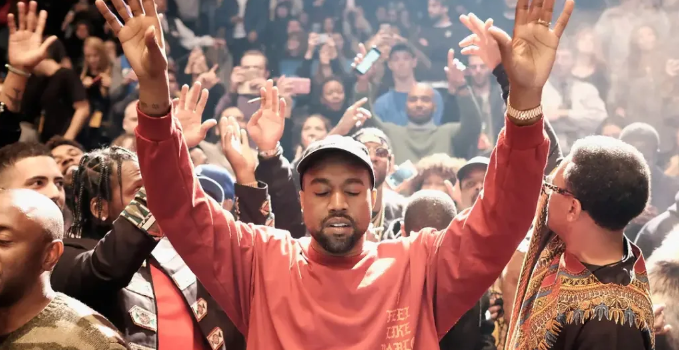
Reflecting on how Kanye West’s transformation challenges the ideals that once inspired me as a Black man

Kanye West’s recent behaviour, including his controversial Instagram posts involving his divorce and fatherhood struggles, has once again thrust him into the limelight. While I can still empathise with his personal turmoil, as a 35-year-old Black man, I can’t help but feel that he’s become everything he once warned me and my peers about.

Kanye’s latest antics, which included tagging figures such as Jeff Bezos, Barack Obama, and Kamala Harris in now-deleted posts about his dispute with Kim Kardashian, are far removed from the rapper I once admired. I recall a time when Kanye’s music defined a cultural shift, a time when my friends and I would trade FUBU for polo shirts and big watches for smaller ones, inspired by his sound and vision.

Back in 2004, Kanye’s debut album, The College Dropout, was revolutionary. It wasn’t just the music, but the persona he crafted — one that challenged societal expectations and encouraged us to reject stereotypes. He became a symbol of empowerment, influencing artists like Kendrick Lamar and Chance the Rapper, and even earning accolades from legends like Paul McCartney, who called him a “monster” of talent.

I also remember his pivotal moment during a concert for Hurricane Relief in 2005, when he boldly stated, “George Bush doesn’t care about Black people.” At the time, his words resonated with me deeply, particularly as a Navy serviceman hearing about the failures during Hurricane Katrina. Kanye’s bravery in using his platform to challenge injustice made me feel seen.

But as the years have passed, Kanye’s actions have become increasingly difficult to understand. His outspoken support for Donald Trump, a figure who represents the very systems he once criticised, is troubling. It’s hard to reconcile the man who once rapped about systemic inequality with the one who now seems to embrace the very forces he once denounced.

Kanye’s personal contradictions extend beyond politics. In 2023, a class-action lawsuit was filed against him by former employees, alleging mistreatment and poor working conditions, which is a far cry from the rebellious artist who once spoke out against corporate exploitation in the music industry. And yet, despite all this, I still hold respect for some aspects of his legacy. His contributions to mental health awareness and his charitable work, like his donations to a Chicago toy drive, remind me of the potential for good within him.

However, his recent behaviour leaves me questioning the impact of his actions on the younger generation, especially Black children who look up to him. For years, I’ve watched his music become increasingly erratic and unfocused. My Beautiful Dark Twisted Fantasy remains his crowning achievement, but after 2010, his work started to decline. Kanye often blames his personal life for his creative struggles, but it’s clear that he has moved far from the ideals that once made him a role model.

As I reflect on the Kanye West I once idolised, it’s hard to ignore how far he’s strayed from the messages of empowerment and self-love that shaped my youth. As a Black man, the man he has become is a stark contrast to the one who once inspired me. The College Dropout holds a different meaning for me now, and I can’t help but feel that the Kanye West I once admired would be deeply embarrassed by who he has become. If I had encountered this version of Kanye 18 years ago, I fear the impact would have been far more damaging.

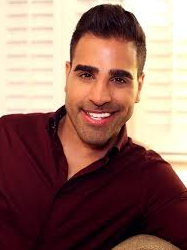
ITV star Dr Ranj Singh reassures fans following a robbery after attending the Brit Awards, where he lost his watch

Dr Ranj Singh, the popular ITV doctor known for his appearances on Good Morning Britain and This Morning, has shared that he was the victim of a robbery following a night out at the Brit Awards. The incident occurred as he was heading home from Soho after the ceremony, though the TV medic assured fans he wasn’t physically harmed.

In an Instagram post on Wednesday night, Dr Singh explained the situation, saying, “I had such a fantastic time last night. Unfortunately, while walking to catch a taxi, a man approached me and took my watch.” He went on to say, “It all happened so fast, and I’m grateful that I wasn’t hurt. The thief got away with my watch, but it could have been much worse.”

He revealed that in an impulsive moment, he chased after the robber, but realised this was a dangerous move. “I now know chasing someone is not the best idea as these situations can lead to dangerous traps,” Dr Singh reflected. Although initially hesitant to speak about the incident out of embarrassment, he later decided to share it with his followers as a precautionary reminder to be vigilant when out late, even in areas thought to be safe.

“Please stay safe, especially when heading home at night. Let’s look out for one another,” he concluded.

Support poured in from his celebrity friends, with Strictly Come Dancing star Oti Mabuse offering her sympathy: “So sorry this happened to you.” TV presenter Gaby Roslin also sent her well wishes: “Hope you’re ok, sending big love.”

This incident came shortly after Dr Singh had proudly shown off his new Clogau watch on social media, a piece valued at between £400-500, expressing his excitement about attending the Brit Awards for the first time.

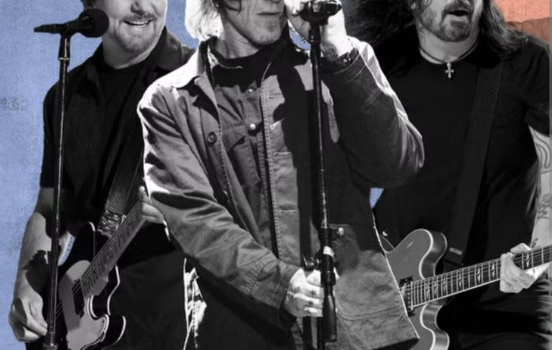
30 years on, grunge legends like Eddie Vedder, Dave Grohl, and Mark Lanegan have matured into cultural pillars, while Britpop stars like Noel Gallagher and Damon Albarn have fallen from grace

In the early 1990s, grunge and Britpop defined two opposing musical forces, one marked by American angst and rawness, the other by British irony and pop influences. Now, three decades later, the grunge icons—Eddie Vedder, Dave Grohl, and Mark Lanegan—have aged gracefully into respected elder statesmen, while their Britpop counterparts have taken a far less admirable route, with many devolving into eccentric, cranky figures.

Eddie Vedder’s recent tour highlights this stark contrast. Opening in New York with a cover of REM’s “Drive,” the Pearl Jam frontman demonstrated just how far he’s come since his early years of grunge turmoil. At 57, Vedder now embraces his legacy as a leader in rock, a far cry from the disillusioned youth he once was. His 30 years in music are celebrated on his upcoming solo album Earthling, marking his evolution from troubled artist to rock royalty.

Meanwhile, his Britpop peers seem stuck in a cycle of bitterness. Noel Gallagher has become a vocal critic of modern culture, often ranting about trivial issues like face masks. Ian Brown’s anti-lockdown stance and Damon Albarn’s criticism of artists like Taylor Swift have led to them being regarded more as disgruntled old men than icons of their generation. These once-vibrant figures, who once provided the soundtrack to British youth culture, are now reduced to complaining about the world that passed them by.

The contrast between these two movements was once crystal clear: grunge, born out of Seattle’s grim reality, faced off against the British optimism of Britpop. With Nirvana’s rise in 1991, grunge encapsulated a raw, rebellious spirit, while Britpop responded with cheeky defiance, celebrating British identity. However, as time has passed, it is the grunge veterans who have endured, while many Britpop stars have faded into irrelevance.

Dave Grohl, who continues to lead Foo Fighters, is another grunge survivor who has maintained his positive presence in the music world. His relentless output of new music and his cheerful personality have made him a beloved figure, while Mark Lanegan, once known for his brooding, has found a second act as a writer and a cleaner, more stable figure after battling addiction. Lanegan’s post-grunge career has seen him embracing a quieter, reflective life in Ireland, marked by memoirs that recount his tumultuous past.

Grunge, with its roots in despair and darkness, was never supposed to have a long shelf life. Yet, despite the tragic losses—Kurt Cobain, Layne Staley, and Chris Cornell—grunge’s survivors have turned their experiences into wisdom, aging gracefully with purpose. Contrast this with Britpop’s decline, where former stars like Gallagher and Albarn have become figures of ridicule, seemingly unable to adapt to the changing times.

This generational shift is most clearly seen in the contrast between the current state of grunge and Britpop. As Vedder and Grohl continue to captivate audiences with their enduring talent, figures like Noel Gallagher cling to past glories, while Damon Albarn, whose legacy once seemed secure, now finds himself embroiled in petty controversies.

Perhaps the most telling reflection of this shift came from Lanegan, who, after years of turmoil, has found peace and purpose through his writing, while still managing to maintain a sense of humour, even mocking Liam Gallagher in his memoir. It is this self-awareness, maturity, and ability to adapt that marks the difference between the grunge survivors and the faded stars of Britpop. While grunge’s grandmasters have become culturally relevant and respected, the Britpop kings have become caricatures, unable to escape the ghosts of their past.

As Eddie Vedder sings and reflects on his journey, it’s hard not to see him as the grunge generation’s “dude”—older, wiser, but still riding the wave of music history with a knowing smile, unlike the many Britpop figures who seem stuck in a battle with the past.

Prime Minister asserts that an invasion will backfire, leading to greater NATO unity and military deployments

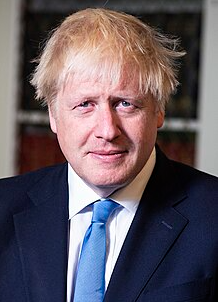
Boris Johnson has cautioned Russian President Vladimir Putin that an invasion of Ukraine will only serve to bolster NATO, not weaken it as Putin claims. The UK Prime Minister stated that the UK would continue to support NATO unconditionally, sending a strong message that the alliance remains resolute in its defence commitments.

As Russia amasses around 130,000 troops near Ukraine’s border, Johnson highlighted that NATO forces are being reinforced in response to the growing threat. He mentioned the possibility of deploying RAF Typhoon jets and Royal Navy warships to safeguard south-eastern Europe, in addition to the 350 British troops already stationed in Poland.

In an article for The Times, Johnson remarked, “If Putin proceeds with further aggression, he will only accelerate the very outcome he seeks to prevent—strengthening NATO’s resolve and presence in the region.” The presence of NATO forces on the alliance’s southern and eastern flanks has already intensified, with Britain, the US, France, and Italy bolstering defences. Johnson stressed that Russian actions would reaffirm NATO’s essential role in European security.

The Foreign Secretary, Liz Truss, is set to visit Moscow later this week for diplomatic talks with Russian Foreign Minister Sergei Lavrov in an attempt to de-escalate tensions. Defence Secretary Ben Wallace confirmed the dispatch of British troops to Poland, calling the move a signal of solidarity between the UK and Poland, particularly as Poland faces its own security concerns at the Belarusian border.

Wallace defended NATO’s defensive posture, insisting that the alliance posed no threat to Russia and reaffirming its purpose as a collective self-defence mechanism. “NATO is not about dividing Russia; it is about ensuring the security of its members,” Wallace stated.

Black Lawmakers Protest the Move, Calling the Justice’s Legacy Harmful to African Americans

The Republican-controlled Senate of Georgia has voted in favour of erecting a monument to U.S. Supreme Court Justice Clarence Thomas, a decision that has sparked strong objections from several Black lawmakers. The proposed monument, which would be funded by private donations, is slated to be placed at the state Capitol if it clears the House vote. The approval was made by a 32-21 vote and now moves forward for further consideration.

Thomas, a Georgia native who was appointed to the U.S. Supreme Court in 1991 by President George H.W. Bush, has been one of the most conservative justices for over three decades. However, his stance on key issues, including abortion rights and affirmative action, has drawn sharp criticism, particularly from Democratic senators. State Senator Nikki Merritt, a Black lawmaker, condemned Thomas as a “hypocrite and a traitor,” arguing that his rulings have consistently undermined the struggles of African Americans. Merritt also highlighted the sexual harassment allegations made against him during his 1991 confirmation hearing, which he denied.

The proposal has divided opinions within the state legislature. Supporters of the monument, such as Republican State Senator Ben Watson, argue that Thomas’ life story—his rise from poverty in Georgia to the Supreme Court—is worthy of recognition, regardless of political views. Watson compared Thomas to former President Jimmy Carter, noting that both figures had significant impacts on Georgia and the nation.

Opponents, however, argue that it is premature to honour Thomas with a statue while he remains an active justice. State Senator Nan Orrock warned that placing a statue of someone still in office could be problematic if their legacy changes over time. “You don’t want to be pulling it down later if things go badly,” Orrock said.

As the bill proceeds to the House for further debate, the issue of whether or not to honour Thomas remains contentious, reflecting deeper divides over his judicial decisions and their impact on African American communities.

The Fastest Woman on Two Wheels Plans to Shatter Her Own Guinness World Record as Motorsport Season Begins

Becci Ellis, the world’s fastest woman on two wheels, is preparing to attempt a new record-breaking speed and surpass her own Guinness World Record. The talented rider from Lincolnshire is gearing up for another thrilling challenge as the UK motorsport season kicks off with 50 unique events hosted by Straightliners.

Ellis, who achieved her current title in 2014 by accelerating from a standstill to 264.1 miles per hour on a conventional motorcycle, is now setting her sights on reaching a speed of 300 mph. She explained that after selling her previous bike, which had reached its speed limit, she and her team built a new motorcycle designed for even greater speeds. “If the conditions are right – the weather, road conditions – we believe it’s possible, and we’re going to try,” she said.

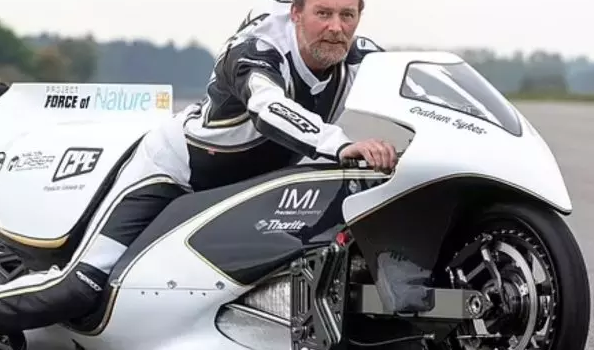
In addition to Ellis, 58-year-old engineer Graham Sykes will also be competing with his uniquely designed steam-powered motorcycle, the “Force of Nature Steam Rocket Bike.” Sykes, who designed the bike himself, invested £70,000 in its construction. Unlike conventional motorcycles, the steam bike runs entirely on steam, using 100 litres of water heated to 200°C to generate over 2,200 lbs of thrust. This allows the bike to accelerate to over 200 mph in just an eighth of a mile, with the potential to reach 230 mph.

Although there is no official record for a steam-powered motorcycle yet, Sykes is hopeful that his machine will break the existing steam car record of 148 mph. He plans to make a serious attempt at the record in September during one of the many motorsport events scheduled across various locations in the UK, including Yorkshire, Devon, and the Isle of Man.

Sykes expressed his confidence, stating, “As long as we don’t encounter any significant mechanical issues, we should be able to make a serious attempt.” Both Ellis and Sykes are poised to make history in the upcoming motorsport season.

‘2020 XL5’, the Second Earth Trojan, Could Offer a Future Space Destination for Humanity

Scientists have confirmed that Earth is now accompanied by a “Trojan asteroid” known as 2020 XL5, marking only the second such discovery. Researchers describe it as a particularly promising specimen, more significant than the first-ever Earth Trojan asteroid, 2010 TK7.

Trojan asteroids share the same orbit as their associated planet, remaining in stable positions either ahead of or behind the planet. These objects are commonly found around Jupiter and are named after characters from the Trojan War. However, until now, only one Earth Trojan had been definitively discovered.

The new object, identified on December 12, 2020, was initially suspected to be an Earth Trojan, but verifying its orbit proved difficult due to limited observations. Now, after extensive analysis combining archived data and new observations, scientists have confirmed that 2020 XL5 is indeed an Earth Trojan.

While its exact origin remains uncertain, it is believed that the asteroid could have originated from the asteroid belt and been displaced into its current orbit due to gravitational interactions with Jupiter. Its orbit is stable, and researchers predict that it will remain in its current position for approximately 4,000 years.

2020 XL5 is a larger and more accessible object compared to its predecessor, 2010 TK7, and its characteristics suggest it could become a valuable target for future space missions. In the distant future, researchers speculate that this asteroid might even be used for establishing human bases or installing scientific instruments, given its stable orbit and the relatively low fuel requirements for visiting it.

The findings, which are published in the study “Orbital stability analysis and photometric characterization of the second Earth Trojan asteroid 2020 XL5” in Nature Communications, open new possibilities for human exploration beyond Earth.

Egypt’s Manager Faces Suspension After Confrontation with Referee in Tense Match Against Cameroon

Carlos Queiroz, the Egypt national football team manager, will be absent from the Africa Cup of Nations (AFCON) final against Senegal after being sent off during the semi-final against Cameroon.

Egypt triumphed over the tournament favourites in a dramatic penalty shootout after a tense and sluggish semi-final match, which ended in a draw. The victory has set up a highly anticipated final on Sunday, where Egypt, with seven AFCON titles, will face off against Senegal, who have never won the competition.

Queiroz, a seasoned international coach, was dismissed in the second half of the match following repeated confrontations with referee Bakary Gassama. The tension escalated when an incident occurred between Egypt’s Ramadan Sobhi and Cameroon’s Nouhou Tolo, which led Queiroz to call for Tolo’s red card.

The situation nearly led to Egypt’s assistant coach, Rodger De Sa, being sent off as well, though he was only issued a yellow card. Consequently, Queiroz will be unable to lead his team from the sidelines during the final, adding an additional layer of drama to an already heated match-up between two of Africa’s footballing giants.

The AFCON final will take on extra significance, with Egypt seeking to claim their eighth title, while Senegal aim for their first-ever victory.

Controversy Erupts as Chinese Soldier Involved in Galwan Clash Becomes Olympic Torchbearer

India has joined the growing list of countries announcing a diplomatic boycott of the Beijing Winter Olympics, following China’s controversial decision to include a soldier involved in the 2020 Galwan Valley clash as a torchbearer.

The Indian Ministry of External Affairs condemned China’s actions, labelling it “regrettable” that the Olympics had been politicised. An Indian official confirmed that India’s envoy would not attend the opening or closing ceremonies of the Games in protest.

The choice of regimental commander Qi Fabao, who led Chinese forces during the 2020 skirmish with Indian troops in Galwan Valley, has sparked outrage in India. Qi, who was injured during the conflict, was hailed by state-run media in China as a “hero” following the deadly clash, which resulted in at least 20 Indian and four Chinese soldiers’ deaths. For nearly eight months, China did not publicly acknowledge the extent of its casualties.

Qi participated in the Olympic torch relay on February 2, carrying the flame from renowned short-track speed skating champion Wang Meng. Qi’s appearance in the Winter Olympics has been met with harsh criticism in India, where many see it as a provocative move by China. Some commentators have suggested that China is using Qi as a symbol of its nationalist agenda.

Manish Tewari, a senior Congress party leader, tweeted about the choice of Qi as torchbearer, calling it a clear message from China. Similarly, Aadil Brar, a journalist and columnist, expressed concern over the glorification of Qi as a national hero, stating that India should not have supported the Olympics under such circumstances. Retired army officer Gaurav Arya labelled the Olympic flame as the “flame of shame,” highlighting the fact that China initially downplayed its own casualties.

Journalist Abhishek Bhalla also criticised China’s decision, noting that the country’s information warfare strategy continued with the selection of Qi as torchbearer.

This controversy comes amidst rising tensions at the India-China border, where both nations have stationed tens of thousands of troops. The conflict in Galwan Valley, in which both countries suffered casualties, remains a source of diplomatic friction.

US Senator Jim Risch condemned China for its choice, linking the decision to the broader issues of human rights abuses, including the treatment of Uyghur Muslims in Xinjiang. Similarly, investigative reports have questioned the official casualty figures from China, suggesting that the true number of Chinese military losses during the Galwan clash may have been much higher than previously acknowledged.

As the Winter Olympics approach, the diplomatic boycott by India further isolates China, while the debate continues over the international implications of the Games and the choices made by the host nation.