


The sitcom that foreshadowed Zelensky’s political path offers sharp satire and unexpected insight

Volodymyr Zelensky’s sitcom Servant of the People has emerged as an uncanny cultural artefact in light of his presidency, with its mix of comedy, satire, and political commentary proving more relevant than ever. Originally aired between 2015 and 2018, the show depicts Zelensky as a modest history teacher who unexpectedly finds himself catapulted into the presidency through sheer honesty—a path that would later become his real-life journey.

The series, with its mix of sharp satire and witty observations, has been described as the most geopolitically significant sitcom in history. Channel 4 now presents it with English subtitles as a unique and timely form of escapism during the current global crisis. The first episode, which opens in Kyiv’s Independence Square at night with shadowy oligarchs scheming over election outcomes, immediately sets the tone for the political intrigue and biting satire that follows.

Zelensky plays Vasyli Petrovych Holoborodko, a relatable yet deeply frustrated everyman struggling through personal issues and disillusionment with Ukrainian politics. His transformation into an accidental President begins with an impassioned rant in a classroom, captured on a student’s mobile phone and going viral. This moment establishes the fish-out-of-water comedy that drives the series, as Holoborodko learns to adjust to his newfound political reality.

While the humour is at times broad, and certain satirical elements are inevitably diluted by translation, Servant of the People maintains sharp observations about corruption, political complacency, and societal discontent. Highlights include clever moments like Holoborodko exploring his new presidential palace with sardonic commentary on Ukraine’s economic history and exchanges that poke at current political figures with a mix of levity and critique.

One particularly memorable moment highlights Zelensky’s ability to balance satire with commentary, as a humorous exchange reveals a sharp dig at Russia’s symbolism and elite displays of wealth. Meanwhile, a subplot introduces Holoborodko’s dim-witted body-double Grisha (also portrayed by Zelensky), adding a comedic and absurd layer to the political tension.

Beyond its humour, Servant of the People delivers a sobering central message: “The truth is the truth, no matter how unpleasant.” In a time when misinformation and propaganda can dominate political discourse, this idea stands out as both timely and thought-provoking.

Zelensky’s journey from actor to President mirrors the story arc of Servant of the People, adding an extra layer of depth to the series. This makes it more than just a sitcom but also a reflection of the modern political moment—offering viewers both escape and insight.

Zelenskyy: The Man Who Took on Putin will air on Channel 4 on March 6 at 6:45pm, followed by Servant of the People at 10:35pm. Both seasons of Servant of the People will later be available on the All 4 streaming platform.


Deliberately messy makeup reflects the real-life entrepreneur’s lifestyle and struggles

The makeup team behind The Dropout has shed light on why Amanda Seyfried’s portrayal of Elizabeth Holmes includes intentionally unpolished and dishevelled makeup.

Hulu’s The Dropout, which premiered on 3 March, stars Seyfried as Holmes, the biotech entrepreneur convicted of wire fraud and conspiracy in January 2022 after misleading investors. In the show, Seyfried’s version of Holmes often sports smudged lipstick and a messy aesthetic, deliberately mirroring the real-life figure’s challenging lifestyle.

Jorjee Douglas, the series’ head of makeup, recently spoke with Vanity Fair to explain the choice. Douglas noted that Holmes’s demanding 20-hour workdays would have left her with little time or interest in traditional grooming or self-care.

Douglas said: “There were points where she was really at a breaking point of trying to sell her company to investors.”

She went on to explain how Holmes used makeup as a sort of weapon—emphasising a “stereotypically sexy” look with bold red lipstick and dark eyeliner to manipulate perception. Douglas researched real-life photos of Holmes to get the look just right, noting “all of the different shades of red that she wore” and the way her foundation often appeared mismatched.

Douglas added: “She wore makeup that sometimes clashed with her skin tone in college… sometimes it was clumpy lipstick, or out-of-line lip liner.”

The aim, Douglas explained, was to “honour” the real Elizabeth Holmes as authentically as possible, despite the painful associations her story holds. She noted, “There’s no way to look at the real Elizabeth Holmes without feeling some sort of pain.”

The first three episodes of The Dropout are available to watch on Hulu in the United States and Disney Plus in the United Kingdom.

Ireland warns of catastrophic consequences as fighting escalates at Zaporizhzhia facility

The recent assault on Europe’s largest nuclear power station has been labelled a “new red flag” by Irish Foreign Affairs Minister Simon Coveney, who warned that the incident could have devastating consequences across the continent.

Russian forces shelled the Zaporizhzhia nuclear facility in south-eastern Ukraine overnight, sparking fires as emergency crews worked to contain the situation. Coveney highlighted the potential danger of a breach at the site, which could release radiation levels far greater than those seen in the 1986 Chernobyl disaster.

Coveney’s remarks followed discussions in Brussels with foreign ministers from the European Union, the UK, the US, and Canada, where leaders underscored their support for Ukraine. Despite public outrage, no new sanctions were confirmed at this stage, though further action remains on the table.

Speaking about the ongoing violence, Coveney said: “This is a new red flag in this conflict. It is no longer just about Ukraine and Russia—it is about all of us on the continent of Europe and the threat of a nuclear accident.”

He further added: “The incident highlights a new urgency to ensure efforts are made to prevent further escalation and isolate Russia internationally.”

Ireland’s Prime Minister Micheál Martin echoed these concerns during a cabinet meeting on Thursday, where discussions focused on assisting refugees arriving in Ireland and addressing the immediate and long-term challenges of the war. Martin noted that Ukrainian children’s access to education, healthcare, and social services would be prioritised in Ireland’s response.

Addressing the economic effects, Martin warned of the war’s impact on global food supply chains and fuel prices, stating: “The war has exacerbated already challenging conditions, particularly around grain exports and energy costs.”

Ireland’s Justice Minister Helen McEntee welcomed the European Union’s decision to implement the Temporary Protection Directive for Ukrainians fleeing the conflict, marking the first time the directive has been enacted. McEntee stressed that Ireland will continue to stand in solidarity with Ukraine, highlighting measures such as the removal of visa requirements for Ukrainian nationals arriving from February 25 onwards.

McEntee stated: “We will do everything possible to support the implementation of this directive and ensure that vulnerable Ukrainians are supported as they flee the violence.”

This latest escalation at Zaporizhzhia underscores the urgency for continued diplomatic efforts to prevent further crises while ensuring humanitarian aid remains accessible to those affected by the ongoing war.

A calculated nine-player change leads Saints to FA Cup quarter-final triumph over West Ham

Ralph Hasenhuttl remains unconcerned by online scepticism following his bold squad rotation, which secured Southampton’s progression to the FA Cup quarter-finals with a 3-1 victory over West Ham.

Hasenhuttl made nine changes to his starting XI for the fifth-round clash on Wednesday, a decision that raised many eyebrows, particularly among social media critics. However, his strategic approach paid dividends as the Saints advanced to the last eight thanks to a well-executed game plan and a resilient performance.

Armando Broja, introduced at half-time, proved pivotal, winning a penalty converted by James Ward-Prowse and sealing the victory with a late strike after Michail Antonio had briefly equalised. The game was also defined by Romain Perraud’s exceptional first-half opener—a stunning strike from over 25 yards that set the tone for the win.

Discussing his decision to rotate heavily, Hasenhuttl defended his strategy, saying: “I don’t need to be on social media because my job is to be a manager and to look at what my guys are offering. A few guys who started today brought us to this game… it’s on me to show trust, and I knew I had five substitutes.”

The manager later spoke to West Ham’s David Moyes post-match, who identified the fresh legs Southampton introduced as a decisive factor. Hasenhuttl added: “We are in the draw. This was the goal for tonight.”

West Ham’s hopes of advancing were hampered by defensive mistakes and a lack of composure in front of goal. Antonio’s equaliser, which briefly brought West Ham back into the contest, was not enough to sustain momentum. The game ended with Southampton advancing and Broja’s late strike sealing their progress to the quarter-finals for the third time in five seasons.

Tomas Soucek’s night was cut short after suffering a head injury in the second half, further compounding a difficult evening for the visitors. Moyes noted the lack of sharpness in West Ham’s attack and their failure to capitalise on earlier opportunities.

Speaking about Soucek’s condition, Moyes said: “They tell me it is a nasty wound and he has had some stitches, but I’ve not had a chance to speak to the medical team yet.”

With this defeat, West Ham’s focus now shifts to their European ambitions as Southampton bask in the success of a calculated tactical gamble that demonstrated the strength of their depth and flexibility.

The former captain expresses gratitude as the Russian billionaire steps away after 19 years at the helm

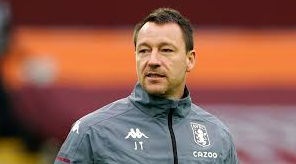
John Terry has paid a heartfelt tribute to Roman Abramovich after the Russian billionaire confirmed his decision to sell Chelsea, marking the end of a 19-year tenure at the club.

Abramovich’s announcement comes amidst significant pressure, with government sanctions looming following Russia’s invasion of Ukraine. Despite this, he made it clear that his decision to sell the club was one of the most challenging he has ever faced. The businessman added that he would not demand repayment of the £1.5 billion loan he extended to Chelsea during his ownership.

The sale follows the emergence of Swiss billionaire Hansjorg Wyss and American businessman Todd Boehly as key figures in the takeover bid. Under Abramovich’s leadership, Chelsea enjoyed a highly successful period, securing five Premier League titles, five FA Cups, three League Cups, two Champions League titles, and the Europa League.

Terry, a club icon and former captain, was quick to respond on Instagram, calling Abramovich “the best owner in the WORLD”. Their era together saw countless achievements, with Terry and Abramovich playing pivotal roles in shaping the club’s modern success.

In his farewell message to Chelsea fans, Abramovich wrote: “Please know that this has been an incredibly difficult decision to make, and it pains me to part with the club in this manner. However, I do believe this is in the best interest of the club. I hope that I will be able to visit Stamford Bridge one last time to say goodbye to all of you in person. It has been a privilege of a lifetime to be part of Chelsea FC, and I am proud of all our joint achievements. Chelsea Football Club and its supporters will always be in my heart.”

The announcement marks the end of an era while leaving fans and stakeholders eager to see what comes next for the club under new ownership.

Experts Urge European Governments to Strengthen Protections as Vulnerable Populations Flee War

Campaigners have raised serious concerns that Ukrainian refugees fleeing the ongoing Russian conflict are at a “severe risk” of being exploited by human traffickers. Criminal gangs are reportedly waiting to capitalise on the crisis by trafficking vulnerable individuals across European borders and into exploitative industries.

Over 660,000 Ukrainians have already crossed borders into neighbouring countries such as Poland, Moldova, Romania, Slovakia, and Hungary, with estimates suggesting this number could soon rise to 1 million. The European Union predicts that up to 7 million people may ultimately be displaced due to the war.

Charity Care has warned of a sharp increase in trafficking cases over the coming months, with evidence that criminal networks are already established in nearby regions and are prepared to exploit the chaos. Lauren Agnew, a human trafficking policy expert with the organisation, described the situation as “deeply alarming,” stressing that governments across Europe must be vigilant in addressing these risks.

Agnew explained that traffickers sometimes lure Ukrainian refugees by offering border crossings or relocation assistance, later coercing them to repay the costs—often leading victims into debt and further exploitation. She called for European governments to heighten preventative measures and for the UK to strengthen domestic protections against modern slavery as the number of potential victims is expected to rise.

The International Justice Mission (IJM) in Romania has also highlighted the increased risks associated with the conflict. In a recent social media statement, IJM emphasised that as vulnerabilities grow, proactive steps are being taken, including awareness campaigns in both Ukrainian and Romanian, to help victims find support.

Kate Roberts, head of policy at Focus on Labour Exploitation, urged the UK government to offer safe passage routes for refugees rather than forcing them into dangerous and irregular migration paths. She specifically called for the removal of Clause 11 from the Home Office’s Nationality and Borders Bill, which would criminalise refugees arriving in the UK through unauthorised routes, increasing their chances of being exposed to exploitation.

Clause 11 would penalise asylum seekers entering the UK via small boats, stowing away, or other irregular methods. These individuals would face potential imprisonment or temporary legal status without access to essential services like benefits or family reunification.

In response, a Home Office spokesperson reaffirmed the UK’s commitment to addressing human trafficking, stating: “The government is committed to tackling the heinous crime of human trafficking. We will continue to clampdown on those who continue to exploit vulnerable people while providing tailored support for victims to help their recovery.”

The Home Office continues to monitor the situation in Ukraine closely and maintains ongoing dialogue with the Ukrainian government to respond to the crisis.

Putin’s nuclear forces on high alert spark fears, but experts debate the likelihood of escalation.

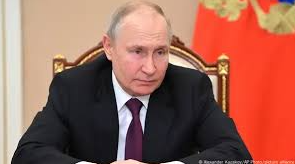
Vladimir Putin’s announcement placing Russia’s strategic nuclear forces on high alert has raised global concerns about the potential for nuclear conflict. The Russian president cited “unfriendly actions in the economic sphere,” referring to sanctions, and “aggressive statements” from NATO leaders as reasons for this move.

On Monday, Kremlin spokesperson Dmitry Peskov further attributed the escalation to comments by UK Foreign Secretary Liz Truss, though he did not specify which remarks. Allies of Ms Truss dismissed this claim, arguing her statements did not justify such an action.

What Does Putin’s Announcement Mean?
During a televised meeting with top defence officials, Putin ordered nuclear forces to adopt a “special regime of combat duty.” Patricia Lewis of Chatham House explained this likely changes the status from peacetime checks to a legal framework allowing potential launches.

Despite this, Professor Malcolm Chalmers of RUSI noted no visible changes in Russia’s nuclear posture. He suggested the announcement serves as a stark reminder of Russia’s nuclear capability, rather than an immediate threat. Defence Secretary Ben Wallace described the situation as a “battle of rhetoric,” urging caution but downplaying immediate escalation risks.

Would Putin Launch a Nuclear Attack?
Experts remain divided on whether Putin would proceed with a nuclear strike. While some emphasise the catastrophic consequences of mutual destruction, others highlight the unpredictability of leaders like Putin.

Ms Lewis pointed out that while combat readiness enables an attack, the decision remains uncertain: “He wants to frighten us, exploiting the West’s greater fear of nuclear weapons.” However, she stressed that using such weapons is typically a last resort.

Professor Chalmers argued that initiating nuclear conflict would unleash devastating global consequences, deterring all parties involved. He deemed such an act “unlikely,” given the risks of escalation to full-scale nuclear warfare.

What Are Russia’s Nuclear Capabilities?
According to the Federation of American Scientists, Russia has a stockpile of approximately 4,477 warheads. This includes 1,588 strategic warheads deployable on ballistic missiles and heavy bombers, with additional reserves and nonstrategic warheads.

Global Implications of a Nuclear Attack
If Russia were to target a NATO country, the response could involve collective retaliation, escalating to catastrophic levels. Casualties would depend on the attack’s location, with urban areas facing devastating loss of life and potential radiation poisoning.

The Bigger Picture
Globally, other nations also hold significant nuclear arsenals. The United States leads with 5,428 warheads, followed by Russia. The UK, France, China, and several other nations maintain smaller stockpiles, reflecting the continued global presence of these destructive weapons.

While tensions remain high, experts stress the importance of measured responses and ongoing dialogue to prevent catastrophic outcomes. For now, Putin’s announcement serves as a sobering reminder of the stakes involved in modern conflicts.

Despite a bitter rivalry, Joshua backs Whyte in the highly anticipated British heavyweight title clash.

Anthony Joshua has expressed unexpected support for his long-time rival Dillian Whyte ahead of the WBC heavyweight title bout against Tyson Fury in April. After extended negotiations, Whyte signed the contract to face Fury at Wembley Stadium on 23 April in a highly anticipated all-British showdown.

This will be Whyte’s first opportunity to fight for a world title and marks Fury’s return to British soil, where he hasn’t fought since defeating Francesco Pianeta at Windsor Park in Belfast in August 2018.

Joshua, who has a rivalry with Whyte dating back to their amateur days and defeated him via technical knockout in December 2015, shared his thoughts with iFLTV ahead of Lawrence Okolie’s victory over Michal Cieslak on Sunday evening. Despite admitting his strong dislike for Whyte, the 32-year-old revealed he is rooting for him over Fury, who recently concluded a historic trilogy of fights with Deontay Wilder.

“It’s a solid opponent [for Fury], a good title defence against Dillian Whyte,” Joshua stated.

“Dillian needs to study what Fury does and react by doing the complete opposite. Perhaps focus on bodywork and prepare to go the distance. I hope he trains hard and doesn’t underestimate Tyson because this is his first chance at a world title, and I believe he’ll be hungry for it, you know what I mean?”

Joshua continued: “It’s not like this is his tenth shot at a title where you can afford a hiccup. This is his first chance. I’m rooting for Dillian, even though I hate him and still want to fight him again one day. Go on, Dillian, I’m fully behind you.”

Peers vote down controversial measures, marking a major setback for the government’s asylum and nationality proposals.

Central elements of Priti Patel’s contentious Nationality and Borders Bill have been rejected in the House of Lords, a move celebrated by campaigners as a “victory for compassion.” The government has been urged to reconsider its approach after peers voted against provisions that penalise refugees based on their arrival method (Clause 11) and allow citizenship removal without notice (Clause 9).

Clause 11 proposed treating asylum seekers differently based on their route into the UK, denying full refugee rights to those arriving via unauthorised means, such as small boats or trucks. Refugees in this category would only receive temporary status without benefits or family reunion rights. Critics, including the UNHCR, warned this breaches the 1951 Refugee Convention.

During a Lords debate, ministers defended the clause, arguing it would still protect refugees but distinguish between those who claimed asylum directly and without delay. However, senior Conservatives, including David Davis and Dominic Grieve, criticised the policy as “dangerous” and in violation of international obligations. Peers voted to remove Clause 11 by 204 to 126.

Clause 9, allowing the home secretary to revoke British citizenship without notice for reasons like national security or public interest, was also rejected. Critics argued this power disproportionately affects ethnic minorities and risks Windrush-style injustices. Maya Foa of Reprieve highlighted the Lords’ stand against what she termed a “power grab.” Peers voted 209 to 193 to remove this clause.

Campaigners welcomed the decisions. Sonya Sceats of Freedom from Torture called the votes a “clear message to abandon cruel and inhumane policies.” Enver Solomon of the Refugee Council praised the rejection of Clause 11 as “a victory for humanity and refugee rights,” urging the government to respect the Lords’ stance.

The bill, now significantly altered, will return to the House of Commons for further votes in the coming weeks. Critics hope MPs will heed the Lords’ objections and strike down these contentious provisions for good.

Panel Requests Classification Details on Records Withheld From National Archives

The US House Oversight Committee has escalated its investigation into the documents recovered from Donald Trump’s Mar-a-Lago residence, focusing on the classification status and preservation of records that legally should have been handed over to the National Archives and Records Administration (NARA).

Committee Chair Carolyn B. Maloney sent a letter to NARA, highlighting potential violations of the Presidential Records Act and other federal laws. The letter emphasised the need for additional details regarding the contents of the 15 boxes of records Trump failed to deliver as required by law.

“The information provided so far indicates that former President Trump and his senior staff may have repeatedly breached legal requirements for record preservation,” wrote Ms Maloney. She added that further information is necessary to assess the scope of the issue and consider potential legislative changes to protect presidential records.

The panel’s request includes identifying any classified materials and detailing the level of their classification. It also seeks information about any documents that were reportedly torn, destroyed, or mutilated during Trump’s tenure and subsequently handed over to NARA.

Initially, reports suggested the boxes contained mostly non-critical items, but it was later revealed that they included significant correspondence, such as letters between Trump and world leaders like Kim Jong-un.

Amid the growing controversy, Trump and his allies attempted to shift the narrative by invoking claims from a court filing by special counsel John Durham. They alleged Hillary Clinton had orchestrated illegal surveillance during Trump’s presidency. However, these claims were debunked, and the focus returned to the Mar-a-Lago records.

The Oversight Committee’s investigation aims to uncover the full extent of any misconduct, ensuring accountability and the preservation of records for public transparency.