



Bandmates, celebrities, and fans express grief and admiration for the late singer

The members of The Wanted have led a wave of tributes to their late bandmate, Tom Parker, following his tragic death on Wednesday. Max, Siva Kaneswaran, Jay McGuiness, and Nathan Sykes shared their sorrow and honoured the singer’s legacy with heartfelt messages on social media.

Accompanying a photo of Tom, the group described him as an “amazing husband and father,” who they considered a “brother.” Their joint statement, shared on Instagram, read: “Max, Jay, Siva, Nathan, and the whole Wanted family are devastated by the tragic and premature loss of our bandmate Tom Parker. He passed away peacefully today at lunchtime, surrounded by his family and bandmates.”

The statement continued, “Tom was an amazing husband to Kelsey and a loving father to Aurelia and Bodhi. He was our brother, and words cannot express the grief and sadness we feel. Always and forever in our hearts.”

Parker had been diagnosed with a terminal brain tumour in 2020 and had undergone extensive treatment, including six rounds of chemotherapy and 30 sessions of radiotherapy. In recent months, he had sought private hospital care in Spain.

Social media was filled with outpourings of love from friends and celebrities. Siva Kaneswaran, in a personal tribute to his bandmate, shared his feelings on Instagram: “Hey Tom, hope you’re having a blast up there. I’m so grateful I had the chance to witness your true courage. It has been a pleasure of my life, Tommy Boy. Thank you for letting us see you light up the world. Talk to you soon and see you later. Love you brother x.”

Among other tributes, Ed Sheeran expressed his sorrow, writing: “So sad to hear of Tom’s passing. Thoughts and love are with Kelsey, his children, and his family. Very sad day, what a lovely guy.”

TV presenter Rylan Clark also shared his condolences on Twitter: “I’ve just seen the news about Tom, and that’s absolutely gutting. He was such a good’un. So sad to hear. Sending my love to Kelsey and the kids. Awful news x #RipTom x.”

X-Factor winner Joe McElderry tweeted, “So very very sad 😢 life can be cruel! My thoughts to his family and friends.”

Howard Donald from Take That shared his sympathy as well: “So young and so sad. RIP @TomParker from @thewanted. Strength and love to his family.”

Union J’s JJ Hamblett described Tom as “an incredible artist and real family man,” saying, “Just seen the news… I am speechless!!! Tom Parker was such a nice guy, an incredible artist, and a real family man! Such a cruel, cruel world… RIP Tom… you will be missed but never, never forgotten.”

Tom Parker’s passing has left a deep void in the hearts of his loved ones, fans, and fellow artists, who continue to remember his courage, kindness, and immense talent.

Chelsea’s defender opens up about his challenging experience facing the controversial striker during last season’s Champions League tie

Antonio Rudiger has called Luis Suarez a “master of the dark arts” after his experience facing the Atlético Madrid forward in a Champions League clash last season.

The Chelsea centre-back shared his thoughts in an interview with the club’s official website, recounting his encounters with Suarez during their Round of 16 tie against Atlético Madrid. Rudiger described the combative Uruguayan as a formidable opponent, known not only for his prolific goal-scoring ability but also for his controversial tactics on the pitch.

Suarez has long been a divisive figure in football, with a notorious reputation following his biting incident involving Branislav Ivanovic during his time at Liverpool. The Atlético Madrid striker is no stranger to controversy, and his competitive nature often leads him to push the boundaries of fair play.

In their Champions League tie, Chelsea triumphed over the Spanish side with a commanding 3-0 aggregate victory, with Olivier Giroud scoring in the first leg and Hakim Ziyech and Emerson Palmieri adding goals in the second. Chelsea would go on to win the competition, claiming their second European title.

Rudiger, who has become a key figure in Chelsea’s defence under Thomas Tuchel, reflected on his direct encounters with Suarez during the match. The German defender revealed that Suarez “pinched” him on the leg during the game, demonstrating the striker’s often underhanded approach to the physical side of football.

“I don’t go into the game with a set plan,” Rudiger explained. “It’s just something that happens in the moment. Like with Suarez, he pinched me on the leg. It’s not that I’m trying to provoke anything. He’s a master of the dark side, so you have to stay alert. Sometimes these things work in your favour, sometimes they don’t.”

Amidst the Supreme Court confirmation hearings, controversy over Thomas’s ties to the January 6th events complicates Democratic strategy

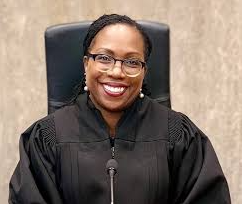
The ongoing Supreme Court drama has put Democrats in a precarious situation. While they are already walking a fine line with the Court’s balance, recent developments have made their position even more fraught. Last week, three key events unfolded: the confirmation hearings for Judge Ketanji Brown Jackson, the hospitalization of Justice Clarence Thomas, and the revelation that his wife, Ginni Thomas, had repeatedly urged former White House Chief of Staff Mark Meadows to take steps to overturn the 2020 presidential election.

Though the Supreme Court strives to maintain an air of impartiality, Clarence Thomas’s wife has long been a prominent figure in conservative political circles. Her activism, which has continued unabated despite her husband’s role on the bench, has caused some discomfort. Clarence Thomas himself recently cautioned that the Court could one day face serious compromises if it becomes too politically entangled.

The controversy surrounding Ginni Thomas’s actions has led some Democrats, such as Congresswoman Ilhan Omar, to call for Clarence Thomas’s impeachment. Others, including Senators Ron Wyden, Cory Booker, and Amy Klobuchar, argued that the Justice should have recused himself from cases relating to the 2020 election and the January 6th insurrection. However, these calls for action arrive at a particularly inconvenient time for the Democrats.

Just days ago, Senator Joe Manchin, a key figure in the Democratic Senate, announced that he would support Ketanji Brown Jackson’s nomination to the Supreme Court, all but guaranteeing her confirmation. This comes despite fierce opposition from Republicans, who have united against Jackson. Nebraska Senator Ben Sasse, one of the more conciliatory Republicans on the Senate Judiciary Committee, declared he would vote against her, ensuring a deadlock in the committee before the vote proceeds to the full Senate.

The Republicans’ long memories when it comes to judicial confirmations are well-known. They have not let go of the contentious confirmation of Robert Bork in 1987, nor have they forgotten the bitter 1991 hearings for Clarence Thomas, where accusations of sexual harassment from Anita Hill led to a fiery debate that Thomas himself called a “high-tech lynching.” More recently, the 2018 confirmation hearings for Brett Kavanaugh, which centred on Christine Blasey Ford’s allegations of sexual assault, remain a deeply contentious issue for the GOP.

Given these divisions, the timing of the Clarence Thomas controversy is particularly challenging for the Democrats. With a historic Supreme Court nomination process underway, the party is reluctant to take any action that could derail Ketanji Brown Jackson’s confirmation. As a result, the Thomas family scandal has placed Democrats in a difficult bind, with few good options for addressing the ethical concerns surrounding the Justice and his wife without jeopardising their immediate political goals.

Sadiq Khan must work with local communities to address diverse regional needs

Last April, Sadiq Khan’s Mayoral Manifesto outlined plans to improve transport in outer London, promising enhanced connectivity through improved bus networks and considering rapid bus transit and trams. However, while his recognition of outer London’s unique needs is welcomed, questions remain about how his strategy will address the diversity and complexity of the region’s transport challenges.

Outer London encompasses five million residents and spans four times the geographical area of central London. This diversity means that a single, overarching strategy could overlook the distinct needs of individual areas, such as differences between places like Chessington and Chingford or Stanmore and Sidcup. To ensure fair and efficient development, multiple, locally-led transport strategies are essential.

A shift is needed from a top-down approach led solely by Transport for London (TfL) and the Mayor to one that prioritises feedback from local councils and communities. These grassroots voices must be central to future planning to ensure infrastructure investments address actual needs. Projects such as new housing developments should be accompanied by comprehensive transport strategies that align new construction with improved accessibility.

In South West London, for instance, the ongoing Hammersmith Bridge issue continues to disrupt traffic across boroughs, while major venues like Twickenham Stadium place additional strain on local transport networks. Moreover, the public transport system still heavily focuses on connecting areas to central London rather than fostering local connectivity.

TfL’s Public Transport Accessibility Level (PTAL) measures public transport access on a scale from 0 to 6. Yet recent housing proposals — like developments at the Tesco and Homebase sites in Osterley (PTAL rating 2) or the Cambridge Road Estate in Kingston (PTAL rating 1a) — demonstrate that these areas risk being left behind without sufficient improvements to local infrastructure.

A flexible, regional transport strategy could address these gaps, connecting developments to local needs without overwhelming infrastructure. Such strategies would also assess long-term trends, like population growth or traffic challenges, with holistic, long-term planning rather than addressing isolated issues piecemeal.

Efforts should aim to account for the interconnected lives of residents — who rely on networks not just in central London but surrounding towns such as Esher, Epsom and Staines — reflecting the varied travel habits of outer Londoners. Transport planning must adapt to this reality and prepare for 5, 10, or even 20 years into the future.

In my report Spaghetti South Western: Unravelling South West London Transport, I advocate for a distinct South West London Transport Strategy covering Hounslow, Kingston and Richmond. This approach could pave the way for Sadiq Khan to move beyond a single, unified outer London transport plan and instead collaborate with boroughs and local residents to design strategies that acknowledge the unique and varied challenges facing these communities.

Tailored and strategic planning could ensure that outer London’s distinct regional challenges — including traffic congestion, limited public transport connections, and housing developments — are adequately addressed both now and for the long term.

Satellite data reveals near-total disintegration as climate concerns mount

Satellite images have confirmed that Antarctica’s Conger ice shelf has completely collapsed amid record-breaking temperature spikes, with “virtually all” of the remaining ice now lost, scientists report.

The dramatic event occurred last week in the Wilkes Land region, with the resulting iceberg measuring approximately 1,200 square kilometres — nearly equivalent to the size of Rome. This marks the latest indication of rapid environmental change as temperatures in the region soared to 4°C above average, setting new records.

The collapse follows another ice shelf that broke off just the week before, adding to growing concerns over the melting rate in both the Arctic and Antarctic regions. Climate experts warn that it is unusual to observe such rapid warming and melting simultaneously at both poles.

According to the US National Ice Centre, the collapse of the Conger ice shelf took place on Thursday last week. The event coincided with broader warming trends, with the Antarctic region recording a 4.8°C increase compared to baseline temperatures from 1979 to 2000, as per the University of Maine’s Climate Reanalyser data.

Walt Meier, an ice scientist with the National Snow and Ice Data Centre in Colorado, described this level of warming as highly concerning, given that it pushes an already elevated climate average even further.

Earlier this year, Antarctic sea ice extent reached a record low, at just 830,000 square miles — nearly 30 per cent below the historical average. This continuing trend highlights the escalating effects of climate change and the urgent need for global mitigation efforts.

The Bridgerton star reflects on her challenges as a biracial woman navigating the industry

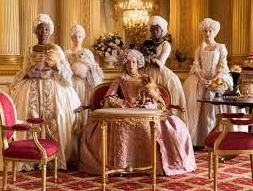
Golda Rosheuvel, best known for her role as Queen Charlotte in Bridgerton, has shared her experience of being rejected for a role in the late 1990s due to being described as “too exotic.” The British-Guyanese actress, 52, recalled how casting opportunities were extremely limited for biracial women during the early stages of her career.

One role in particular — Mary Magdalene in the hit musical Jesus Christ Superstar — stands out as a pivotal moment. Rosheuvel had been the understudy in a West End production and had performed the signature song I Don’t Know How To Love Him throughout a national tour. However, during her audition for a filmed version of the show, she faced unexpected rejection.

“I didn’t get that role. I was told I was too exotic and my eyes were too close together, and they gave me a role in the ensemble instead,” she explained in a conversation with Bustle. “I was hurt, but I had to have a serious conversation with myself. What was I going to do about this? It was the first time I’d ever heard such comments, and it forced me to question what ‘exotic’ even meant.”

She remembers standing in front of a mirror, confronting her own reflection and beauty while feeling powerless to change how others perceived her. “How can you deny me a role that I had performed for two years just because I look ‘exotic’?” she asked herself.

Although she was cast in the ensemble rather than the lead, Rosheuvel later secured roles in acclaimed shows like Death in Paradise, Silent Witness, Luther, and Coronation Street — all leading to her iconic role in Bridgerton. She described the initial setback as a lesson, stating, “I’m empowered by the experience. I come from a background of learning to persevere. Although it hurt at the time, I learned to stand up and keep going.”

Reflecting on her role as Queen Charlotte, Rosheuvel shared her pride in representing biracial experiences. “I’m thrilled to be able to speak out and represent biracial artists and the unique struggles we face,” she said. “It’s not a conversation that happens enough — the journey of coming into yourself, confronting mistakes, pain, and sometimes seeking numbness through vices.”

Rosheuvel’s story highlights not only her resilience but her determination to pave the way for greater representation in an often challenging industry.

Violence erupts at a secretive rooster fight in Michoacán, amidst ongoing cartel conflict

Nineteen people were killed when gunmen stormed a covert cockfighting event in western Mexico, according to authorities in Michoacán. The tragic attack took place late on Sunday near the town of Zinapecuaro in the state of Michoacán.

The victims include 16 men and three women, with several others reported to have been injured. Prosecutors indicated that the region has been plagued by violence linked to rival criminal groups.

Michoacán has long been a hotspot for fierce battles between local cartels and the Jalisco New Generation Cartel, based in the neighbouring state of Jalisco. The violent confrontations have escalated, with cartel members employing increasingly sophisticated tactics such as bomb-dropping drones, landmines, and homemade armoured vehicles.

Although cockfighting is illegal in many parts of Mexico, it remains a deeply ingrained and secretive tradition in some areas, often taking place away from public view. The fatal attack highlights the pervasive and often brutal influence of organised crime in the region.

GOP senators focus on child sex abuse image cases as debate intensifies during pivotal hearing.

Republican senators on the Senate Judiciary Committee spent much of the confirmation hearing for Supreme Court nominee Ketanji Brown Jackson pressing her on her judicial record, particularly related to child sex abuse image cases. Despite her clear explanations, the GOP appeared focused on advancing political talking points rather than addressing her role as a nominee or broader judicial issues.

Senator Dick Durbin, the committee chairman and a Democrat from Illinois, criticised his Republican colleagues for derailing the hearing. “For many senators, yesterday was an opportunity to showcase talking points for the November election,” Durbin remarked, lamenting how the hearing had devolved into “a testing ground for conspiracy theories and culture war theories.”

Missouri Senator Josh Hawley led the criticism, accusing Jackson of being too lenient toward paedophiles due to her sentencing record while serving as a district judge. Alarming conspiracy theories, including ties to QAnon, have framed these discussions. In response, the White House labelled Hawley’s questioning as a “QAnon-signaling smear.”

The contentious exchanges escalated with South Carolina Senator Lindsey Graham, who repeatedly used his questioning time to raise unrelated issues, including comparisons with Brett Kavanaugh’s 2018 confirmation hearing. Frustrated by Graham’s interruptions, Durbin had to interject to enforce procedural limits. Patrick Leahy, the longest-serving Democrat on the committee, left the hearing in visible anger, declaring Graham’s conduct as “a sad day” for the Senate.

Ted Cruz of Texas also aggressively targeted Jackson about sentences for child sex abuse image defendants, claiming they were too lenient. Despite Jackson’s attempts to explain that her decisions were informed by pre-sentencing reports and the changing nature of these crimes – now largely committed via the internet rather than older physical methods – Cruz remained combative. Durbin ultimately had to intervene by using his gavel to restore order.

As tensions rose, Cruz and other senators also pushed for access to pre-sentencing reports from federal cases, but Durbin warned against pursuing this further. These reports, he explained, contained personal details that could jeopardise crime victims’ safety. “I don’t believe these pre-sentencing reports are going to change anyone’s disposition of how they’re going to vote on this issue,” Durbin said, adding that releasing them could place victims at risk.

The hearing underscored deep divisions within the Senate as Jackson continues her historic nomination. Her explanations about her judicial record, the evolving nature of federal sentencing guidelines, and her commitment to fairness did little to quell the opposition from hardline members of the GOP.

The confirmation process continues to highlight the intersection of political strategy, culture war rhetoric, and judicial scrutiny as President Biden’s nominee seeks approval to sit on the Supreme Court.

Bill Clinton and world leaders pay tribute to the pioneering diplomat and trailblazer.

Madeleine Albright, the first woman to serve as the United States’ Secretary of State, has died at the age of 84 following a battle with cancer. Bill Clinton, who appointed her as the nation’s top diplomat in 1996, has led tributes to her extraordinary life and achievements.

Albright made history as the highest-ranking woman in US government at the time, serving for four years during the Clinton administration. Although she was not in the presidential line of succession because she was born in Czechoslovakia, her influence as a diplomat left a lasting mark on American foreign policy. Clinton mourned her passing, describing her as “one of the finest Secretaries of State, an outstanding UN Ambassador, a brilliant professor, and an extraordinary human being.”

Albright’s life story was defined by resilience. She fled Nazi-occupied Czechoslovakia as a child during the Second World War and later became a proud naturalised American citizen. Her career spanned decades of diplomatic service, including her advocacy during crises such as the genocides in Rwanda and Bosnia-Herzegovina, where she pushed for UN war crimes tribunals that held key leaders accountable.

Former President George W. Bush expressed his sadness, stating that Albright “lived out the American dream.” NATO Secretary General Jens Stoltenberg called her “a force for freedom.” Tributes also came from tennis legend Billie Jean King, who honoured her as “a trailblazing spirit.”

Albright’s tenure symbolised a push for “muscular internationalism,” according to James O’Brien, her former senior advisor during the Bosnian conflict. Her sharp diplomacy was exemplified by her unflinching approach to complex political questions, including advocating military responses and international accountability.

Albright was also a role model for generations of women striving for equality in the workplace, famously saying: “There’s a special place in hell for women who don’t help each other.” Her distinct personal style, including her signature use of statement jewellery, further set her apart. Each brooch she wore carried symbolic meaning – a political tool that communicated subtle messages, including a snake brooch referencing Saddam Hussein’s infamous comment calling her “an unparalleled serpent.”

Born Marie Jana Korbelova in Prague on 15 May 1937, Albright’s early years were shaped by the Holocaust and the complex European political landscape. After the war, her family returned to Czechoslovakia before ultimately immigrating to the United States as communism took hold.

Albright leaves behind an impressive legacy as a trailblazer in politics, diplomacy, and gender equality – a life dedicated to advocating human rights, peace, and American leadership on the global stage.

The Darjeeling Express chef discusses her journey into cooking, family traditions, and her latest culinary project.

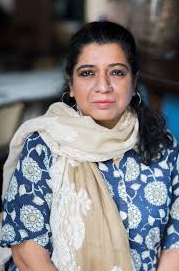
Asma Khan has always believed that food offers a way to reconnect with one’s roots, a sentiment that has become even more significant as she explores her Indian heritage through her cooking. The celebrated chef behind Darjeeling Express has released a new cookbook dedicated to her mother, a reflection on family, memory, and the power of home-cooked meals.

Khan’s journey into the kitchen came unexpectedly. She never had a desire to cook as a child – “I just wanted to eat,” she shares with a laugh. Growing up in India, she thought cooking would always be a part of someone else’s responsibilities, especially within the context of her arranged marriage. However, when she found herself in the UK after her marriage, her perspective shifted dramatically.

“I was suddenly in a foreign land with a stranger,” Khan explains. Cooking became her emotional anchor – “Food became my way of going home, but it also became my language of love.” Her connection to her mother, Ammu, and her Indian heritage grew stronger as she learned to prepare traditional dishes. It wasn’t simply about learning how to cook but about healing, nourishing, and creating a connection to the life she left behind.

Through the process of writing her cookbook, Khan discovered the parallels between herself and her mother. “She changed things around her very gently… she was very unusual for her time,” Khan reflects, recalling her mother’s resilience and her efforts to support abandoned women and their children through food entrepreneurship. Her mother’s belief in empowering women through opportunity resonates in Khan’s own vision for Darjeeling Express, where she leads an all-female team of chefs.

Since opening her London restaurant in 2017, Khan has become a well-known advocate for diversity in the culinary world. As the first British chef to appear on Netflix’s Chef’s Table, she has used her platform to challenge the norms of representation and create opportunities for women. “Representation matters,” she says. “If there’s no chair at the table, take a chair and sit down.”

Khan is passionate about sharing her culture through food, but she is also clear about respecting its origins. She encourages anyone to cook her recipes, provided they take the time to learn the stories behind them. “Understand the region, understand the stories… some part of you will be honouring the women and generations from which this recipe has come down.”

Her philosophy on cooking focuses on generosity, time, and tradition. “The most expensive ingredient you put into a dish is time,” Khan explains. “Healing and nourishing have always been at the heart of how I cook.”

Asma Khan’s story, and her new cookbook, are reminders that food is far more than sustenance. It is a bridge to history, memory, and home – an act of love and connection shared across generations and borders.