

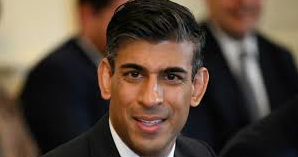
Instructions on how to promote Sunak’s candidacy through identical social media posts are inadvertently revealed by backbencher Paul Maynard.

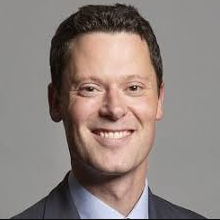
A Conservative MP has inadvertently exposed the instructions sent by Rishi Sunak’s team to fellow Tory MPs, guiding them on how to publicly support his leadership bid through social media. The guidance, which came shortly after Sunak announced his intention to run for Conservative Party leader, detailed a uniform Twitter post to be shared by MPs, including a quote and a link to his campaign website.

The instructions included a prepared message to be posted alongside the MP’s own photograph, directing them to use the hashtag #Ready4Rishi and to link to the website Ready4rishi.com. The pre-written message read: “I’m backing Rishi as he will tackle inflation, grow the economy and cut taxes. Rishi is why we have record low unemployment today. And that’s why he’s the best man to lead the country.”

Conservative backbencher Paul Maynard accidentally tweeted the instructions instead of the intended post, before quickly deleting it and replacing it with the correct message. The blunder did not go unnoticed, with social media users mocking the MP for the slip-up, joking that the original, scripted tweet was far more polished.

Prior to Sunak’s official announcement, Maynard had already engaged his Facebook followers by asking them to complete a survey on who they thought should be the next prime minister in his Blackpool North and Cleveleys constituency. This incident followed the launch of Sunak’s official campaign website, Ready4rishi.com, which had sparked speculation about his leadership ambitions when it first appeared in 2020.

The website, which caused ripples within Downing Street, had previously been dismissed by Sunak’s team as “totally false” when rumours of a leadership bid began circulating. However, with his formal entry into the race, Sunak’s campaign has quickly gathered momentum.

In a polished video shared on social media, Sunak framed his candidacy as one of fiscal responsibility, distancing himself from calls for immediate tax cuts and stressing the need to confront the nation’s economic challenges with “honesty, seriousness, and determination.” He presented himself as the candidate capable of restoring trust after the scandals surrounding Boris Johnson’s leadership, suggesting a shift away from “culture wars” if he were to become prime minister.

As Sunak takes the lead in the race, his announcement has positioned him as a front-runner ahead of rivals such as Jeremy Hunt, Liz Truss, and Ben Wallace, setting the stage for a highly competitive Conservative leadership contest.
The actor, returning as Donte Charles, shares his excitement about the school drama’s revival and his on-screen family reunion.

Adam Thomas has teased that the upcoming Waterloo Road reboot will be the “best series yet” when it makes its highly anticipated return later this year. After a six-year hiatus, the BBC’s iconic school drama is bringing back a mix of old and new faces, with Thomas reprising his role as the infamous bad boy, Donte Charles.

Speaking during a filming break, Thomas expressed his enthusiasm for the new series, describing it as “great fun” and “exciting.” Reflecting on his return to the role, he added, “It’s going to be the best series yet. It’s been brilliant getting back to doing what I love, reconnecting with old cast members, and meeting the new faces.”

Having first left the show in 2009, Thomas will be reunited with his on-screen wife, Chlo, played by Katie Griffiths, and their daughter Izzy. The twist? In the reboot, their daughter Izzy will now be played by Thomas’ real-life niece, 13-year-old Scarlett Thomas, marking her debut in a major television role. Scarlett, who is the daughter of Coronation Street stars Ryan Thomas and Tina O’Brien, will share her first on-screen moments with her uncle.

Adam was quick to praise his niece’s talent, sharing a selfie with her on set. “I’m just in awe of this girl,” he wrote, “Could watch her all day, every day! Can’t wait for you to see her in action!”

In addition to his Waterloo Road return, Thomas has also been spending time with his family outside of the TV world. Recently, he teamed up with his brother for a quirky new Oreo campaign, which explores the unusual ways people enjoy the iconic cookie. A study conducted as part of the campaign revealed that 63% of 2,000 adults like experimenting with strange food combinations. Among the odd pairings enjoyed by participants was Oreos with sour cream and chive, a combination that many surprisingly found “not bad.”

With a lifetime supply of Oreos on hand, Thomas and his family have plenty of opportunities to keep experimenting with bizarre food pairings – and, perhaps, even some new Waterloo Road scenes too!

The TV star expresses his heartbreak as his brother, a beloved Catholic priest, passes away following a brief illness.

Declan Donnelly has expressed his profound sorrow after the death of his brother, Father Dermott Donnelly, who passed away at the age of 55. The Catholic priest died peacefully in hospital on Friday afternoon after a short illness, as confirmed by the Diocese of Hexham and Newcastle.

In a heartfelt post on Twitter, Declan, 46, shared the news with his followers, writing: “I am heartbroken to tell you that my darling brother Fr Dermott, @TweeterPriest, sadly passed away this afternoon. We are all beyond devastated. Thank you for your messages of sympathy and support, they are appreciated DD.”

Father Dermott, a cherished figure within his community, had served for over 30 years, primarily at St Joseph’s Church in Stanley, County Durham. His death has left many shocked, with the Diocese describing it as a “great loss.” A statement from the Diocese asked for prayers for his soul and for his family, especially his mother, during this difficult time.

Bishop Robert Byrne of Hexham and Newcastle praised Father Dermott for his exceptional dedication, particularly in his work with young people and youth ministry. “He will be sorely missed for his energy, enthusiasm, and ability to engage with all who met him,” said the Bishop, adding that Father Dermott had played a pivotal role in bringing disadvantaged youth closer to faith.

The priest had recently celebrated 30 years of service and was known for his vibrant personality and deep commitment to his parishioners. His work with young people, many of whom came from difficult backgrounds, was especially noteworthy. He was instrumental in organizing and leading events such as the Flame gatherings at Wembley Arena, which brought together thousands of young Catholics.

Father Dermott was also a strong supporter of various charities, including The Catholic Agency for Overseas Development (Cafod), where his passion for social justice and service to the most vulnerable was widely acknowledged. Monica Conmee, head of education at Cafod, paid tribute, recalling Father Dermott’s “immense talent and gifts” in guiding young people to experience God’s love.

Before his death, Father Dermott had been reported as being critically ill, with local parishes, including Stanley, Dipton & Byermoor Catholic Parishes, requesting prayers for him. His passing has been met with an outpouring of tributes from those who knew him, with many reflecting on his kindness, warmth, and unwavering faith.

In 2014, Father Dermott appeared on Songs of Praise, alongside CBBC’s Hacker T Dog, to answer questions about the Church posed by young viewers. His legacy will live on, not only in his community but through the countless lives he touched throughout his career.

A prayer gathering will be held at St Joseph’s Church in Stanley at 6 pm on July 8 to honour Father Dermott and celebrate his life and work. The Donnelly family, including Declan, continues to receive messages of sympathy as they mourn their loss.

Prime Minister refuses to step down after tense showdown with senior ministers, even as his government faces increasing resignations.

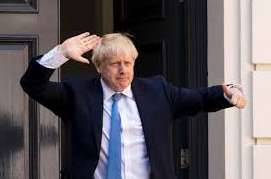
Boris Johnson has defied mounting calls for his resignation following a dramatic confrontation with senior cabinet ministers, including Michael Gove, at Downing Street. Despite over 40 members of his government resigning in protest, the Prime Minister remains steadfast, insisting that he will “fight on” and will not step down.

During an intense meeting at No. 10, Johnson was urged by several ministers to accept the inevitable and resign. However, the Prime Minister made it clear that he intends to remain in office until forced out by another confidence vote. His decision to stay in power led to further resignations, including Welsh Secretary Simon Hart and Junior Health Minister Ed Argar, who both left their positions hours after the meeting.

Johnson’s aide, James Duddridge, told Sky News that the Prime Minister is “in buoyant mood” and determined to continue, citing his “14-million mandate” and a strong sense of duty. Meanwhile, a senior ally was quoted as saying that the party would have to “dip their hands in blood” if they wished to overthrow the will of the electorate.

The Prime Minister’s refusal to resign came despite a dramatic wave of cabinet departures. Among the most vocal critics was Attorney General Suella Braverman, who declared that while she would not resign, it was “time to go” for Johnson, emphasising that his handling of recent events had been “appalling”.

The Conservative Party’s 1922 Committee, which oversees leadership challenges, initially refrained from initiating an immediate rule change to allow a fresh confidence vote. They expected, however, that the cabinet would take decisive action without the need for such a vote. The delegation of ministers, led by Chief Whip Chris Heaton-Harris, included Transport Secretary Grant Shapps, Simon Hart, and possibly newly-appointed Chancellor Nadhim Zahawi.

Despite the growing pressure, Johnson maintained that resigning would trigger the chaos of a leadership contest at a time when the nation is grappling with a cost-of-living crisis, followed by potential demands for a general election. He also sought to rally wavering MPs, arguing that none of the potential leadership contenders could match his public appeal.

In the House of Commons, there was applause when a Tory MP accused Johnson of “blaming others for his mistakes” and called on him to take responsibility and resign. Sajid Javid, the first to resign as Health Secretary, urged fellow MPs to follow his lead, asserting that “the problem starts at the top.”

The growing tension within the cabinet became evident as some ministers formed a separate faction inside No. 10, attempting to resist the pressure for Johnson’s resignation. Culture Secretary Nadine Dorries, a long-time ally, reaffirmed her support for the Prime Minister, suggesting that he could remain in power despite the widespread opposition.

As the political drama unfolded, Johnson even took time away from his leadership battle for his regular weekly phone call with the Queen. Meanwhile, key figures such as Business Secretary Kwasi Kwarteng and Northern Ireland Secretary Brandon Lewis publicly withdrew their support for the embattled Prime Minister.

In the aftermath of the confrontation, resigning ministers expressed their dissatisfaction with the direction of the government. Equalities Minister Mike Freer spoke of a “hostility” towards LGBT+ people, while Safeguarding Minister Rachel Maclean criticised the government’s handling of sexual harassment issues, particularly referencing the Chris Pincher scandal. Mark Fletcher, an unpaid aide who witnessed the alleged groping incident, condemned Johnson’s response, calling it inadequate and irresponsible.

The showdown continued as Johnson, speaking to a committee of MPs, insisted that it was his “duty” to stay in power. He did not deny past comments regarding former minister Chris Pincher’s behaviour, but reiterated that resignation was not the solution. Under intense scrutiny, he eventually ruled out calling an early general election, a move that had been suggested as a possible means of maintaining control.

Labour leader Keir Starmer seized the opportunity to mock Johnson’s situation, likening it to a sinking ship and calling out those ministers still standing by the Prime Minister as the “lightweight brigade”. He urged those remaining in Johnson’s camp to show some “self-respect” and questioned how much longer they could support his increasingly isolated leadership.

As the political crisis deepens, Johnson’s refusal to resign highlights the mounting pressure within the Conservative Party, with his leadership increasingly under scrutiny from both within his own ranks and across the political spectrum.

The Lionesses earn a hard-fought 1-0 victory, yet their performance must be sharper to challenge top contenders like France, Sweden, and Germany.

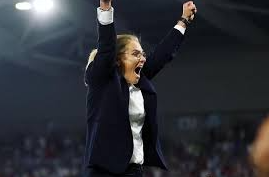
England’s 1-0 win over Austria in their opening match of the UEFA Women’s Euro 2022 was an important step, but the performance left much to be desired if they are to contend with the tournament’s heavyweights. The Lionesses were dominant for large periods of the game, with Beth Mead’s first-half goal proving enough to secure the three points. However, Austria’s resilience ensured a nervy finish, and England’s unpolished display is unlikely to intimidate teams like Spain, Germany, or France.

The match at Old Trafford was a story of mixed emotions. Despite a solid victory, England’s performance lacked the sharpness and clinical edge required to strike fear into the major contenders. Coach Sarina Wiegman will be aware that, much like her Netherlands team in 2017, peaking in the later stages of the tournament could be the key to success. This victory may not have been a statement of intent, but it did the job.

Off the pitch, the atmosphere was electric. A record crowd of 68,871 spectators witnessed a vibrant occasion, with fans supporting the team with energy and enthusiasm, aided by a lively brass band, typically seen at men’s fixtures. Despite gloomy weather in Manchester, the spirit of the crowd remained undeterred, and even the pyrotechnic-heavy opening ceremony could not dull the excitement surrounding the tournament.

The game began with a nervous edge for England, but they settled into their rhythm after 16 minutes, when Mead put them ahead with a beautifully crafted goal. Fran Kirby’s vision and quick pass allowed Mead to cushion the ball with her shoulder before delicately lifting it over the Austrian goalkeeper, Manuela Zinsberger. The goal was confirmed by goal-line technology and VAR, making it the first time these technologies were used in a women’s Euro.

From that moment, England began to dominate, with Kirby pulling the strings in midfield, setting up further chances for Lucy Bronze and Lauren Hemp. However, despite their attacking dominance, they couldn’t add to their lead before half-time. In the second half, Wiegman’s tactical switch, bringing on forwards Alessia Russo, Chloe Kelly, and Ella Toone, aimed to break Austria’s resistance, but it was not until the final moments that England really came alive.

Austria remained a threat, particularly in the latter stages, with England’s defence and goalkeeper Mary Earps having to dig deep. Earps made crucial saves, first denying Barbara Dunst from long range and then keeping out Julia Hickelsberger-Fuller’s effort. Despite some late pressure, England held on to secure the win, making it 15 matches unbeaten under Wiegman.

The result was celebrated by fans, with the famous Sweet Caroline anthem ringing out after the final whistle, evoking memories of the men’s run to the final at Euro 2020. Like Gareth Southgate’s team, the Lionesses know the importance of keeping clean sheets at this level, but Wiegman will demand more clinical performances as the tournament progresses.

While England’s opening match was far from perfect, it was a successful start to what could be a historic tournament for the team. The victory was crucial, but if the Lionesses want to go deep in the competition, they must improve their overall performance to match the intensity and quality of the top teams in Europe.

As India increasingly imports cheap Russian oil, its traditional Middle Eastern suppliers lose ground, amidst rising diplomatic and communal challenges.

India is experiencing a significant shift in its oil procurement strategy, with Russia rapidly emerging as a major supplier, displacing longstanding sources like Saudi Arabia and Iraq. Following Russia’s invasion of Ukraine, its oil exports to India have skyrocketed, reaching a record 950,000 barrels per day in June—up from zero in the early months of 2022. This marks a dramatic rise in India’s reliance on Russian crude, which now accounts for 21% of its oil imports, making Russia the second-largest supplier to the country, according to data from Kpler.

Historically, Russia was only the tenth-largest oil exporter to India up until 2021, but the global shift in trade dynamics, partly driven by sanctions on Russia by the US and European Union, has seen India fill the void left by Western buyers. Russia’s ability to offer oil at a steep discount has made it an attractive option for India, especially at a time when global energy prices are volatile and high.

In comparison, traditional suppliers from the Middle East are facing a decline in exports to India. Oil imports from Iraq dropped marginally in June to around 1 million barrels per day, while Saudi Arabia saw its shipments decrease from 697,000 to 686,000 barrels per day. Other Gulf countries, such as Kuwait, have also experienced a drop in their exports to India. This decline coincides with the post-pandemic recovery, which has caused India’s overall demand for crude oil to surge by almost 13% compared to 2021.

Despite these shifts, India remains a critical refining hub, using imported crude to produce refined products like diesel and gasoline, which it then exports. This refining capacity makes Russia’s discounted crude especially attractive, as India capitalises on the cost advantages of Russian oil to increase its clean product exports by nearly 9% this year compared to 2021.

However, this pivot to Russian oil is not without its complications. While the immediate economic benefits are clear, the geopolitical and diplomatic ramifications are significant. The Indian government finds itself walking a fine line, balancing its economic interests with its political relationships. According to Thomas Murphy, strategic intelligence manager at Dragonfly, India’s reliance on Russian oil could lead to increasing criticism and pressure from Western nations, particularly the US and the European Union, for not imposing sanctions on Russia or holding it accountable for its actions in Ukraine.

The growing dependence on Russian oil is also putting India’s long-standing ties with the Middle East under strain. With the region relying heavily on oil exports for its revenue, the loss of key markets like India and China could have long-term consequences. Harsh V Pant, Professor of International Relations at King’s College London, notes that this shift could prompt the Middle Eastern oil producers to reconsider their strategies, especially if India and China continue to purchase discounted Russian oil.

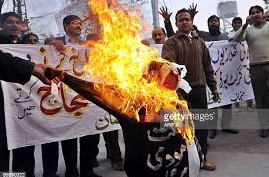
Additionally, rising communal tensions within India have complicated its relations with Islamic nations. In June, derogatory remarks made by members of India’s ruling BJP party about the Prophet Muhammad led to protests across several Muslim-majority countries, including Qatar, Iran, and Kuwait. These tensions have prompted diplomatic backlash and consumer boycotts of Indian products, creating further strain in India’s relations with the Gulf states.

Despite these internal and external challenges, India continues to pursue its oil deal with Russia, with Prime Minister Narendra Modi maintaining a neutral stance on the Ukraine war. Modi’s government has resisted Western pressure to sever ties with Russia, with Foreign Minister Subrahmanyam Jaishankar defending India’s position, asserting that the West is hypocritical in its approach to Russian energy imports.

As the US and EU impose further sanctions on Russian oil, India is rapidly increasing its purchases, making up for the reduced supply to Europe. In fact, India is closing in on the EU’s pre-war import levels, which averaged 2.2 million barrels per day. Indian officials, including Jaishankar, have fiercely rejected accusations of opportunism, insisting that European nations are equally complicit in financing the war by continuing to buy Russian gas.

Looking forward, the question remains whether India’s strategic pivot to Russian oil will persist beyond the war in Ukraine and whether it will face increasing diplomatic isolation from its traditional allies in the Middle East and the West. As the geopolitical landscape shifts, India’s energy strategy will continue to be a key factor in global oil markets and international relations.

Despite a neck and shoulder injury, Nick Kyrgios battles through pain to defeat Nakashima and progress to the last eight.

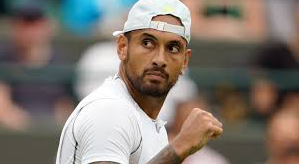
Nick Kyrgios has once again proven his ability to rise to the occasion at Wimbledon, battling through an injury to secure a hard-fought win over Brandon Nakashima in the fourth round. The Australian star, known for his unpredictable temperament, displayed a more restrained approach on court, though his progress was not without struggle.

Kyrgios, who has experienced a series of highs and lows during this year’s tournament, was notably subdued in his latest encounter. His usual fiery antics were largely absent, as he focused on managing discomfort from a neck and shoulder injury that required treatment from the physio and painkillers during the match. Despite these issues, Kyrgios triumphed 4-6, 6-4, 7-6, 3-6, 6-2, extending his impressive run at Wimbledon, where he previously reached the quarter-finals in 2014.

The match was a departure from the usual spectacle associated with Kyrgios, as he refrained from the usual histrionics. Instead, he concentrated on getting the job done. The Centre Court crowd, known for anticipating both fireworks and frustration, were treated to a more controlled display, despite Kyrgios’ physical limitations. His serving speed and forehand were clearly affected by his injury, yet he still managed to dominate in key moments, especially in the deciding set.

The Australian’s performance was a mix of efficiency and flair, with his shot-making still evident even when hindered by pain. The first set was a quiet affair, with neither player able to break decisively until Kyrgios suffered an untimely forehand error. But he responded strongly, breaking Nakashima’s serve to level the match at one set all. The injury flare-up during the second set brought out the physio once more, and after some brief discomfort, Kyrgios played more freely in the third set, ultimately claiming it in a tiebreak.

A double fault from Nakashima in the tiebreak proved pivotal, and Kyrgios capitalised on this moment of vulnerability to take the set 7-2. Despite an earlier hiccup in the fourth set when he briefly lost his composure, Kyrgios regrouped and shifted the momentum back in his favour. With four straight games in the deciding set, he raced to a 5-0 lead, closing out the match with authority.

Kyrgios, reflecting on the victory, admitted that it wasn’t his best performance but expressed satisfaction at his ability to grind through the pain. “I’m super happy to get through today. My five-set record’s pretty good. I’ve never lost a five-set match here,” he remarked, looking ahead to the quarter-finals.

The win marks another milestone in a Wimbledon campaign that has seen Kyrgios struggle to maintain consistency, yet he remains one of the most compelling players in the draw. As he moves forward, it will be fascinating to see how his injury impacts his game and whether he can continue to thrive on one of tennis’ biggest stages.

Just Stop Oil demonstrators glue themselves to “The Hay Wain” at National Gallery, demanding a halt to new fossil fuel projects.

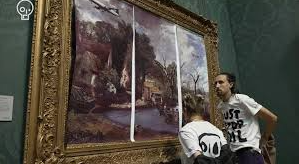
Two climate activists from the group Just Stop Oil staged a protest at London’s National Gallery on Monday, gluing themselves to the frame of John Constable’s renowned painting The Hay Wain. The demonstration aimed to draw attention to the UK government’s plans to approve new oil and gas projects, which the activists argue contribute to a climate crisis threatening future generations.

In a symbolic act, the protestors, identified as Eben Lazarus, 22, a music student, and Hannah Hunt, 23, a psychology student, also pasted over the original artwork with their own reimagined version. Their altered depiction of The Hay Wain included an old car parked in front of the mill and a washing machine on the hay cart, symbolising the environmental degradation they claim is inevitable if fossil fuel extraction continues. The activists, wearing white Just Stop Oil T-shirts, crossed a security barrier before affixing the printed dystopian imagery to the iconic artwork.

As security swiftly evacuated visitors from the gallery, the demonstrators knelt in front of the painting, placing their hands on its frame while loudly voicing their concerns about climate change and government inaction. Lazarus, who described himself as an art lover, passionately declared, “Art is important, but when there is no food, when there is no water, when billions of people are suffering—what use is art?”

The Hay Wain, completed by Constable in 1821, is widely considered his most famous work. It portrays a peaceful rural Suffolk scene, but the activists argued that their reimagining was a visual representation of humanity’s potential future under unchecked environmental destruction. Lazarus stated, “We have stuck a reimagined version of The Hay Wain that demonstrates our road to disaster.”

Hunt also addressed the crowd, calling on the UK government to end its plans for 40 new oil and gas licences, warning that this would push the world towards an “unliveable climate” and result in widespread crop failures and global suffering. She emphasised, “You can forget our ‘green and pleasant land’ when further oil extraction leads to food shortages. Ultimately, new fossil fuel projects are a death sentence for billions.”

A spokesperson for the National Gallery confirmed the incident, stating that the room was closed to the public and that police had been called. The gallery’s conservation team was also involved in assessing any potential damage to the artwork.

The protest is part of a larger wave of actions by Just Stop Oil, which has also disrupted events like the British Grand Prix and targeted other cultural institutions. Last week, five members of the group reportedly attached themselves to a 19th-century landscape painting by Horatio McCulloch in Glasgow’s Kelvingrove Art Gallery and Museum, while also vandalising the gallery with the group’s logo in orange paint.

The Metropolitan Police responded to Monday’s protest, confirming they were called to the National Gallery at 14:25, but no arrests had been made at the time of reporting.

The activists’ actions are a direct challenge to government policies on fossil fuel extraction, which they claim are accelerating the climate crisis at the expense of both the environment and future generations.

The UK Prime Minister pledges continued support for Ukraine, stressing the need for a united response against Russian aggression.

Prime Minister Boris Johnson has reiterated that Ukraine must emerge victorious in its ongoing conflict with Russia, emphasising the importance of global unity in opposing the invasion. Speaking in the House of Commons upon his return from a series of international summits, including the Commonwealth, G7, and NATO meetings, Johnson underscored the alliance’s strengthened resolve to support Ukraine “for as long as it takes.”

The Prime Minister described the NATO summit in Madrid as “exceeding all expectations” due to the solidarity shown by member nations. He warned that if Russian President Vladimir Putin is not halted in Ukraine, his expansionist ambitions would continue, posing a direct threat to global peace. “We are not defending an abstract principle, but the very foundation of a peaceful world,” Johnson said. “If large nations can be allowed to dismantle their neighbours, no country will ever be safe again.”

Johnson also highlighted that Ukraine “must have the strength to end the war on its own terms,” echoing Ukrainian President Volodymyr Zelensky’s stance on the conflict. The Prime Minister welcomed the inclusion of Finland and Sweden into NATO, stressing that their partnership reinforced the collective opposition to Russia’s aggression.

Addressing the global economic consequences of the war, Johnson clarified that rising food prices are a direct result of Russia’s blockade of Ukraine’s vital grain exports, further exacerbating the crisis. He emphasised that the implications of Russia’s actions extend beyond Ukraine’s borders, affecting global food security and threatening the safety of nations far removed from the conflict.

The UK’s commitment to defence spending will also increase, with Johnson indicating that the country is set to allocate 2.5% of its GDP to military expenditure by the end of the decade. He also reported that the G7 had pledged nearly $30 billion in financial support for Ukraine, alongside additional military, humanitarian, and diplomatic aid.

Johnson condemned Russia’s missile attack on a Ukrainian shopping centre during the G7 summit, which resulted in at least 18 civilian deaths, describing the assault as “barbaric” and strengthening the resolve of international leaders to continue supporting Ukraine.

In addition, the G7 members agreed to tighten sanctions on Russia, including a ban on the import of Russian gold, a major source of export revenue for the country. Leaders also discussed ways to ensure that the 25 million tonnes of grain blocked in Ukraine reach the global markets that depend on them.

Johnson concluded by emphasising that the unity of the international community is critical for both Ukraine’s victory and the protection of global peace and security.

Long delays in processing EU settlement applications leave families in limbo, with mounting concerns over jobs, travel, and housing.

A year after the deadline for the EU Settlement Scheme passed, hundreds of thousands of EU nationals living in the UK are still waiting for decisions on their applications. Campaigners are now warning of the severe repercussions of continued delays, which are impacting people’s job prospects, housing, and travel plans, as nearly 250,000 applicants remain in a backlog.

Among those affected is 27-year-old Hussen Mohamed, a Dutch-Somali who has lived in the UK for 17 years. Mohamed applied for his settlement status in November 2019 but, to this day, is still awaiting a response. Despite numerous inquiries to the Home Office, he was repeatedly told his case was “in the backlog,” with no explanation for the delay. When The Independent reached out to the Home Office, it was revealed that Mohamed had been wrongly identified as his twin brother, who had been convicted of murder in 2018.

Living without EU settled status for almost three years, Mohamed has faced significant challenges, including being unable to find a job and repeatedly detained at airports after travelling abroad. “This is not normal,” he said, frustrated by the way he has been treated. “You’re being questioned to get into a country where you’ve worked and paid taxes. It makes you question everything about the system.”

Government figures reveal that as of 31 May 2022, 245,700 applications remained unresolved, with over 6.6 million applications having been submitted since the scheme’s inception in 2019. However, many individuals have found their lives put on hold as a result, with cases like Mohamed’s being far from isolated.

Similarly, Angelique Santos, a Filipino national working as a carer in London, and her nine-year-old daughter, Jina, are still waiting for a review decision on their applications, which were submitted in June 2021. Despite providing further evidence in response to a refusal, they have been left in uncertainty for over eight months. This delay has prevented them from travelling to visit family in the Philippines and to Portugal for medical treatment for Jina.

Santos expressed her frustration: “It’s very stressful. We can’t plan our lives or travel as a family. My daughter is sad because she doesn’t understand why we can’t go anywhere.” She went on to highlight how the delay was affecting her mental health, as well as her financial situation, adding, “It feels like we’ve been forgotten. The government can’t just keep putting everything else on hold.”

The group the3million, which advocates for the rights of EU citizens in the UK, has voiced deep concern over the ongoing delays. Spokesperson Andreea Dumitrache stressed that the uncertainty faced by applicants is causing significant disruption. “These delays have serious consequences. Jobs are at risk, travel is restricted, and many people are living with the fear that they might not be able to access essential services like healthcare.”

Alec Herron, from the charity Settled, added: “EU citizens were promised that nothing would change after Brexit. But now, many are facing discrimination and difficulties in accessing services like mortgages, simply because their status remains unresolved.”

The Home Office has acknowledged the delays, with a spokesperson stating: “We apologise to Mr Mohamed for the delays in processing his application, which we are working urgently to resolve. The EU Settlement Scheme has been an overwhelming success, with over 5.8 million grants of status made, but we are dealing with unprecedented demand.”

Despite this, campaigners and affected individuals are calling for the government to prioritise the resolution of these cases and address the concerns of EU nationals still waiting for a fair outcome.