
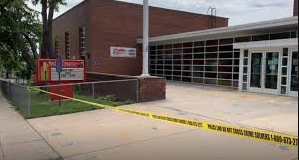
The Texas House report reveals a disorganised law enforcement response, poor school security, and missed warning signs leading up to the tragic events at Robb Elementary School.

The long-awaited Texas House report into the tragic Robb Elementary School shooting on May 24, which resulted in the deaths of 19 children and two teachers, paints a damning picture of law enforcement’s chaotic and ineffective response. The report sheds light on multiple lapses in security protocols, missteps in coordination among officers, and missed opportunities to prevent the attack, painting a broader picture of systemic failures than previously understood.

Ineffective and Disorganised Law Enforcement Response
The report highlights a response that was both massive in scale and utterly disorganised. Nearly 400 law enforcement officers, including local, state, and federal agents, arrived at the scene but failed to take decisive action. After the shooter crashed his truck and entered the school, the situation devolved into more than an hour of inaction, despite multiple 911 calls from inside classrooms and urgent pleas from parents outside. “At Robb Elementary, law enforcement responders failed to adhere to their active shooter training and failed to prioritise saving innocent lives,” the report stated.

While much of the blame has been directed at Pete Arredondo, the Uvalde school district’s police chief, the report spreads responsibility across all responding agencies. Arredondo failed to take charge of the situation, and no one else stepped up to assume command, resulting in a “chaotic atmosphere” on the scene. Early responders attempted to breach the classrooms but were pushed back by gunfire, and the officers misclassified the situation as a “barricaded shooter” rather than an “active shooter,” severely delaying their response.

A key factor contributing to the lack of urgency was the high frequency of school lockdowns in the area. These were mostly triggered by human trafficking incidents, which led to the false assumption that the alert was not a serious threat. The report suggests that this desensitisation to lockdown alarms may have dulled the readiness of both school officials and law enforcement to respond appropriately.

School Security Failures
The report also addresses the critical failure of the school’s security measures, particularly regarding the doors. Robb Elementary had a history of issues with door locks, and the school’s culture of noncompliance around basic security measures played a fatal role. The door the shooter used to gain access to the building was not properly secured, and one of the classroom doors was known to be faulty by several staff members and students. However, no repairs were made, and the door was left unaddressed, leaving it vulnerable to the attack.

Warning Signs from the Shooter
In the months leading up to the attack, the shooter exhibited numerous signs of violent behaviour, which were largely ignored by those around him. He had developed an interest in violent online content and had a history of threatening behaviour. He was known to have become obsessed with school shootings, even adopting the moniker “school shooter” on an online platform. Despite multiple warning signs, including violent behaviour and estrangement from his family, the shooter legally acquired firearms in the days leading up to the attack.

The report reveals that several family members knew about the shooter’s troubled behaviour and attempts to buy guns, but no one took action to intervene. In an online conversation just days before the attack, he ominously wrote, “10 more days.”

Role of Border Patrol Officers
While much of the focus initially fell on local and state law enforcement agencies, the report also notes the involvement of the U.S. Border Patrol, which had 149 officers at the scene—the largest contingent of any agency. Despite the Border Patrol’s presence, many of its officers, including those in the tactical unit that eventually took down the shooter, were delayed in taking action. The commander of the Border Patrol tactical team waited for a bulletproof shield and a working key to the classroom door, despite reports that the door may not have needed the key. The report further revealed that none of the Border Patrol agents involved in opening the door were wearing body cameras, which further hampered the investigation.

The report raises critical questions about the effectiveness and coordination of the law enforcement response to the attack, with implications for how similar situations will be handled in the future.
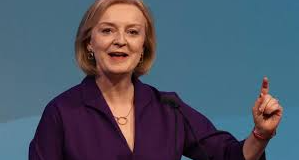
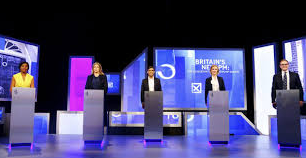
The Foreign Secretary’s attire at Channel 4’s debate draws comparisons to the former Prime Minister’s iconic 1979 look.

Liz Truss was quickly noticed on social media for appearing to recreate a look worn by Margaret Thatcher during a 1979 election broadcast. The Foreign Secretary chose a black blazer paired with a white shirt and a prominent bow tie, strikingly similar to the outfit Thatcher wore in her famous 1979 campaign broadcast.

Twitter users immediately pointed out the resemblance, with many commenting on the fashion choice. One tweet, which gained over 4,500 likes, noted: “Liz Truss has recreated Margaret Thatcher’s appearance from her 1979 election broadcast down to the last detail.” Another joked: “Liz Truss’s Margaret Thatcher Tribute Act is available for hire.”

Truss was participating in the first live televised debate for the Conservative leadership, alongside fellow candidates Tom Tugendhat, Rishi Sunak, Kemi Badenoch, and Penny Mordaunt. Hosted by Krishnan Guru-Murthy, the debate provided a platform for Truss to defend her political stance and discuss key issues.

When asked about her commitment to integrity and honesty, Truss responded: “I stood by Boris Johnson, of course, I raised issues with him in private, but I supported him for the leadership election. I was part of his Cabinet and I owed him my loyalty.”

She also appeared to take a veiled dig at Rishi Sunak’s economic record. In her concluding remarks, Truss said: “We face grave challenges as a country, the worst economic crisis for a generation, an appalling war perpetrated by Russia in Ukraine, after decades of very slow growth. Now is not the time for a continuity of our current economic policy. We need to be bold, we need to do things differently, we need to cut taxes, we need to unleash growth, and we need to unleash the potential of all of the people across our great country.”

Her Thatcher-inspired outfit and fiery rhetoric have sparked further discussions as Truss positions herself as a bold alternative to the current economic policies under Johnson’s leadership.

A roundup of the most significant statements made during the first televised debate in the Tory leadership race.

During the first televised debate in the Conservative leadership race, candidates shared a range of striking quotes that gave insight into their political views and personal values.

Penny Mordaunt responded to attacks on her candidacy with confidence, saying, “We are all responsible for our own campaigns and I take it as a big fat compliment that no-one wants to run against me.” She also strongly affirmed her identity, stating, “I’m a woman, I’m a biological woman, if I had a mastectomy I would still be a woman – I’m a biological woman in every cell in my body.”

Liz Truss, when questioned about criticisms aimed at Mordaunt, retorted, “I’m running an entirely positive campaign which is about the great challenges we face and what we need to do to deliver for the people of Britain because we are facing a cost-of-living crisis, families are struggling.”

Tom Tugendhat, asked if Boris Johnson is an honest man, simply answered with a direct “No.” He also joked about the NHS, replying to a woman in the audience, “You’ve also given me two children,” before quickly adding, “Not you personally, of course.” Tugendhat further stood out with his remark: “It’s easy to stand up to your enemies – it’s sometimes harder to stand up to your friends,” which many on social media linked to a line from the Harry Potter series.

Kemi Badenoch, reflecting on her vision for Britain, stated, “Why should the public trust us? We haven’t exactly covered ourselves in glory and it has, on occasion, looked like we were doing this for ourselves.” She also spoke personally about her experience, sharing, “Energy is a subject that worries me a lot, I grew up in Nigeria where there were blackouts every single day, there still are. I know what it’s like not to be able to turn on the light, so it terrifies me seeing how high bills are going.”

Rishi Sunak emphasised fiscal responsibility, telling the audience, “I don’t think the responsible thing to do right now is launch into some unfunded spree of borrowing and more debt, that will just make inflation worse, it will make the problem longer.” He also shared a personal moment about his family, stating, “I have two young girls and they’re not massively bothered about my job (but) the one thing they ask me about is the environment.”

In a sharp exchange, Sunak accused Truss of not having a sound economic plan, saying, “Borrowing your way out of inflation isn’t a plan, it’s a fairytale.” Truss, in turn, responded, “I think it is wrong to put taxes up,” and defended her stance on funding Covid-related measures, saying, “I support the extra money, I just don’t support the way we funded it. I support spreading the Covid debt over a longer period of time.”

These key quotes from the debate reflect the intense and competitive nature of the Tory leadership race as candidates position themselves on various critical issues.

From Ukraine’s frontlines to Portugal’s wildfire battle and Canada’s music festival, this gallery captures significant global events.

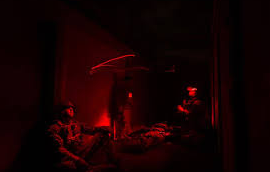
From soldiers seeking shelter on the frontlines near Kharkiv in Ukraine, to a man desperately using a tree branch to hold back a raging wildfire in Portugal, to music lovers gathering in vast numbers at the Festival d’été de Quebec in Canada, which is drawing over a million people across 11 days, this collection of images offers a glimpse into some of the most striking moments from the past week around the globe.

Curated by AP photo editor Anita Baca in Mexico City, these photographs, captured or published by The Associated Press, reflect the diverse and often intense stories shaping our world during the week of July 9-15, 2022.

The contest for the next Conservative leader narrows to six candidates after first-round voting, with Zahawi and Hunt failing to secure enough support.

The race for the next leader of the Conservative Party, and potentially the keys to Number 10, has now narrowed to six contenders after the first round of voting eliminated Chancellor Nadhim Zahawi and former Cabinet minister Jeremy Hunt.

Rishi Sunak, whose resignation as Chancellor helped spark the leadership contest, topped the ballot with 88 votes, followed by trade minister Penny Mordaunt with 67 and Foreign Secretary Liz Truss with 50. Other candidates progressing to the next stage include Suella Braverman, Tom Tugendhat, and Kemi Badenoch.

Zahawi and Hunt, both prominent figures within the party, fell short of the 30-vote threshold required to continue in the contest. Zahawi, brought in by Boris Johnson after Sunak’s resignation, secured just 25 votes, while Hunt, a former Health and Foreign Secretary, garnered only 18.

The results were announced by Sir Graham Brady, chair of the Conservative 1922 Committee, in a packed Committee Room 14 in the House of Commons. With the first elimination now confirmed, the battle for the leadership has intensified.

Truss, who is focusing on uniting the right-wing faction of the party, stated that now was the time for Tories to rally behind a candidate who would cut taxes and ensure victory in Ukraine. A spokesperson for Truss further claimed she would bring the “real economic change” needed from day one.

Jonathan Gullis, a key supporter of Zahawi, suggested that the party’s right-wing factions should unite behind a single candidate. However, Zahawi himself refrained from endorsing any of his former rivals, opting not to make any further interventions in the contest.

The first-round voting followed growing tensions between rival factions of the party. Downing Street has repeatedly denied orchestrating a “Stop Sunak” campaign, even as Boris Johnson’s loyalists, including Culture Secretary Nadine Dorries and Brexit Opportunities Minister Jacob Rees-Mogg, publicly backed Truss. Dorries accused Sunak’s campaign of using “dirty tricks,” while Rees-Mogg criticised the former Chancellor’s tax policies as “economically damaging.”

Johnson’s press secretary firmly denied any involvement in a smear campaign against Sunak, maintaining that the Prime Minister was remaining neutral in the leadership race.

Meanwhile, trade minister Penny Mordaunt, considered one of the frontrunners, officially launched her campaign by positioning herself as the best candidate to secure victory in the next general election. In a speech at Westminster’s Cinnamon Club, Mordaunt, who has secured significant backing, declared that she was “the candidate Labour fears the most.”

Mordaunt, a former Defence Secretary and naval reservist, positioned herself as a stark contrast to Johnson, pledging to return to traditional Conservative values of “low tax, small state, and personal responsibility.” She also committed to meeting the NATO defence spending target of 2% of GDP and increasing it by 0.5% above inflation annually.

The next ballot in the leadership contest will take place on Thursday, where the candidate with the fewest votes will be eliminated. The process will continue until only two candidates remain, with the final pair battling it out over the summer to secure the support of Conservative members.

The chosen successor to Boris Johnson will be announced on September 5, with Johnson set to formally tender his resignation to the Queen the following day, clearing the way for his successor.

Democrats warn that GOP’s efforts to impose fetal personhood laws signal a nationwide push for an abortion ban.

While Republican lawmakers have long argued that the US Supreme Court’s decision to overturn Roe v. Wade simply returned the issue of abortion laws to state control, many in the GOP are now advancing a controversial notion of “fetal personhood” that could pave the way for a nationwide ban on abortion.

Despite claims by Republican representatives, such as Fred Keller, who told the House Judiciary Committee that the Court’s decision in Dobbs v Jackson merely allowed states to set their own abortion laws, the push for fetal personhood is gaining traction. GOP lawmakers are now asserting that fetuses, embryos, and fertilized eggs should be afforded full legal protections, sparking concern among Democrats that Republicans are seeking to impose a nationwide ban on abortion.

Erin Hawley, a prominent conservative legal figure, echoed Republican sentiments that the Supreme Court’s ruling was a return to “judicial modesty,” claiming it corrected a “50-year error” and placed the power back in the hands of elected representatives. Hawley, who worked on the case central to the Dobbs decision, described the ruling as the “project of a lifetime.”

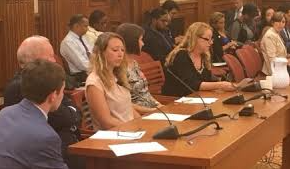
The debate over personhood was heated in the House Judiciary Committee, where Republican US Rep. Jody Hice questioned whether a woman could give birth to something “other than a human being, like a turtle or a breakfast taco,” in an attempt to make a point about personhood. Similarly, Rep. Ralph Norman, drawing false parallels to infanticide, equated abortion with murder, while pushing claims that elective abortions were performed right after birth.

Georgia state Rep. Renitta Shannon strongly rebuffed these claims, defending abortion access as a necessity for families in difficult situations. She responded to Rep. Norman, saying, “Nobody would carry a pregnancy and decide on a Monday to have an abortion because they’re bored.”

Meanwhile, in Arizona, a federal judge recently struck down the state’s fetal personhood law, and in Ohio, a state legislator introduced a bill granting full constitutional rights to “unborn human individuals from the moment of conception.”

In the wake of the Supreme Court ruling, nine states, including Alabama, Arkansas, and Texas, have already moved to outlaw abortion in most cases, with up to 26 states potentially following suit. Six states are considering fetal personhood legislation, which would grant legal rights to embryos and fetuses, further restricting abortion access.

In Michigan, a 1931 law that bans abortion with no exceptions for rape or incest remains blocked by a court-issued injunction, but it could be enforced if the law is interpreted to cover self-managed abortions. Lawmakers in Michigan, where nearly 58% of voters oppose the Supreme Court’s ruling, are pushing for a state constitutional amendment to protect abortion rights. However, the state’s Republican-dominated legislature, aided by gerrymandered districts, has blocked efforts to pass abortion rights legislation.

Democratic lawmakers, including Rep. Carolyn Maloney, have voiced alarm over the GOP’s plans. Maloney warned that Republicans are “openly planning to impose a national ban on abortion,” warning of the profound damage such a policy would inflict.

Rep. Jamie Raskin condemned the fragmented state of healthcare access, where abortion laws vary dramatically by state or even county, and questioned whether the country could endure this disjointed system.

Fatima Goss Graves, president of the National Women’s Law Center, expressed deep concern about the erosion of constitutional rights, calling the Supreme Court’s decision a historical precedent that would deprive future generations of the freedoms their predecessors fought for. “This is the first time in our nation’s history that the Supreme Court has taken away an individual right in the constitution,” she said, adding, “Now you have grandmothers looking at their grandchildren and realising they’re going to have fewer rights. It cannot stand.”

Kemi Badenoch warns that the Online Safety Bill, delayed until autumn, risks overreaching and stifling free expression.

A Conservative leadership candidate has spoken out against the current form of the Online Safety Bill, arguing that it is unfit to become law. Kemi Badenoch, a former minister, welcomed the news that the Bill’s final stages are being delayed until the autumn, claiming the delay is the “right move.”

Badenoch, who is vying for the Tory leadership, stated that if she becomes Prime Minister, she will ensure the Bill does not “overreach” and emphasised that legislation should not be made in response to “hurt feelings.” In her response to reports of the delay, Badenoch tweeted: “The Bill is in no fit state to become law. If I’m elected Prime Minister, I will ensure the Bill doesn’t overreach. We should not be legislating for hurt feelings.”

This came after news that the Bill’s third reading, originally scheduled for next week, would be postponed to allow time for a vote of no confidence in the Government and the progression of the Northern Ireland Protocol Bill. Despite this setback, sources suggest that the Online Safety Bill is likely to return to Parliament in the autumn, once the new Prime Minister is in place.

The delay has sparked concern among campaigners, particularly those focused on child protection. Andy Burrows, the head of child safety online policy at the NSPCC, warned that further postponements could delay critical measures needed to safeguard children from online harm. “The Online Safety Bill is a crucial piece of legislation that is fundamentally about protecting children from abuse happening on an industrial scale on social media. Any delay will mean families continue to pay the price for the failure and inaction of tech firms,” he said.

Tim Cairns, senior policy officer at Care, a social policy charity, echoed these concerns, recognising the importance of certain aspects of the Bill. While Care shares concerns about potential restrictions on free speech, Cairns noted that safeguarding children from harmful content, such as pornography, should be a priority. “Age verification is one measure that would reduce child exposure to pornography, which the majority of the public supports. The Bill was supposed to introduce this safeguard,” Cairns explained.

The Bill is currently in the report stage and had been expected to undergo a third reading in the House of Commons soon. However, with the delay, there are concerns that key provisions, especially those addressing child protection, could be further pushed back. Campaigners are urging the Government to either push ahead with the Bill or implement similar protections through other legislation, such as Part 3 of the Digital Economy Act.

If the Bill is not brought back under the new leadership, some fear that the Government will have failed to deliver essential protections for children, a “second betrayal” according to those advocating for stronger online safeguards.

Officer Harry Dunn expresses doubt about accepting Stephen Ayres’ apology after the rioter testified about his involvement in the Capitol attack.

A Capitol Police officer who was hugged and apologised to by former Oath Keeper Stephen Ayres after a recent January 6 hearing has expressed uncertainty about accepting the apology.

Ayres, who took part in the Capitol riot, appeared before the House select committee investigating the events of that day. During his testimony, Ayres shared that he and other rioters believed former president Donald Trump would join them at the Capitol. He explained that Trump’s rhetoric during the rally encouraged the crowd to move forward, making it feel like they were following his instructions.

Ayres, speaking about his involvement in the riot, admitted that it had ruined his life. “I lost my job, sold my house, and everything just… changed my life,” he said. “Definitely not for the better.”

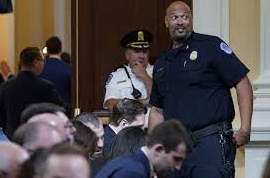
After his testimony, Ayres approached several officers who had defended the Capitol, including Michael Fanone, a retired Metropolitan Police officer, Sgt Aquilino Gonell, who sustained permanent injuries and will have to retire, and Officer Harry Dunn. He offered apologies to them for his actions on that day.

However, Officer Dunn, in an interview with The Independent, revealed that he was still processing the moment and wasn’t sure whether he could accept Ayres’ apology. “I haven’t processed that yet,” Dunn said. “It just seemed like the right thing to do, but I’m not sure if I accept that. It’s hard to feel sympathy for someone like that right now… maybe, but I’m just not there yet.”

Dunn, along with Gonell, Fanone, and Officer Daniel Hodges, previously testified before the committee about the harrowing experiences they endured during the Capitol attack. As a Black officer, Dunn had been a target of racial abuse during the riot. He recalled that, in the aftermath of the insurrection, other Black officers shared similar stories of racism they faced on January 6.

“It wasn’t just me. In the days following the attempted insurrection, other Black officers shared their own stories of the racial abuse they experienced,” Dunn said during his testimony last year.

The race heats up as accusations of “dirty tricks” are levelled against Rishi Sunak’s team, while MPs prepare for the first ballot in the Tory leadership battle.

As the race to succeed Boris Johnson intensifies, Tory MPs will cast their votes in the first ballot of the Conservative leadership contest on Wednesday, with eight contenders still in the running.

Rishi Sunak, former chancellor, and Foreign Secretary Liz Truss have secured the backing of over 20 MPs, allowing them to progress to the first round of voting. Also advancing are Penny Mordaunt, Nadhim Zahawi, Jeremy Hunt, Tom Tugenhat, Suella Braverman, and Kemi Badenoch.

Sajid Javid, however, withdrew just moments before the announcement, as did backbencher Rehman Chishti and Grant Shapps earlier in the day.

In a packed Westminster schedule, candidates participated in a series of hustings on Tuesday evening, offering MPs the chance to hear their pitches. The second round of voting will take place on Thursday, with MPs needing to secure 30 votes to stay in the race.

Meanwhile, tensions have flared as Nadine Dorries, a staunch Boris Johnson loyalist, accused Rishi Sunak’s campaign team of orchestrating “dirty tricks” to boost his chances. The Culture Secretary, now backing Liz Truss for the top job, claimed that Sunak’s camp engineered the voting outcome to ensure Jeremy Hunt made it through to the next round, knowing he would be easier to defeat.

Dorries took to Twitter, calling it a “stitch-up” and referring to it as “dark arts”, accusing Sunak’s supporters of manipulating the vote. This followed a suggestion that Gavin Williamson, a backer of Sunak, had arranged for votes to be siphoned off to let Hunt pass the first hurdle.

Hunt’s team strongly denied these allegations, with a source from his campaign labelling them “categorically untrue”. The source added that Hunt was focused on running a campaign based on his merits, free from personal attacks.

The leadership contenders have also been lining up prominent figures within the party to gain endorsements. Liz Truss garnered support from key Johnson allies, including Dorries, Jacob Rees-Mogg, and James Cleverly, as part of an effort to prevent Sunak from succeeding the former prime minister.

The Foreign Secretary’s campaign received a further boost when Home Secretary Priti Patel, a fellow right-winger, announced that she would not be standing, clearing a path for Truss.

Elsewhere in Westminster, tensions were high as the Labour Party accused the government of “running scared” by refusing to allocate parliamentary time for a no-confidence vote in Johnson’s administration.

Notably, Kemi Badenoch, former equalities minister, launched her leadership bid, vowing to avoid engaging in a “tax cut bidding war” and criticising other candidates for trying to please voters with unrealistic promises. Meanwhile, Tom Tugenhat, chair of the Foreign Affairs Committee, proposed a 10p reduction in fuel duty to kickstart his campaign, defending his lack of ministerial experience.

Nadhim Zahawi, the current Chancellor, shrugged off criticism from Bank of England Governor Andrew Bailey regarding his tax proposals, asserting that they were “fully costed” and setting out his stall for the role of prime minister.

In an increasingly combative campaign, allies of Boris Johnson have intensified their attacks on Sunak, labelling him the “high-tax chancellor” and blaming him for failing to address the warning signs of rising inflation.

Launching his bid for the leadership, Sunak emphasised that cutting taxes would only be possible “when inflation is under control”, hitting out at rivals who promised immediate tax cuts. Backed by Deputy Prime Minister Dominic Raab, he argued that it was “not credible” to pledge tax reductions while increasing spending.

While Zahawi criticised Sunak’s cautious approach, he insisted that cutting taxes was essential to addressing the cost-of-living crisis. Zahawi also took the opportunity to voice his strong support for traditional family values, noting that the importance of family had been sidelined in Westminster.

The first ballot of voting will determine which candidates advance to the second round. Those failing to secure 30 votes will be eliminated. The process will continue through the week, narrowing the field until just two candidates remain, who will compete for the Conservative Party leadership over the summer. The final result will be announced on 5 September, after Tory members vote to choose their next prime minister.

The PCS union calls for a thorough investigation following multiple complaints of racial discrimination and bullying in government departments.

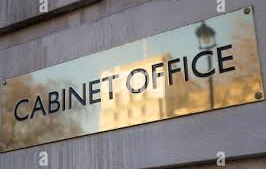
The Public and Commercial Services union (PCS) has urged the government to initiate a public inquiry into allegations of racism and bullying within the Cabinet Office, citing numerous complaints and ongoing legal disputes.

In a letter to the Public Administration and Constitutional Affairs Committee (PACAC), which scrutinises civil service standards, PCS is requesting a select committee investigation into what it describes as longstanding issues of racial discrimination within the central government department.

The letter, seen by The Independent, highlights evidence the union has gathered, including formal complaints from over 80 members who have reported experiences of racial profiling and bullying. It also references an increasing number of Employment Tribunals, several of which have ruled in favour of the employees, as well as articles published by The Independent that have exposed systemic issues.

John Moloney, Assistant General Secretary of PCS, stated in the letter: “We hope the committee will investigate how the Cabinet Office has dealt with claims of racial discrimination and whether it has fully adhered to the Civil Service Code, especially in terms of openness and honesty with staff and unions.” He added that PACAC’s powers could compel the Cabinet Office to disclose the full scale of discrimination within the department, which the union believes may be more widespread than it is aware of.

This request follows The Independent’s revelations about systemic racism within the Cabinet Office, including the case of Kay Badu, a Black civil servant who received a significant payout after alleging racial discrimination within the Government Digital Service. Despite the settlement, the Cabinet Office did not admit liability or accept many of the claims made.

Dame Helen Macnamara, the former deputy cabinet secretary, also expressed concerns about “systemic” racial issues within the department before her departure. In response to these reports, campaigners and politicians, including the Labour Party, Black Lives Matter, and Stand Up To Racism, have called for a formal investigation into the Cabinet Office’s treatment of race-related complaints.

Furthermore, Olivea Ebanks, another former civil servant, was awarded a six-figure settlement after making three successful race discrimination claims against the Ministry of Justice over 20 years.

Earlier this year, PCS withdrew from a government-led review into racism in the Cabinet Office, accusing it of being a “whitewash.” The union argued that the department’s Respect and Inclusion Review was a superficial exercise that failed to tackle discrimination at its core.

According to a staff survey conducted by the Cabinet Office in January, the department reported the highest number of bullying and harassment incidents in Whitehall. The Institute for Government (IfG), in its Whitehall Monitor report, also highlighted that diversity remains a major challenge within the civil service, with significant gaps in representation at all levels.

In response to the ongoing concerns, a Cabinet Office spokesperson said: “The Cabinet Office does not tolerate bullying, harassment, or discrimination in any form. Although reported incidents have decreased since 2019, we acknowledge there is more work to be done. This is why we commissioned an independent review into Respect and Inclusion, and we are committed to ensuring the department remains a supportive and inclusive workplace.”