



Health professionals urge urgent action as the window to halt the spread of monkeypox narrows.

The global monkeypox outbreak could continue for several months, experts advising the World Health Organisation (WHO) have warned, with the window of opportunity to halt its spread rapidly closing. According to WHO Europe, the number of monkeypox cases has surged to over 27,000 across 88 countries by August 2, up from 17,800 cases in almost 70 countries just weeks earlier.

Originally confined to parts of Africa, where it has been endemic for decades, monkeypox began spreading outside these regions in May. While it typically causes moderate symptoms, such as fever, fatigue, and painful skin lesions, the rapid increase in cases has raised alarms. Anne Rimoin, an epidemiology professor at UCLA and a member of the WHO’s expert committee on monkeypox, stressed that health officials must act swiftly to control the outbreak.

“It’s clear that the window of opportunity for containment is closing,” Rimoin said, urging more proactive measures to limit the virus’s spread.

While the WHO expert committee did not initially declare the outbreak a global health emergency, WHO Director-General Tedros Adhanom Ghebreyesus overruled the decision, declaring it an emergency regardless. In response, health professionals are calling for an accelerated approach, including widespread vaccination, expanded testing, enhanced contact tracing, and quarantine measures for those infected.

Antoine Flahault, director of the Institute of Global Health at the University of Geneva, and chair of WHO Europe’s advisory group, warned that transmission is “clearly unchecked.” The advisory group has modelled various scenarios for the future, including continued transmission within high-risk groups, such as men who have sex with men, and potential spread into more vulnerable populations like children. A particularly concerning scenario is the possible transmission between humans and animals, which could establish a monkeypox reservoir in new regions, much like the one that exists in parts of west and central Africa.

Scientists also expressed concerns about the virus mutating, which could make it more efficient at spreading among humans. The primary mode of transmission is close physical contact, such as touching contaminated clothing, bedding, or towels used by an infected individual, or coming into contact with their skin lesions or scabs. While not officially classified as a sexually transmitted disease, sexual intercourse is considered a higher-risk activity due to the close physical contact involved, which increases the likelihood of exposure.

The majority of reported cases have been among gay and bisexual men, as well as men who have sex with men, highlighting the need for targeted public health measures. The ongoing surge in cases presents a significant challenge to global health authorities, as the fight to curb the outbreak intensifies.
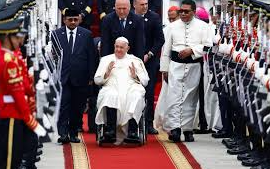
Government and survivors call for deeper acknowledgment of the Catholic Church’s role in residential school abuses.

The Canadian government has expressed that Pope Francis’ recent apology to Indigenous communities for the suffering caused by church-run residential schools is insufficient, emphasising that true reconciliation remains far from achieved. The remarks came as the Pope arrived in Quebec City, where he met with Prime Minister Justin Trudeau and Governor General Mary Simon on the second leg of his week-long visit to Canada.

While the Pope acknowledged the “evil” committed by church personnel and described the residential school system as “catastrophic,” critics pointed to significant gaps in his apology, notably his omission of sexual abuse and his failure to directly assign institutional responsibility to the Catholic Church. This sentiment was shared by many survivors of the system, who have long demanded an apology that includes an explicit acknowledgment of the Church’s role in supporting policies of forced assimilation.

The residential school system, which operated from the 19th century until the 1970s, sought to remove over 150,000 Indigenous children from their families and culture, often subjecting them to physical and sexual abuse. Francis described the system as a policy “promoted by governmental authorities at the time,” but did not hold the Church accountable for its active involvement in these abuses.

Trudeau, a Catholic whose father, former Prime Minister Pierre Trudeau, was in office while the last residential schools were still functioning, reinforced the call for the Church to take responsibility as an institution. He noted that the Truth and Reconciliation Commission had in 2015 called for an apology, and emphasised that survivors’ courage in pressing the issue had made the Pope’s visit possible. He added that the Church must do more to atone, suggesting that while the Pope’s apology was a significant step, much more is required from the Vatican.

Echoing the concerns of Indigenous leaders, Marc Miller, the Minister of Crown-Indigenous Relations, pointed out that the Pope’s apology did not address the specific issue of sexual abuse, which many survivors had highlighted. Miller also criticised the Pope’s failure to take responsibility for the Catholic Church’s systemic support of the assimilation policies, which have left lasting scars on Indigenous communities.

Some survivors have welcomed the Pope’s apology as a genuine step toward healing, while others argue it falls short of addressing the full scope of the Church’s complicity. Pope Francis himself has acknowledged that the healing process will be long and difficult, but reaffirmed his commitment to working with the Canadian church and government to foster reconciliation.

The Pope’s visit, which included no specific proposals for action from the Vatican, marked a first step in a lengthy and challenging journey of reconciliation, with Indigenous leaders stressing that this must be followed by tangible steps toward justice and healing for those affected by the residential school system.

The incumbent prosecutor, facing legal challenges, is defeated by defence attorney Ivan Bates in the Democratic primary.

Marilyn Mosby, the incumbent Baltimore State’s Attorney, has lost her bid for re-election in the Democratic primary to defence attorney Ivan Bates. Mosby, who rose to national prominence in 2015 for prosecuting six police officers involved in the death of Freddie Gray, faced mounting legal troubles of her own in the lead-up to the election.

Bates, who is the managing partner of the Baltimore law firm Bates and Garcia, campaigned on a platform calling for a change in leadership, focusing on the need for ethical, transparent, and effective prosecution. He defeated not only Mosby but also former assistant attorney general Thiru Vignarajah, a contender in the primary.

Baltimore, a predominantly Democratic city, has no Republican candidate in the race, but unaffiliated candidate Roya Hanna is set to run in the general election in November.

Mosby, who served two terms as State’s Attorney, became a controversial figure following the prosecution of the police officers involved in the Freddie Gray case. The charges, which sparked widespread protests and riots, were ultimately unsuccessful, as none of the officers were convicted. In January, Mosby was indicted by a grand jury on two counts each of perjury and making false statements in connection with a loan application to purchase properties in Florida. Mosby has pleaded not guilty to the charges.

The indictment alleges that Mosby falsely claimed the financial impact of the COVID-19 pandemic in order to withdraw $90,000 from her city retirement account, despite earning over $247,000 in salary in 2020, a year in which her pay was not reduced.

Bates’s victory comes amid increasing concerns over violent crime in Baltimore, which has seen more than 300 homicides annually over the past seven years. The city recorded its deadliest January in decades earlier this year, with 36 murders.

The Democratic primary results were delayed until Friday, as mail ballots, which were a significant factor in the outcome, could not be counted until the Thursday following the election. Maryland law mandates that counties cannot open mail ballots before this time. With this victory, Bates is now poised to challenge the city’s ongoing issues of crime and public safety.

England secures a dominant 118-run victory as South Africa’s rain-delay gamesmanship fails to save them.

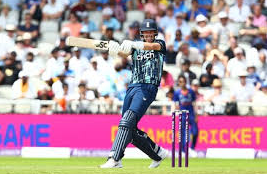
David Willey was quick to highlight how South Africa’s attempt at time-wasting was thwarted during England’s commanding 118-run win at Old Trafford, which levelled the ODI series at 1-1. The England all-rounder suggested that “Mother Cricket” played a key role in ending the Proteas’ gamesmanship and allowing the match to reach a conclusion.

England’s victory was built on a strong bowling performance, as they bowled South Africa out for just 83, easily chasing down a target of 202 after the visitors’ dramatic collapse to 6 for 4 early in their innings. Although the match was in England’s hands, there was a brief moment of concern when light rain threatened to derail the game, potentially leading to an abandonment that would have deprived the hosts of the chance to claim the series.

Heinrich Klaasen, sensing an opportunity to extend the match, created an artificial delay of eight minutes, raising concerns about a small patch of exposed white at the bottom of the sightscreen. This tactic appeared designed to disrupt play in the hope of a rain delay that would alter the outcome. However, England remained unfazed, and Klaasen’s attempt at gamesmanship only led to frustration within the England camp.

“I think it was pretty clear what they were trying to do,” Willey remarked after the game. “They were hoping for a bit of rain to stick around and force the game into a no-result, allowing them to go to Headingley 1-0 up. But, as it turned out, Mother Cricket had other plans – they lost a few more wickets, and the game was effectively over for them.”

Klaasen’s delay came just before England reached the 20-over mark, which would have rendered the match a completed game and prevented a no-result scenario. When Jos Buttler stumped Klaasen for 33, the end was nigh for South Africa, and England wrapped up the win shortly thereafter.

Willey’s performance with the ball was pivotal in England’s dominant victory. Alongside Reece Topley, he helped dismantle South Africa’s top order in a controlled and clinical bowling display. With several key seamers injured, Willey and Topley have become central figures in England’s bowling attack this summer.

“We knew we had to bowl and field well to put them under pressure,” Willey said. “We managed to keep our foot on their throat and execute the basics well. Reece and I have been going well so far, and it’s been nice to get rewards from pitches that have been bowler-friendly.”

In the aftermath of the defeat, South African all-rounder Dwaine Pretorius remained philosophical, acknowledging that “bad days at the office” happen, but stressing that the team’s confidence would not be shaken. “Our batting unit has been in great form, and I’m sure they’ll bounce back and not let this defeat affect their performances,” Pretorius said.

With the series now tied, both teams will head to Headingley for the decider, where England will look to take the series lead, buoyed by their commanding win and the resilience shown by their bowlers.

The property developer and husband to Princess Beatrice offers his stylish, Grade II-listed London flat for rent.

Edoardo Mapelli Mozzi, property developer and husband to Princess Beatrice, has put his chic one-bedroom Bayswater apartment on the rental market for £4,550 per month. The Grade II-listed flat, located in the sought-after Lancaster Gate area, offers a luxurious living space with stunning views over Hyde Park.

Spanning the first floor of a classic stucco-fronted townhouse, the 980-square-foot apartment blends period charm with modern design, making it a stylish urban retreat. With a mezzanine bedroom, walk-in wardrobe, and both ensuite and guest bathrooms, the property is a testament to the attention to detail Mapelli Mozzi is known for through his company, Banda Property.

The flat maintains original features such as high ceilings with intricate plasterwork, a marble fireplace, and Victorian sash windows, while incorporating sleek contemporary elements like floor-to-ceiling Crittall doors leading into the modern kitchen. The open-plan living and dining space exudes warmth and character, designed to be a “cosy, welcoming” environment. Clever storage solutions are scattered throughout the apartment, ensuring functionality is not sacrificed for aesthetics. The kitchen is fully equipped with two ovens and a wine fridge, offering a perfect balance of practicality and luxury.

The colour scheme is subtle, with neutral greys, beige tones, and pale wooden parquet floors creating a calm, inviting atmosphere. A mustard yellow velvet sofa injects a pop of colour into the living room, while quirky touches, such as a cushion reading “No dogs on this sofa” and a sketch of a dog in the kitchen, add personality to the space.

The flat’s history also adds to its allure. It was once the home of Alexander Murray, the 8th Earl of Dunmore, a decorated soldier and the first journalist to receive the Victoria Cross in 1897 for his bravery. Mapelli Mozzi, a fan of historical buildings, has expressed his admiration for the heritage of such properties, noting their authenticity and individuality.

Princess Beatrice and Edoardo Mapelli Mozzi married in Windsor in 2020 and have since been spotted attending high-profile events, including Wimbledon and the National Gallery’s inaugural summer party. The couple is reportedly planning to move into their newly renovated £3.5 million farmhouse in the Cotswolds, after spending time living at St James’s Palace with their daughter, Sienna.

For now, the stylish Bayswater property remains available for rent through Berkshire Hathaway HomeServices.

Sport adopts new name to promote inclusivity and move away from author’s controversial stance on gender identity.

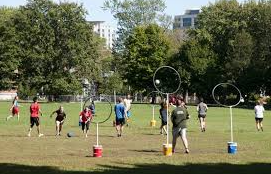
The sport of Quidditch is officially rebranding, adopting the new name “Quadball” to distance itself from J.K. Rowling’s controversial remarks on gender identity. The decision comes as part of a wider effort by the sport’s governing bodies to establish a more inclusive and independent identity.

Originally inspired by Rowling’s famous Harry Potter series, Quidditch was first played in the United States in 2005 before becoming a global phenomenon. The name change, confirmed by QuidditchUK (QUK), marks a pivotal moment for the sport, which is played on broomsticks and encourages participation from all genders, including those who identify as trans or non-binary.

QUK described the rebranding as “symbolically and practically significant,” underscoring that it reflects a commitment to creating an inclusive space for players of all identities. The organisation further explained that the change would also provide a stronger legal standing, as well as enhance the sport’s potential for external funding and sponsorship opportunities.

“By shifting away from the association with J.K. Rowling,” said the governing body, “we are reaffirming our commitment to being a welcoming and inclusive space for everyone. This is about securing a future for Quadball that aligns with the values we hold dear: inclusivity and respect for all players, regardless of race, gender, or background.”

The name change follows criticism of J.K. Rowling for her public comments on transgender issues, which many have deemed transphobic, though the author has denied these accusations. Last year, both US Quidditch (USQ) and Major League Quidditch (MLQ) conducted surveys to gauge the opinion of players and stakeholders, ultimately leading to the decision to rename the sport.

For years, the Quidditch community has been committed to diversity, and players have argued that the sport’s previous name was at odds with these values in light of Rowling’s ongoing remarks. In a statement, QUK said: “We cannot continue to call ourselves Quidditch while remaining linked to an individual who perpetuates harmful and exclusionary views that hurt our trans athletes, volunteers, and supporters.”

The name “Quadball” was chosen by USQ after considering various options, and QUK expressed its support for the change, with rebranding efforts set to take place later this year. Among the changes, players can expect a new name for the ball used in the game. The shift is expected to open up more opportunities for the sport’s growth and expansion beyond its ties to the Harry Potter franchise.

With nearly 600 teams now participating in over 40 countries, the sport has grown significantly since its inception. The International Quidditch Association (IQA) will also be adopting the new name, solidifying the global shift towards Quadball.

Chris Lau, Chairman of the IQA Board of Trustees, expressed his excitement about the rebrand: “This is a historic moment for our sport. We’re confident that the transition to Quadball will bring new opportunities and help the sport continue to grow and thrive. I’m thrilled to be a part of this pivotal change.”

A civil rights icon and former NAACP president, Spearman’s death marks the loss of a passionate advocate for justice.

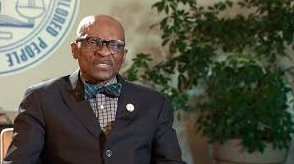
Rev. T. Anthony Spearman, a prominent civil rights advocate and former president of the North Carolina chapter of the NAACP, has been found dead at the age of 71, his attorney confirmed on Wednesday. Mark Cummings, a Greensboro-based lawyer representing Spearman, shared that the civil rights leader passed away on Tuesday, though he did not provide further details regarding the cause of death.

Spearman, a well-known figure in both the local and national civil rights movements, was also the former president of the North Carolina Council of Churches. Described by his attorney as “a drum major for justice,” Spearman’s life and work mirrored the legacy of Dr. Martin Luther King Jr. “He saw the good in everyone, even those who criticized him, always finding a way to see the best in people,” Cummings stated.

The late civil rights leader’s family released a heartfelt tribute, describing him as “a man of strong conviction who loved his family with every ounce of his being.” No further comments were made by the family at this time.

Bishop William J. Barber, who succeeded Spearman as president of the North Carolina NAACP and currently serves as president of Repairers of the Breach, issued a statement mourning the loss. “I have lost a true brother in the struggle,” Barber said. “We have lost a scholar, a preacher, and a defender of voting rights, prison reform, and justice for the wrongfully accused. His efforts should be cherished.”

Spearman had faced recent controversies, including a suspension from the NAACP by the organisation’s national leadership approximately five months ago. This followed his filing of a 28-page lawsuit in June, in which he accused national NAACP President Derrick Johnson and other high-ranking officials of defamation and civil conspiracy. Spearman claimed that his support for a woman who accused a state NAACP member of sexual harassment led to an effort to oust him from his position. The lawsuit also implied that these actions were part of a wider campaign of retribution.

The individual at the centre of the harassment allegations, Rev. Curtis Gatewood, declined to confirm or deny the accusations but expressed forgiveness for Spearman’s role in the conflict. On Facebook, Gatewood wrote, “I forgave him,” adding that while they disagreed on several matters, “I loved the brother.”

Rev. Spearman’s death marks the end of a remarkable career dedicated to civil rights and social justice, leaving a void in the movement that will be felt by many across the state and beyond.

Sarina Wiegman’s tactical changes spark a thrilling 2-1 win over Spain, propelling the Lionesses into the last four.

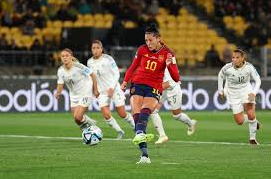
England’s women delivered a stirring 2-1 victory over Spain after extra time, advancing to the semi-finals of the 2022 UEFA Women’s Euro Championship. Substitute Ella Toone levelled the score late in regular time, and Georgia Stanway fired a stunning 96th-minute winner to secure a memorable comeback that defied expectations and set up a clash with either Sweden or Belgium in Sheffield next week.

The result marks a defining moment for the Lionesses, a victory that not only pushes them closer to European glory but also has the potential to ignite further growth in women’s football across the nation.

For the first 84 minutes, the match followed a familiar script for the England team, as they were outplayed by a technically superior Spain. The Spanish side, led by Barcelona’s Aitana Bonmati, controlled possession and displayed their trademark slick passing game. Despite England’s best efforts, they were outclassed in every area, with Spain taking the lead through a composed 55th-minute finish by Esther Gonzalez.

Spain’s attacking move began when Athenea Del Castillo danced past Rachel Daly in the box, cutting the ball back for Gonzalez to score from close range. England struggled to break down their opponents and could only manage one shot on target until the dramatic final moments.

However, as the match approached its dying moments, England found new life. The breakthrough came from a well-worked set-piece. Toone, on as a substitute, latched onto a precise knockdown from Alessia Russo to volley home the equaliser, sending the Amex Stadium into raptures.

With Spain tiring, England seized control, and in the 96th minute, Stanway delivered a match-winning strike from 20 yards, firing a powerful shot across goalkeeper Sandra Paños to seal the victory.

The dramatic turnaround is a testament to the resilience of the Lionesses, overturning a one-goal deficit and rewriting the usual narrative of English teams struggling against more technically polished opponents at the business end of a tournament. England’s thrilling comeback is a stark contrast to the more typical fate of English teams in similar situations, where a lack of depth or tactical nous often leads to a collapse under pressure.

The turning point in the match came when Sarina Wiegman, with England trailing 1-0, made a bold decision to substitute her three most likely sources of a goal. Off came Beth Mead, the tournament’s top scorer; Ellen White, the Lionesses’ record goal-scorer; and playmaker Fran Kirby, who had contributed to key goals earlier in the competition.

In their place came Chloe Kelly, Alessia Russo, and Ella Toone, with the match hanging in the balance. Wiegman’s gamble paid off handsomely, as Russo’s header laid the ball off for Toone to volley in the equaliser, igniting the crowd. Had the substitutes not made an impact, questions would surely have been asked about Wiegman’s decisions, but instead, the change was hailed as another masterstroke from the Dutch manager, showcasing her tactical brilliance and England’s incredible strength in depth.

While Stanway and Toone will rightly dominate the headlines, the standout performance came from England’s centre-back Millie Bright. The Chelsea defender was a rock at the heart of the defence, playing one of her finest matches in an England shirt. Bright repeatedly thwarted Spain’s attacking threats, showing immense resilience and composure under pressure.

England’s defence has been one of the highlights of their campaign, with Esther Gonzalez’s goal marking the first they’ve conceded in four matches. Wiegman’s decision to move captain Leah Williamson into the defensive line, breaking up Bright’s partnership with Alex Greenwood, continues to pay off, with Bright’s performances proving invaluable to the team’s success.

With their place in the semi-finals secured, England will now look to build on this remarkable victory and take another step towards Euro 2022 glory.

In light of sweltering temperatures, Prince Charles stresses the importance of national commitments to achieve net zero and tackle the climate emergency.

Amid a scorching heatwave that has seen temperatures exceed 38°C, Prince Charles has called for urgent action on climate change, declaring that tackling the crisis is “utterly essential” for the future of the UK and the world. Speaking at an outdoor event to mark his 70 years as Duke of Cornwall, Charles emphasised that national commitments to achieving net zero have never been more crucial.

The country is grappling with extreme heat, which has led to school closures, reduced train services, and increased pressure on emergency services, as ambulance crews face a rise in 999 calls. On Monday, temperatures hit 38.1°C in Santon Downham, Suffolk, marking the hottest day of the year, with many other locations across the country also exceeding 37°C.

Charles, who has long been a passionate advocate for environmental sustainability, reiterated his call for decisive action, stressing that climate change is no longer just a topic for discussion. “If I may say so,” he remarked, “commitments around net zero have never been more vitally important, as we all swelter under today’s alarming record temperatures across Britain and Europe.”

He went on to state that “the climate crisis is a genuine emergency,” and that urgent measures are necessary, not just for Cornwall and the UK, but for the entire planet. “Tackling it is utterly essential,” he concluded.

This call for action comes at a time when the UK, and much of Europe, is enduring its hottest summer on record, with temperatures soaring well beyond typical seasonal averages. In the lead-up to the 2021 UN Climate Change Conference (COP26), Charles famously told delegates that the world could no longer afford to delay meaningful climate action, urging governments and industries to turn commitments into tangible results.

In a related development, Alok Sharma, the former COP26 President, has indicated that he may resign if the incoming UK Prime Minister does not commit fully to the net-zero agenda. Sharma, in an interview with The Observer, suggested that some candidates in the Tory leadership race have been “lukewarm” in their stance on climate change, making it a leadership issue.

Charles also took the opportunity to highlight the sustainable practices underway in Nansledan, an eco-friendly development in Newquay, Cornwall. The project, on land owned by the Duchy of Cornwall, aims to meet ambitious net zero carbon targets. “We have made progress in the development of Nansledan, as well as in the Duchy’s regenerative agricultural practices, by working closely with tenants, suppliers, and the people of Cornwall,” Charles noted, underlining the importance of collaboration in addressing the climate challenge.

In a more light-hearted moment, the Prince recalled an amusing experience from a visit to the Royal Cornwall Show, where he inadvertently followed a deaf chairman to the wrong tent, ending up in the lavatory section instead of the bee exhibit.

The couple also took the time to visit the village of Mousehole, near Penzance, where the temperatures were a cool 10°C lower than the sweltering 38°C in London. Camilla, carrying a parasol, joked with locals about the difference in climate, quipping, “I think I’m going to take off like Mary Poppins.”

As they continue their tour of Cornwall and Devon to mark 70 years since Charles became the Duke of Cornwall, the Prince’s message remains clear: the time to act on climate change is now, and the world must rise to meet the challenge.

In his last scheduled Cabinet meeting, the Prime Minister will review the UK’s handling of Covid and the heatwave’s strain on services, while acknowledging the NHS’s resilience.

Boris Johnson is preparing to hold what is expected to be his final scheduled Cabinet meeting as Prime Minister, with a focus on two major issues: the ongoing heatwave and a significant milestone in the UK’s Covid response. The Prime Minister is set to reflect on the nation’s vaccination success, the resilience of public services, and the ongoing pressure faced by the NHS amidst the extreme summer temperatures.

Johnson, whose tenure has been marred by controversies and a steep decline in public support, will also mark a year since England reached Step Four of the government’s Covid roadmap. This stage saw most of the remaining pandemic restrictions lifted, allowing the economy to reopen fully. Ministers will revisit the vaccination rollout, hailed as one of the UK’s major successes in the fight against Covid, as well as the NHS’s performance during the heatwave, with both topics being key discussion points for the meeting.

The Prime Minister is expected to highlight the country’s global leadership in rolling out vaccines, stating: “We were the first to deliver approved vaccines and, thanks to the work of our scientists, the NHS, and the volunteers who administered millions of doses, we built a formidable wall of protection, enabling us to safely reopen our economy.”

Despite rising Covid cases across the UK, Downing Street pointed to the continued effectiveness of the booster campaign, noting that while cases have increased, there has not been a corresponding surge in hospital admissions or fatalities. The Prime Minister is likely to encourage anyone eligible for the spring Covid booster to come forward. Statistics released recently revealed a sharp rise in Covid infections, with some regions approaching the levels seen earlier in the year. Hospital admissions are also on the rise, driven largely by the spread of the newer Omicron subvariants, BA.4 and BA.5.

In a sombre reflection, Johnson will acknowledge the toll Covid has taken on lives, offering condolences to those who have lost loved ones during the pandemic. He is expected to say: “One year on from reopening, we can take pride in what our NHS and nation have achieved. Without our remarkable scientists, clinicians, and the millions who stepped up to be vaccinated, our journey would have been far more difficult.”

Turning to the current heatwave, Downing Street assured the public that the NHS is managing well, despite the intense weather. The government has taken precautions, including reducing services and speed limits on transport networks to mitigate the impact. According to the Prime Minister’s official spokesman, the Cobra meeting earlier in the day received updates from public sector teams, including those handling health, transport, and education. He noted that no significant disruptions had yet been reported, with schools remaining open and the NHS continuing to cope with the pressure.

As Johnson approaches the end of his leadership, this meeting will serve as a moment to reflect on the UK’s progress in both health and crisis management, with many eyes now on his final decisions before he steps down.